.svg)
.svg)

.svg)


ترجمه مقاله شبکه سنسور بی سیم، حملات اکتیو و پسیو، آسیب پذیری و اقدامات متقابل - نشریه الزویر

عنوان فارسی
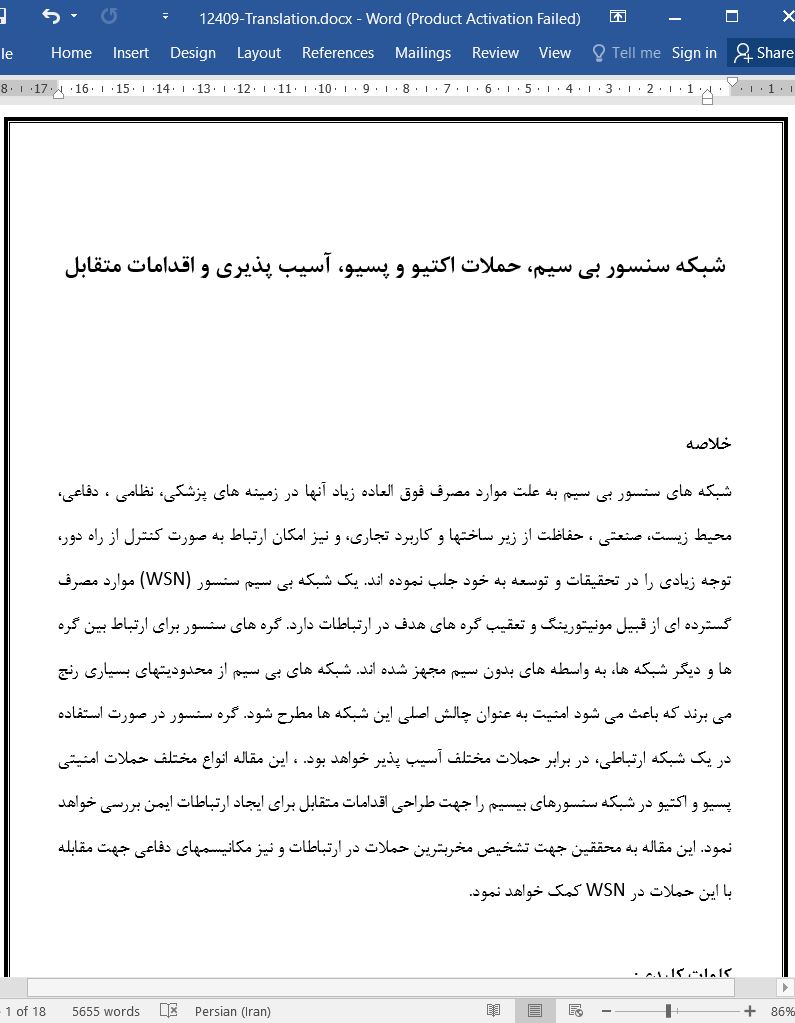
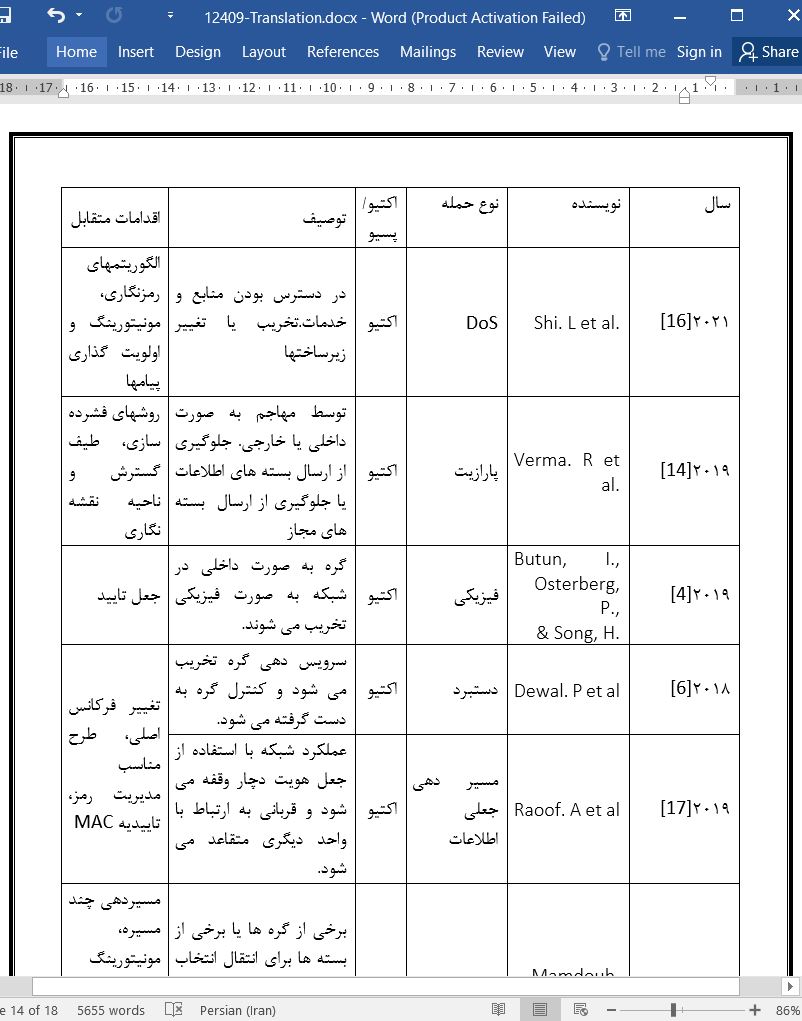
شبکه سنسور بی سیم، حملات اکتیو و پسیو، آسیب پذیری و اقدامات متقابل
عنوان انگلیسی
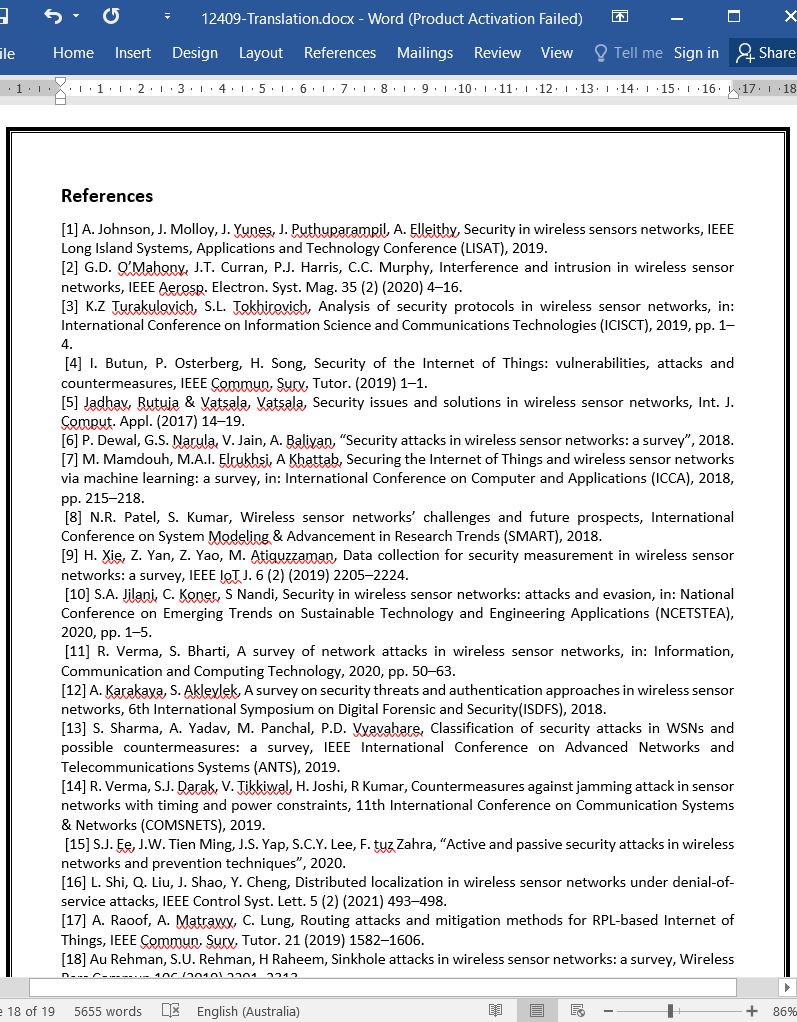
Wireless Sensor Networks: Active and Passive attacks - Vulnerabilities and Countermeasures
صفحات مقاله فارسی
18
صفحات مقاله انگلیسی
6
سال انتشار
2021
رفرنس
دارای رفرنس در داخل متن و انتهای مقاله
نشریه
الزویر - Elsevier
فرمت مقاله انگلیسی
pdf و ورد تایپ شده با قابلیت ویرایش
فرمت ترجمه مقاله
pdf و ورد تایپ شده با قابلیت ویرایش
فونت ترجمه مقاله
بی نازنین
سایز ترجمه مقاله
14
نوع مقاله
ISI
نوع نگارش
مقالات پژوهشی (تحقیقاتی)
نوع ارائه مقاله
ژورنال
شناسه ISSN مجله
2666-285X
کد محصول
12409
وضعیت ترجمه عناوین تصاویر و جداول
ترجمه شده است ✓
وضعیت ترجمه متون داخل تصاویر و جداول
ترجمه شده است ✓
وضعیت ترجمه منابع داخل متن
به صورت عدد درج شده است ✓
وضعیت فرمولها و محاسبات در فایل ترجمه
ندارد ☓
ضمیمه
ندارد ☓
بیس
نیست ☓
مدل مفهومی
ندارد ☓
پرسشنامه
ندارد ☓
متغیر
ندارد ☓
فرضیه
ندارد ☓
رفرنس در ترجمه
در انتهای مقاله درج شده است
رشته و گرایش های مرتبط با این مقاله
مهندسی کامپیوتر، فناوری اطلاعات، فناوری اطلاعات و ارتباطات، شبکه های کامپیوتری، امنیت اطلاعات، دیتا و امنیت شبکه، اینترنت و شبکه های گسترده
مجله
مجموعه مقالات انتقال جهانی - Global Transitions Proceedings
دانشگاه
گروه علوم کامپیوتر، موسسه آویناشیلینگام برای علوم خانگی و آموزش عالی برای زنان، هند
کلمات کلیدی
حملات اکتیو. چالشها. محدودیتها . حملات پسیو. شبکه سنسور بی سیم (WSN)
کلمات کلیدی انگلیسی
Active attacks - Challenges - Constraints - Passive attacks - Wireless Sensor Network(WSN)
doi یا شناسه دیجیتال
https://doi.org/10.1016/j.gltp.2021.08.045
۰.۰
(هنوز امتیازی ثبت نشده است)