.svg)
.svg)

.svg)


ترجمه مقاله رابطه بین حمایت از فعالیت های اجتماعی و ترس از جرم در یک مجتمع مسکونی در ایران - نشریه الزویر

عنوان فارسی
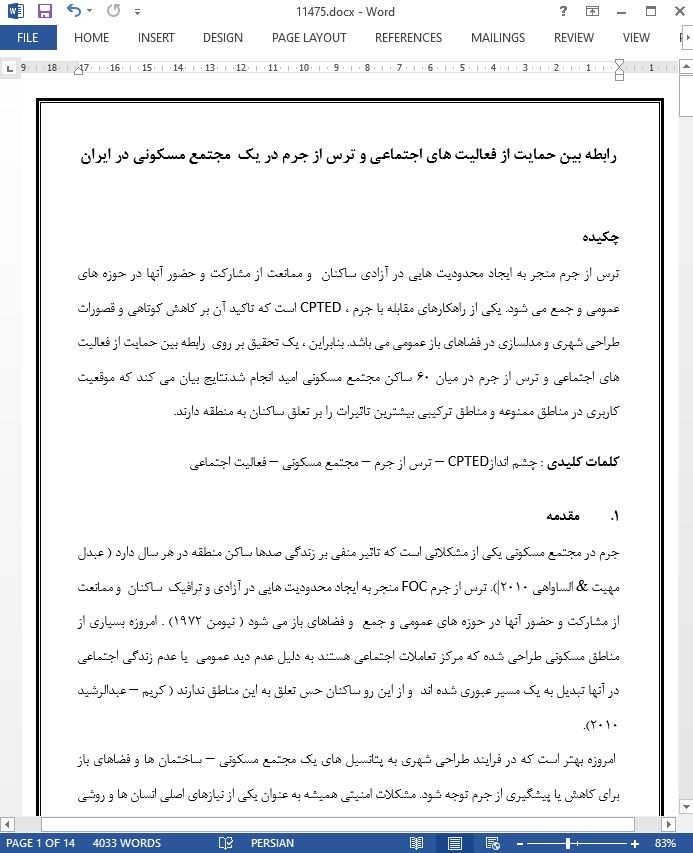
رابطه بین حمایت از فعالیت های اجتماعی و ترس از جرم در یک مجتمع مسکونی در ایران
عنوان انگلیسی
Relationship between Support of Social Activities and Fear of Crime in Iran Residential Complex
صفحات مقاله فارسی
14
صفحات مقاله انگلیسی
11
سال انتشار
2015
رفرنس
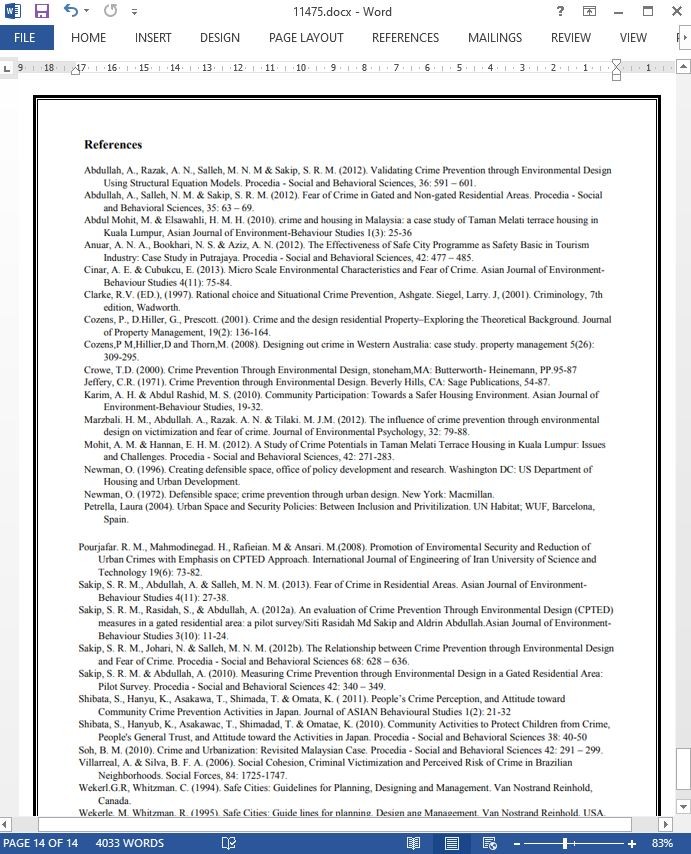
دارای رفرنس در داخل متن و انتهای مقاله
نشریه
الزویر - Elsevier
فرمت مقاله انگلیسی
pdf و ورد تایپ شده با قابلیت ویرایش
فرمت ترجمه مقاله
pdf و ورد تایپ شده با قابلیت ویرایش
فونت ترجمه مقاله
بی نازنین
سایز ترجمه مقاله
14
نوع مقاله
ISI
نوع نگارش
مقالات پژوهشی (تحقیقاتی)
نوع ارائه مقاله
ژورنال
شناسه ISSN مجله
1877-0428
کد محصول
11475
وضعیت ترجمه منابع داخل متن
ترجمه شده است ✓
بیس
نیست ☓
مدل مفهومی
ندارد ☓
پرسشنامه
ندارد ☓
متغیر
ندارد ☓
رفرنس در ترجمه
در انتهای مقاله درج شده است
رشته و گرایش های مرتبط با این مقاله
علوم اجتماعی و شهرسازی، جامعه شناسی، طراحی شهری
مجله
پروسدیا - علوم اجتماعی و رفتاری - Procedia - Social and Behavioral Sciences
دانشگاه
دانشکده معماری و طراحی محیط، دانشگاه علم و صنعت، تهران، ایران
کلمات کلیدی
چشم اندازCPTED، ترس از جرم، مجتمع مسکونی، فعالیت اجتماعی
کلمات کلیدی انگلیسی
CPTED viewpoint - fear of crime - residential complex - social activity
doi یا شناسه دیجیتال
https://doi.org/10.1016/j.sbspro.2015.01.059
۰.۰
(هنوز امتیازی ثبت نشده است)