.svg)
.svg)

.svg)


ترجمه مقاله تحقیق درباره پژوهش پیش بینی کیفیت سرویس (QoS) دینامیک و آگاه از زمان - نشریه اشپرینگر

عنوان فارسی
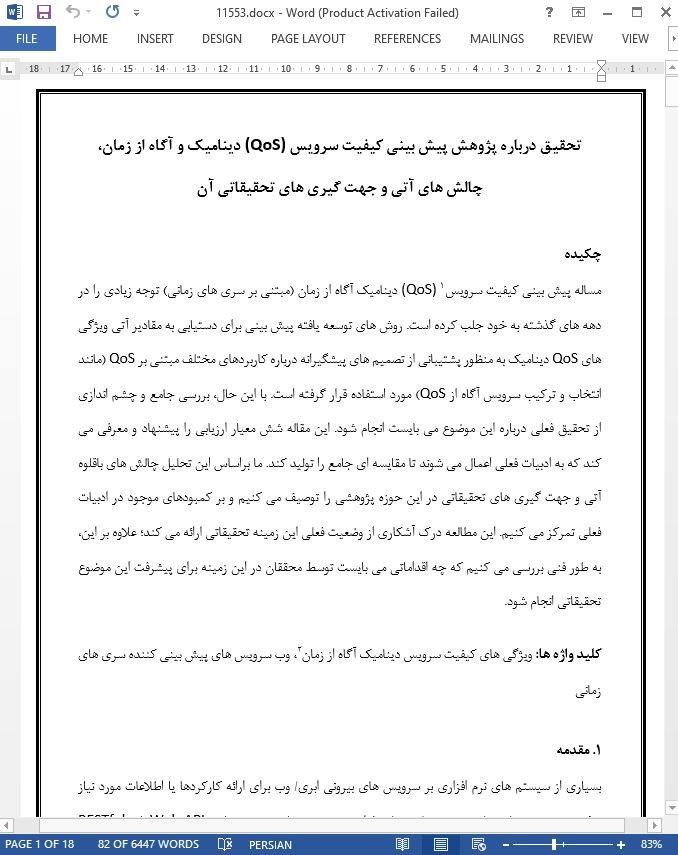
تحقیق درباره پژوهش پیش بینی کیفیت سرویس (QoS) دینامیک و آگاه از زمان، چالش های آتی و جهت گیری های تحقیقاتی آن
عنوان انگلیسی
A Survey of Time-Aware Dynamic QoS Forecasting Research, Its Future Challenges and Research Directions
صفحات مقاله فارسی
18
صفحات مقاله انگلیسی
18
سال انتشار
2018
رفرنس
دارای رفرنس در داخل متن و انتهای مقاله
نشریه
اشپرینگر - Springer
فرمت مقاله انگلیسی
pdf و ورد تایپ شده با قابلیت ویرایش
فرمت ترجمه مقاله
pdf و ورد تایپ شده با قابلیت ویرایش
فونت ترجمه مقاله
بی نازنین
سایز ترجمه مقاله
14
نوع مقاله
ISI
نوع نگارش
Conference paper
نوع ارائه مقاله
کنفرانس
کد محصول
11553
وضعیت ترجمه عناوین تصاویر و جداول
ترجمه شده است ✓
وضعیت ترجمه متون داخل تصاویر و جداول
ترجمه نشده است ☓
وضعیت ترجمه منابع داخل متن
ترجمه شده است ✓
ضمیمه
ندارد ☓
بیس
نیست ☓
مدل مفهومی
ندارد ☓
پرسشنامه
ندارد ☓
متغیر
ندارد ☓
رفرنس در ترجمه
در انتهای مقاله درج شده است
رشته های مرتبط با این مقاله
مهندسی کامپیوتر و فناوری اطلاعات
گرایش های مرتبط با این مقاله
مهندسی نرم افزار، رایانش ابری، مدیریت سیستم های اطلاعاتی
کنفرانس
کنفرانس بین المللی محاسبات خدمات - International Conference on Services Computing
دانشگاه
موسسه علوم اطلاعاتی، شهر تایپه، تایوان
کلمات کلیدی
ویژگی های کیفیت سرویس دینامیک آگاه از زمان ، وب سرویس های پیش بینی کننده سری های زمانی
کلمات کلیدی انگلیسی
Time-aware dynamic QoS attributes - Time series forecasting Web services
doi یا شناسه دیجیتال
https://doi.org/10.1007/978-3-319-94376-3_3
۰.۰
(هنوز امتیازی ثبت نشده است)