SUMMARY
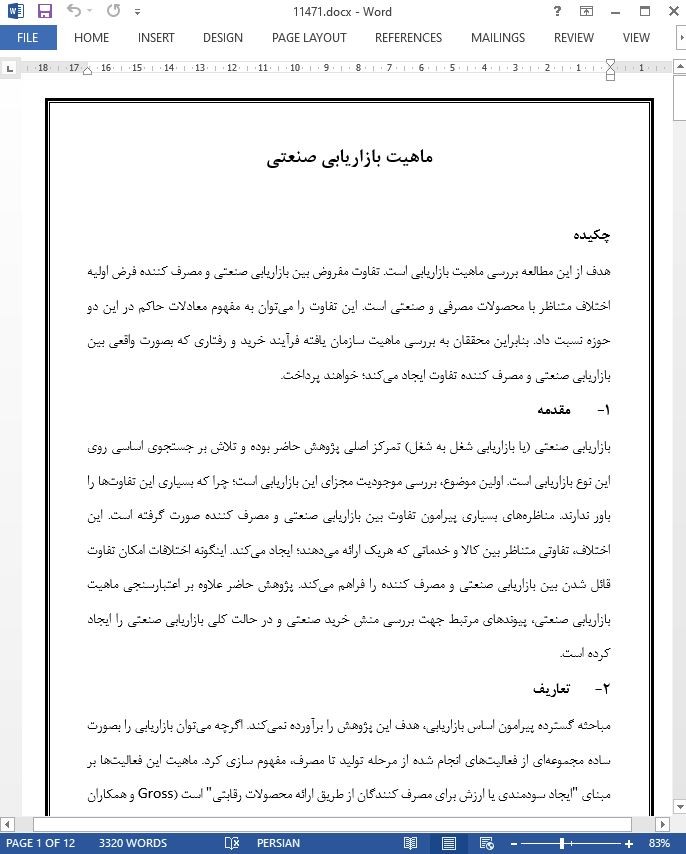
The aim o f this study is to examine the nature o f industrial marketing. The postulated division between industrial and consumer marketing is premised primarily o f the corresponding division between industrial and consumer products although it is possible to proxy this division on the notion o f transaction. The latter leads scholars to examine the organisational nature o f the purchasing process and behaviour that really distinguishes industrial marketing from consumer marketing.
1. INTRODUCTION
Industrial (alternatively business to business) marketing constitutes the focus of this study and the study would attempt to lay the foundations for a pıobe into it. The initial concern is to establish its separate entity, as not everyone agrees on such a differentiation. There are many powerful arguments in favour of such a division between industria! and consumer marketing hovvever, pıemised for instance on the division between consumer and industrial customers. This division implies a corıesponding one between goods and services intended for these respective user groups. Establishing such sets of divisions wou!d conclusively al!ow for differentiated industrial and consumer markets. Having validated the rationale for the existence of industrial markets therefore, this study will provide for forward links to investigate industrial buying behaviour and ultimately, industrial marketing in general.
5. CONCLUSION
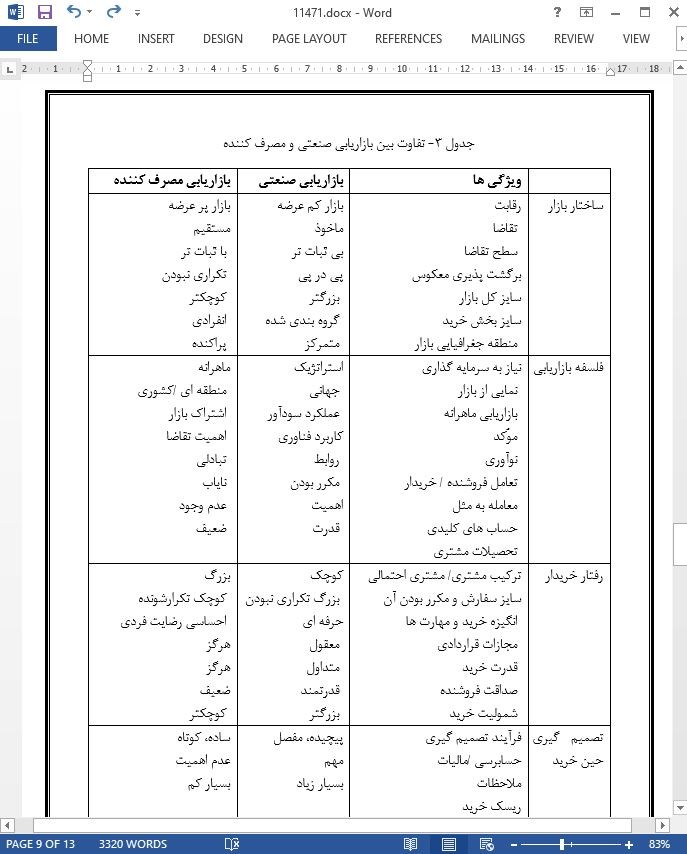
This study has dealt briefly vvith vvhat can be regarded as the key features of industrial markets, from a marketing point of view. Distinguishing features of industrial marketing must be premised on the existence of significant disparities in the buying behaviour of the typical buyers in these markets. important sets of differences originate in the organisationcıl nature of buying decisions so far as industrial marketing is concerned.
In sum m aıy, industrial buyers are more professional and better informed than consum ers. W hile the typical consum er has little technical knovvledge regarding most products purchased, buyers in industrial m arkets are professionally trained and technically qualified. The purchasing decision process is more com plex than the purchasing process for consum er products. This stems directly from two factors: product com plexity, requiring a greater degree of organisational interaction, and because of the high buyer concentration nature of industrial markets. Finally an im portant set of differences betvveen consum er and industrial marketing is premised on the joint (derived) dem and for industrial products.