.svg)
.svg)

.svg)


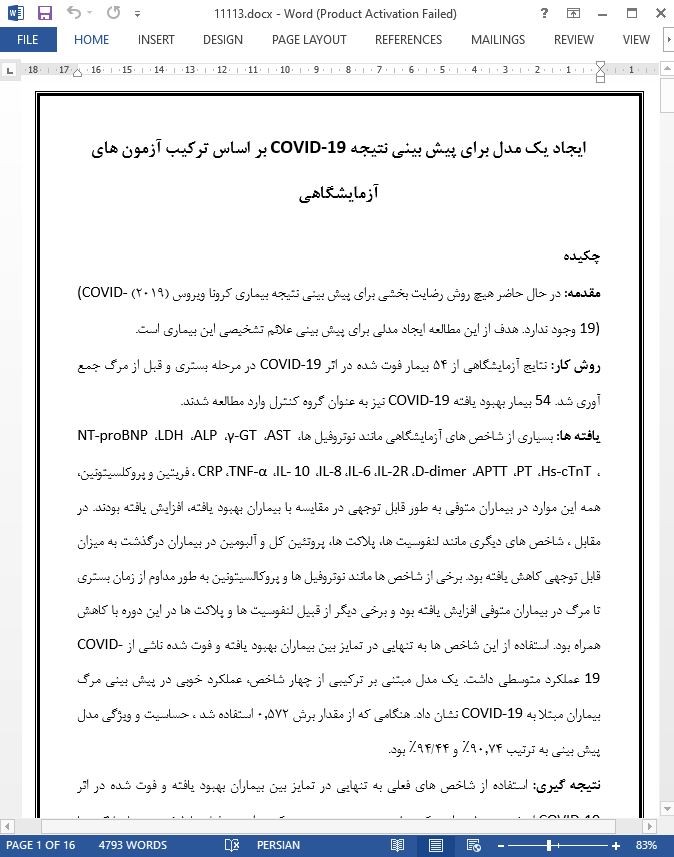
ترجمه مقاله ایجاد یک مدل برای پیش بینی نتیجه COVID-19 بر اساس ترکیب آزمون های آزمایشگاهی - نشریه الزویر

عنوان فارسی
ایجاد یک مدل برای پیش بینی نتیجه COVID-19 بر اساس ترکیب آزمون های آزمایشگاهی
عنوان انگلیسی
Establishing a model for predicting the outcome of COVID-19 based on combination of laboratory tests
صفحات مقاله فارسی
16
صفحات مقاله انگلیسی
7
سال انتشار
2020
رفرنس
دارای رفرنس در داخل متن و انتهای مقاله
نشریه
الزویر - Elsevier
فرمت مقاله انگلیسی
PDF
فرمت ترجمه مقاله
pdf و ورد تایپ شده با قابلیت ویرایش
فونت ترجمه مقاله
بی نازنین
سایز ترجمه مقاله
14
نوع مقاله
ISI
نوع نگارش
مقالات پژوهشی (تحقیقاتی)
نوع ارائه مقاله
ژورنال
پایگاه
اسکوپوس و تامسون رویترز
ایمپکت فاکتور(IF) مجله
3.632 در سال 2019
شاخص H_index مجله
40 در سال 2020
شاخص SJR مجله
1.075 در سال 2019
شناسه ISSN مجله
1477-8939
شاخص Q یا Quartile (چارک)
Q1 در سال 2019
کد محصول
11113
وضعیت ترجمه عناوین تصاویر و جداول
ترجمه شده است ✓
وضعیت ترجمه متون داخل تصاویر و جداول
ترجمه شده است ✓
وضعیت ترجمه منابع داخل متن
ترجمه شده است ✓
ضمیمه
ندارد ☓
بیس
نیست ☓
مدل مفهومی
ندارد ☓
پرسشنامه
ندارد ☓
متغیر
ندارد ☓
رفرنس در ترجمه
در داخل متن و انتهای مقاله درج شده است
رشته و گرایش های مرتبط با این مقاله
پزشکی، پزشکی ریه یا پولمونولوژی، پزشکی داخلی
مجله
پزشکی مسافرتی و بیماریهای عفونی - Travel Medicine and Infectious Diseas
دانشگاه
گروه پزشکی آزمایشگاهی، بیمارستان Tongji، کالج پزشکی Tongji، دانشگاه علم و فناوری Huazhong، ووهان، چین
کلمات کلیدی
COVID-19، شاخص های آزمایشگاهی، نتیجه، مدل پیش بینی
کلمات کلیدی انگلیسی
COVID-19 - Laboratory indicators - Outcome - Prediction model
doi یا شناسه دیجیتال
https://doi.org/10.1016/j.tmaid.2020.101782
۰.۰
(هنوز امتیازی ثبت نشده است)