.svg)
.svg)

.svg)


ترجمه مقاله مدیریت سوددهی، ساختار سرمایه و نقش حاکمیت شرکتی - نشریه وایلی

عنوان فارسی
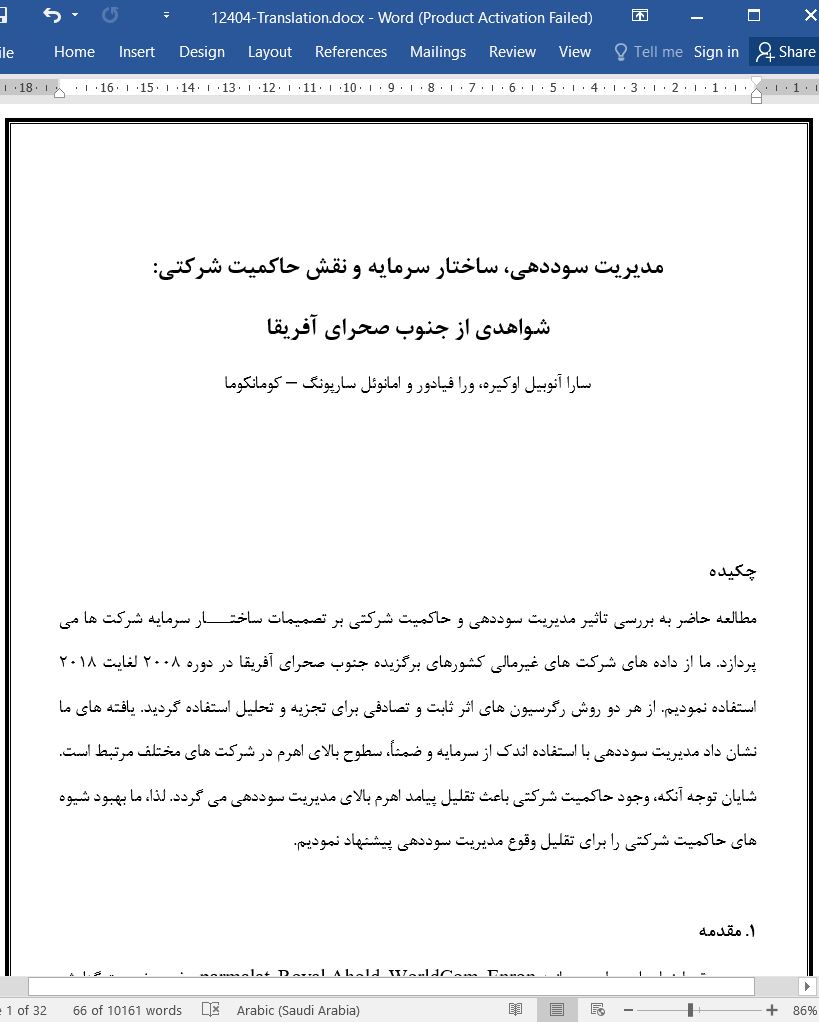
مدیریت سوددهی، ساختار سرمایه و نقش حاکمیت شرکتی: شواهدی از جنوب صحرای آفریقا
عنوان انگلیسی
Earnings management, capital structure, and the role of corporate governance: Evidence from sub-Saharan Africa
صفحات مقاله فارسی
32
صفحات مقاله انگلیسی
14
سال انتشار
2021
رفرنس
دارای رفرنس در داخل متن و انتهای مقاله
نشریه
وایلی - Wiley
فرمت مقاله انگلیسی
pdf و ورد تایپ شده با قابلیت ویرایش
فرمت ترجمه مقاله
pdf و ورد تایپ شده با قابلیت ویرایش
فونت ترجمه مقاله
بی نازنین
سایز ترجمه مقاله
14
نوع مقاله
ISI
نوع نگارش
مقالات پژوهشی (تحقیقاتی)
نوع ارائه مقاله
ژورنال
پایگاه
اسکوپوس
ایمپکت فاکتور(IF) مجله
0.945 در سال 2020
شاخص H_index مجله
51 در سال 2021
شاخص SJR مجله
0.288 در سال 2020
شناسه ISSN مجله
1099-1468
شاخص Q یا Quartile (چارک)
Q3 در سال 2020
کد محصول
12404
وضعیت ترجمه عناوین تصاویر و جداول
ترجمه شده است ✓
وضعیت ترجمه متون داخل تصاویر و جداول
ترجمه شده است ✓
وضعیت ترجمه منابع داخل متن
ترجمه شده است ✓
وضعیت فرمولها و محاسبات در فایل ترجمه
تایپ شده است ✓
ضمیمه
دارد و ترجمه شده است ✓
بیس
نیست ☓
مدل مفهومی
ندارد ☓
پرسشنامه
ندارد ☓
متغیر
ندارد ☓
فرضیه
ندارد ☓
رفرنس در ترجمه
در داخل متن و انتهای مقاله درج شده است
رشته و گرایش های مرتبط با این مقاله
اقتصاد، حسابداری، مدیریت، حسابداری مالی، اقتصاد مالی، مدیریت مالی، مدیریت کسب و کار
مجله
اقتصاد مدیریت و تصمیم گیری - Managerial and Decision Economics
دانشگاه
دانشکده بازرگانی دانشگاه غنا، آکرا، غنا
doi یا شناسه دیجیتال
https://doi.org/10.1002/mde.3324
۰.۰
(هنوز امتیازی ثبت نشده است)