.svg)
.svg)

.svg)


ترجمه مقاله اثر تنش خشکی بر تنظیمات متابولیتی در آویشن مقاوم و حساس به خشکی - نشریه الزویر

عنوان فارسی
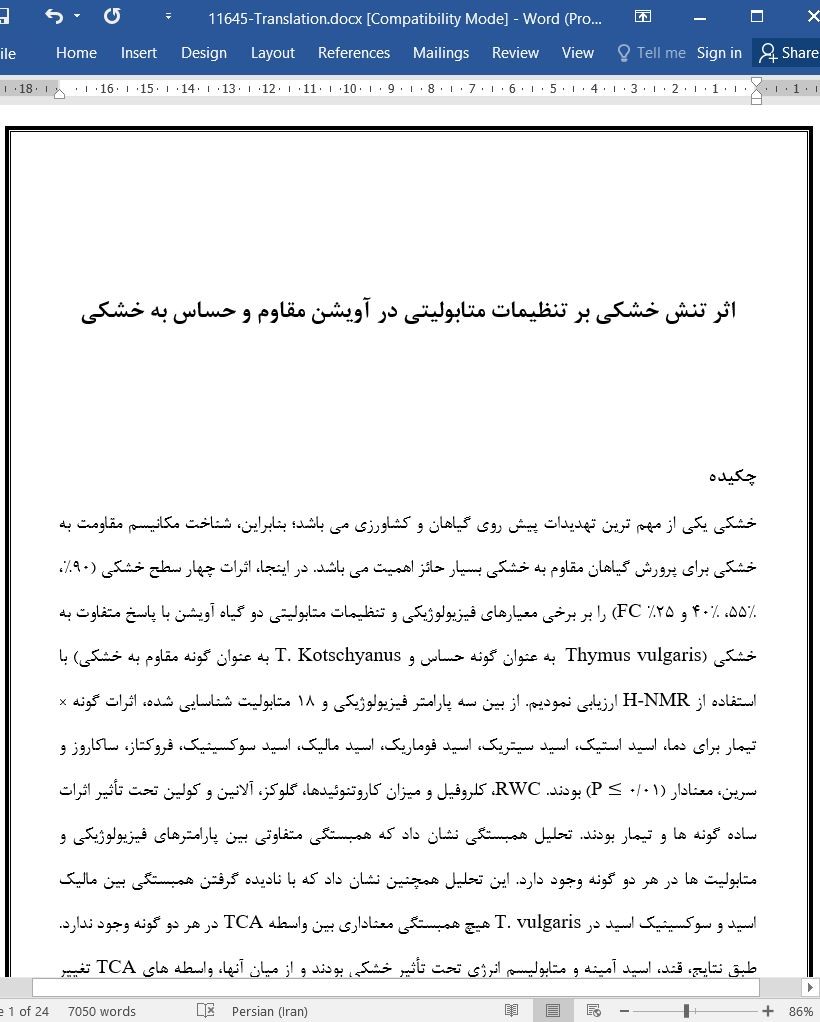
اثر تنش خشکی بر تنظیمات متابولیتی در آویشن مقاوم و حساس به خشکی
عنوان انگلیسی
Effect of drought stress on metabolite adjustments in drought tolerant and sensitive thyme
صفحات مقاله فارسی
24
صفحات مقاله انگلیسی
9
سال انتشار
2018
رفرنس
دارای رفرنس در داخل متن و انتهای مقاله
نشریه
الزویر - Elsevier
فرمت مقاله انگلیسی
pdf و ورد تایپ شده با قابلیت ویرایش
فرمت ترجمه مقاله
pdf و ورد تایپ شده با قابلیت ویرایش
فونت ترجمه مقاله
بی نازنین
سایز ترجمه مقاله
14
نوع مقاله
ISI
نوع نگارش
مقالات پژوهشی (تحقیقاتی)
نوع ارائه مقاله
ژورنال
پایگاه
اسکوپوس
ایمپکت فاکتور(IF) مجله
4.143 در سال 2020
شاخص H_index مجله
124 در سال 2021
شاخص SJR مجله
1.170 در سال 2020
شناسه ISSN مجله
0981-9428
شاخص Q یا Quartile (چارک)
Q1 در سال 2020
کد محصول
11645
وضعیت ترجمه عناوین تصاویر و جداول
ترجمه شده است ✓
وضعیت ترجمه متون داخل تصاویر و جداول
ترجمه شده است ✓
وضعیت ترجمه منابع داخل متن
ترجمه شده است ✓
وضعیت فرمولها و محاسبات در فایل ترجمه
به صورت عکس، درج شده است ✓
ضمیمه
ندارد ☓
بیس
نیست ☓
مدل مفهومی
ندارد ☓
پرسشنامه
ندارد ☓
متغیر
ندارد ☓
فرضیه
ندارد ☓
رفرنس در ترجمه
در انتهای مقاله درج شده است
رشته و گرایش های مرتبط با این مقاله
کشاورزی، زیست شناسی، علوم گیاهی، علوم باغبانی، سیاست و توسعه کشاورزی و اکولوژی گیاهان زراعتی
مجله
فیزیولوژی و بیوشیمی گیاهی - Plant Physiology and Biochemistry
دانشگاه
گروه زراعت و اصلاح نباتات، دانشکده کشاورزی، دانشگاه زنجان، ایران
کلمات کلیدی
آویشن، گیاه دارویی، تنش آبی، متابولیت مسئول خشکی، متابولومیکس NMR
کلمات کلیدی انگلیسی
Thyme - Medicinal plant - Water stress - Drought responsible metabolite - NMR metabolomics
doi یا شناسه دیجیتال
https://doi.org/10.1016/j.plaphy.2018.09.009
۰.۰
(هنوز امتیازی ثبت نشده است)