.svg)
.svg)

.svg)


ترجمه مقاله ارزیابی عملکرد لرزه ای ساختمان های دیاگرید (شبکه مورب) فولادی - نشریه اشپرینگر

عنوان فارسی
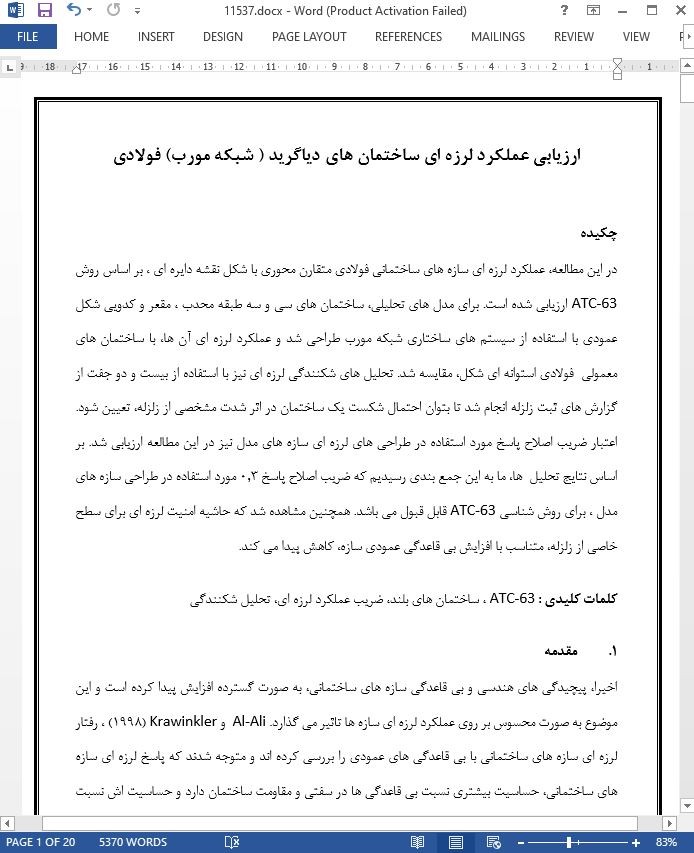
ارزیابی عملکرد لرزه ای ساختمان های دیاگرید (شبکه مورب) فولادی
عنوان انگلیسی
Seismic Performance Evaluation of Steel Diagrid Buildings
صفحات مقاله فارسی
20
صفحات مقاله انگلیسی
13
سال انتشار
2018
رفرنس
دارای رفرنس در داخل متن و انتهای مقاله
نشریه
اشپرینگر - Springer
فرمت مقاله انگلیسی
pdf و ورد تایپ شده با قابلیت ویرایش
فرمت ترجمه مقاله
pdf و ورد تایپ شده با قابلیت ویرایش
فونت ترجمه مقاله
بی نازنین
سایز ترجمه مقاله
14
نوع مقاله
ISI
نوع نگارش
مقالات پژوهشی (تحقیقاتی)
نوع ارائه مقاله
ژورنال
پایگاه
اسکوپوس
ایمپکت فاکتور(IF) مجله
1.035 در سال 2019
شاخص H_index مجله
20 در سال 2020
شاخص SJR مجله
0.382 در سال 2019
شناسه ISSN مجله
1598-2351
شاخص Q یا Quartile (چارک)
Q2 در سال 2019
کد محصول
11537
وضعیت ترجمه عناوین تصاویر و جداول
ترجمه شده است ✓
وضعیت ترجمه متون داخل تصاویر و جداول
ترجمه شده است ✓
وضعیت ترجمه منابع داخل متن
به صورت انگلیسی درج شده است ✓
وضعیت فرمولها و محاسبات در فایل ترجمه
به صورت عکس، درج شده است
ضمیمه
ندارد ☓
بیس
نیست ☓
مدل مفهومی
ندارد ☓
پرسشنامه
ندارد ☓
متغیر
ندارد ☓
رفرنس در ترجمه
در انتهای مقاله درج شده است
رشته های مرتبط با این مقاله
مهندسی عمران
گرایش های مرتبط با این مقاله
زلزله، مدیریت ساخت و سازه
مجله
مجله بین المللی سازه های فلزی - International Journal of Steel Structures
دانشگاه
گروه مهندسی عمران و معماری، دانشگاه Sungkyunkwan ، کره
کلمات کلیدی
ATC-63 ، ساختمان های بلند، ضریب عملکرد لرزه ای، تحلیل شکنندگی
کلمات کلیدی انگلیسی
ATC-63 - Tall buildings - Seismic performance factors - Fragility analysis
doi یا شناسه دیجیتال
https://doi.org/10.1007/s13296-018-0044-8
۰.۰
(هنوز امتیازی ثبت نشده است)