.svg)
.svg)

.svg)


ترجمه مقاله کاربرد انفورماتیک در متن کاوی شبکه مالی بر اساس رایانش عاطفی - نشریه الزویر

عنوان فارسی
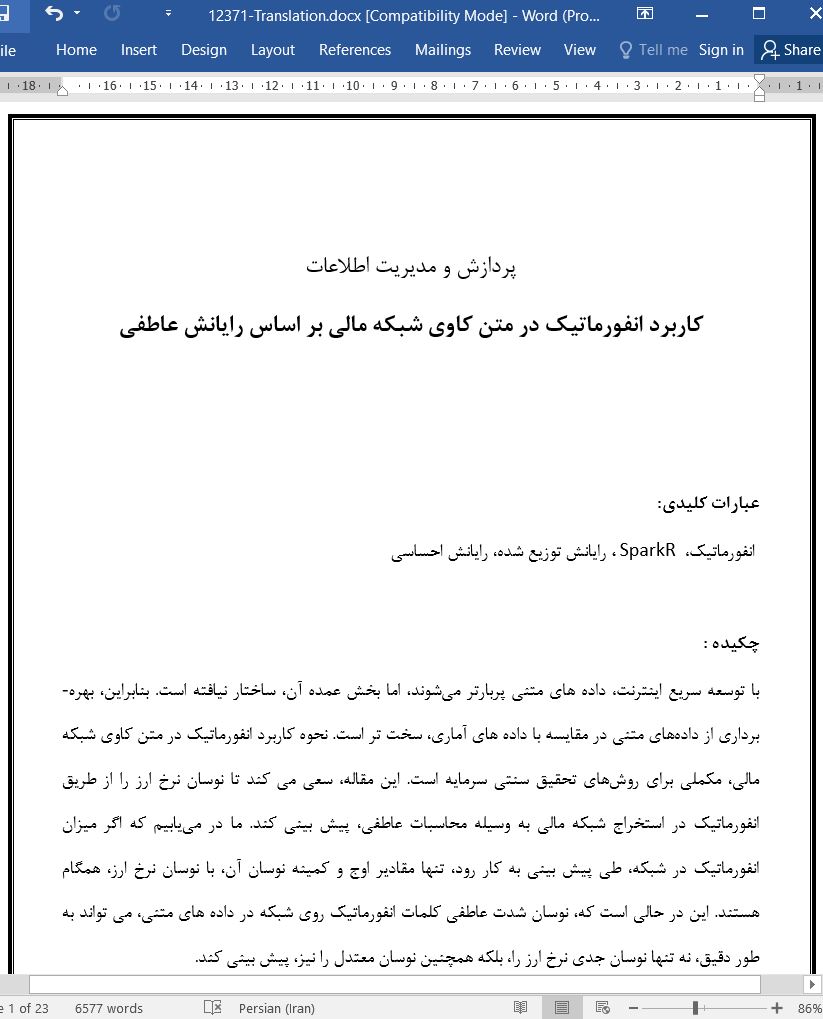
کاربرد انفورماتیک در متن کاوی شبکه مالی بر اساس رایانش عاطفی
عنوان انگلیسی
Application of Informetrics on Financial Network Text Mining Based on Affective Computing
صفحات مقاله فارسی
23
صفحات مقاله انگلیسی
10
سال انتشار
2022
رفرنس
دارای رفرنس در داخل متن و انتهای مقاله
نشریه
الزویر - Elsevier
فرمت مقاله انگلیسی
pdf و ورد تایپ شده با قابلیت ویرایش
فرمت ترجمه مقاله
pdf و ورد تایپ شده با قابلیت ویرایش
فونت ترجمه مقاله
بی نازنین
سایز ترجمه مقاله
14
نوع مقاله
ISI
نوع نگارش
مقالات پژوهشی (تحقیقاتی)
نوع ارائه مقاله
ژورنال
پایگاه
اسکوپوس
ایمپکت فاکتور(IF) مجله
8.009 در سال 2020
شاخص H_index مجله
101 در سال 2021
شاخص SJR مجله
1.061 در سال 2020
شناسه ISSN مجله
0306-4573
شاخص Q یا Quartile (چارک)
Q1 در سال 2020
کد محصول
12371
وضعیت ترجمه عناوین تصاویر و جداول
ترجمه شده است ✓
وضعیت ترجمه متون داخل تصاویر و جداول
ترجمه شده است ✓
وضعیت ترجمه منابع داخل متن
ترجمه شده است ✓
وضعیت فرمولها و محاسبات در فایل ترجمه
تایپ شده است ✓
ضمیمه
ندارد ☓
بیس
نیست ☓
مدل مفهومی
ندارد ☓
پرسشنامه
ندارد ☓
متغیر
ندارد ☓
فرضیه
ندارد ☓
رفرنس در ترجمه
در انتهای مقاله درج شده است
رشته و گرایش های مرتبط با این مقاله
اقتصاد، اقتصاد مالی، اقتصاد پولی، برنامه ریزی سیستم های اقتصادی
مجله
پردازش و مدیریت اطلاعات - Information Processing and Management
دانشگاه
دانشکده اقتصاد و مدیریت، دانشگاه علم و صنعت جیانگ سو، چین
کلمات کلیدی
انفورماتیک، SparkR، رایانش توزیع شده، رایانش احساسی
کلمات کلیدی انگلیسی
informetrics - SparkR - Distributed computing - affective computing
doi یا شناسه دیجیتال
https://doi.org/10.1016/j.ipm.2021.102822
۰.۰
(هنوز امتیازی ثبت نشده است)