.svg)
.svg)

.svg)


ترجمه مقاله ارزیابی بهره وری محیط کار در چارچوب اداری: بررسی نظاممند و نگرش های صنعتی کنونی - نشریه امرالد

عنوان فارسی
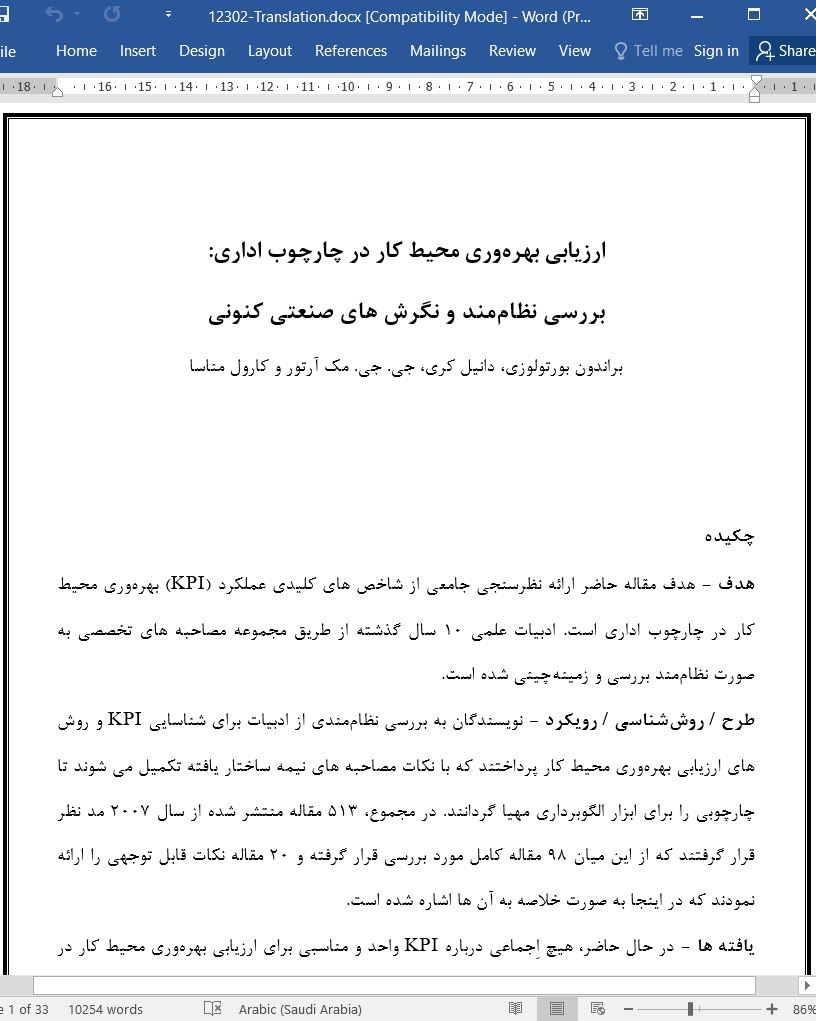
ارزیابی بهره وری محیط کار در چارچوب اداری: بررسی نظاممند و نگرش های صنعتی کنونی
عنوان انگلیسی
Measurements of workplace productivity in the office context: A systematic review and current industry insights
صفحات مقاله فارسی
33
صفحات مقاله انگلیسی
22
سال انتشار
2018
رفرنس
دارای رفرنس در داخل متن و انتهای مقاله
نشریه
امرالد - Emerald
فرمت مقاله انگلیسی
pdf و ورد تایپ شده با قابلیت ویرایش
فرمت ترجمه مقاله
pdf و ورد تایپ شده با قابلیت ویرایش
فونت ترجمه مقاله
بی نازنین
سایز ترجمه مقاله
14
نوع مقاله
ISI
نوع نگارش
مرور ادبیات (Literature Review)
نوع ارائه مقاله
ژورنال
پایگاه
اسکوپوس
ایمپکت فاکتور(IF) مجله
1.628 در سال 2020
شاخص H_index مجله
26 در سال 2021
شاخص SJR مجله
0.501 در سال 2020
شناسه ISSN مجله
1463-001X
شاخص Q یا Quartile (چارک)
Q2 در سال 2020
کد محصول
12302
وضعیت ترجمه عناوین تصاویر و جداول
ترجمه شده است ✓
وضعیت ترجمه متون داخل تصاویر و جداول
ترجمه شده است ✓
وضعیت ترجمه منابع داخل متن
ترجمه شده است ✓
وضعیت فرمولها و محاسبات در فایل ترجمه
ندارد ☓
ضمیمه
ندارد ☓
بیس
است ✓
مدل مفهومی
ندارد ☓
پرسشنامه
ندارد ☓
متغیر
دارد ✓
فرضیه
ندارد ☓
رفرنس در ترجمه
در داخل متن و انتهای مقاله درج شده است
رشته و گرایش های مرتبط با این مقاله
مدیریت، مدیریت کسب و کار، مدیریت استراتژیک و مدیریت منابع انسانی
دانشگاه
گروه مهندسی عمران و محیط زیست، دانشگاه میشیگان، میشیگان، ایالات متحده آمریکا
کلمات کلیدی
محیط اداری دانش ورزان، شاخص کلیدی عملکرد، کارکنان اداری، الگوبرداری بهره وری، بهره وری محیط کار
کلمات کلیدی انگلیسی
Office environment - Knowledge worker - Key performance indicator - Office worker - Productivity benchmarking - Workplace productivity
doi یا شناسه دیجیتال
https://doi.org/10.1108/JCRE-10-2017-0033
۰.۰
(هنوز امتیازی ثبت نشده است)