.svg)
.svg)

.svg)


ترجمه مقاله ابعاد رضایت شغلی کارکنان که نیت توصیه کارکنان را تبیین می کند - نشریه الزویر

عنوان فارسی
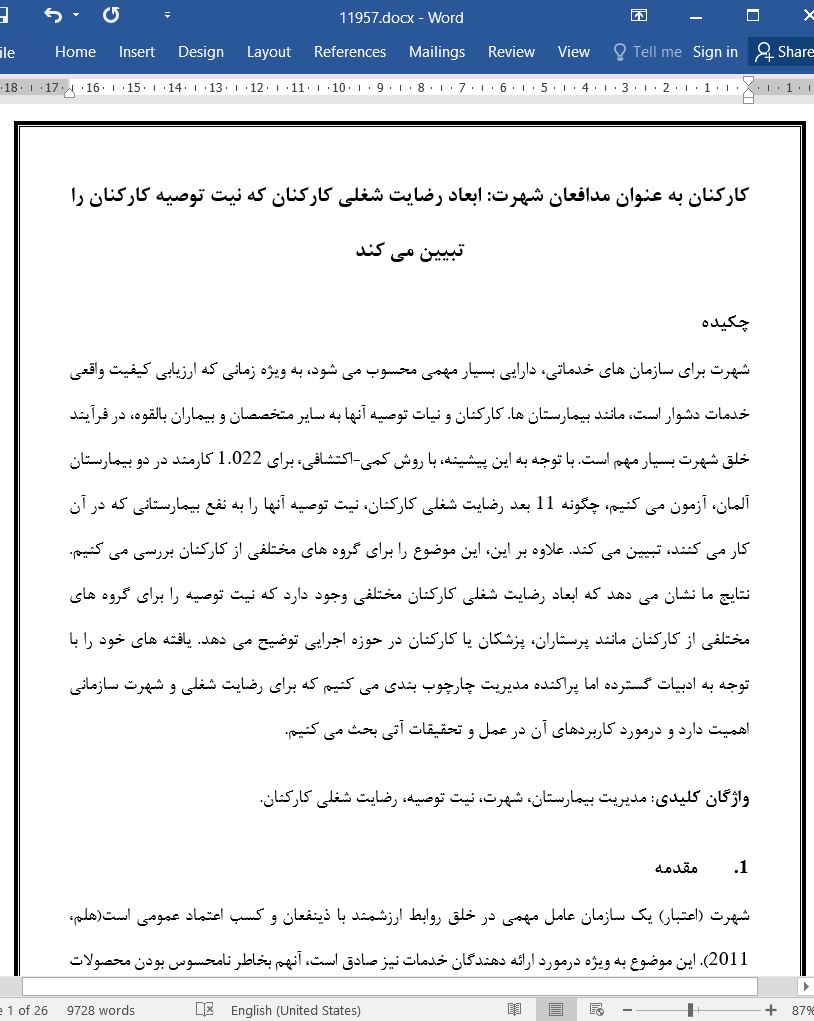
کارکنان به عنوان مدافعان شهرت: ابعاد رضایت شغلی کارکنان که نیت توصیه کارکنان را تبیین می کند
عنوان انگلیسی
Employees as reputation advocates: Dimensions of employee job satisfaction explaining employees’ recommendation intention
صفحات مقاله فارسی
26
صفحات مقاله انگلیسی
9
سال انتشار
2021
رفرنس
دارای رفرنس در داخل متن و انتهای مقاله
نشریه
الزویر - Elsevier
فرمت مقاله انگلیسی
pdf و ورد تایپ شده با قابلیت ویرایش
فرمت ترجمه مقاله
pdf و ورد تایپ شده با قابلیت ویرایش
فونت ترجمه مقاله
بی نازنین
سایز ترجمه مقاله
14
نوع مقاله
ISI
نوع نگارش
مقالات پژوهشی (تحقیقاتی)
نوع ارائه مقاله
ژورنال
پایگاه
اسکوپوس
ایمپکت فاکتور(IF) مجله
7.382 در سال 2020
شاخص H_index مجله
195 در سال 2021
شاخص SJR مجله
2.049 در سال 2020
شناسه ISSN مجله
0148-2963
شاخص Q یا Quartile (چارک)
Q1 در سال 2020
کد محصول
11957
وضعیت ترجمه عناوین تصاویر و جداول
ترجمه شده است ✓
وضعیت ترجمه متون داخل تصاویر و جداول
ترجمه شده است ✓
وضعیت ترجمه منابع داخل متن
ترجمه شده است ✓
وضعیت فرمولها و محاسبات در فایل ترجمه
به صورت عکس، درج شده است ✓
ضمیمه
ندارد ☓
بیس
است ✓
مدل مفهومی
ندارد ☓
پرسشنامه
ندارد ☓
متغیر
دارد ✓
فرضیه
ندارد ☓
رفرنس در ترجمه
در انتهای مقاله درج شده است
رشته و گرایش های مرتبط با این مقاله
مدیریت، مدیریت کسب و کار، مدیریت منابع انسانی
مجله
مجله پژوهش کسب و کار - Journal of Business Research
دانشگاه
دانشگاه علوم و هنرهای کاربردی کوبورگ، کوبورگ، آلمان
کلمات کلیدی
مدیریت بیمارستان، شهرت، نیت توصیه، رضایت شغلی کارکنان
کلمات کلیدی انگلیسی
Hospital management - Reputation - Recommendation intention - Employee job satisfaction
doi یا شناسه دیجیتال
https://doi.org/10.1016/j.jbusres.2021.05.021
۰.۰
(هنوز امتیازی ثبت نشده است)