.svg)
.svg)

.svg)


ترجمه مقاله پیش بینی تعداد مسافران سیستم حمل و نقل عمومی: سیستم های مدیریت اطلاعات - نشریه الزویر

عنوان فارسی
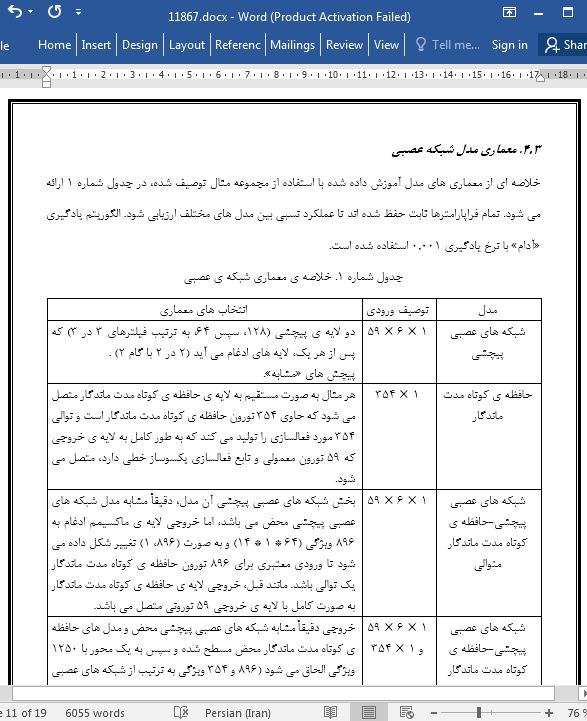
پیش بینی تعداد مسافران سیستم حمل و نقل عمومی: سیستم های مدیریت اطلاعات با استفاده از معماری های شبکه های عصبی پیچشی و شبکه های عصبی حافظه کوتاه مدت ماندگار
عنوان انگلیسی
Forecasting Public Transport Ridership: Management of Information Systems using CNN and LSTM Architectures
صفحات مقاله فارسی
18
صفحات مقاله انگلیسی
8
سال انتشار
2021
رفرنس
دارای رفرنس در داخل متن و انتهای مقاله
نشریه
الزویر - Elsevier
فرمت مقاله انگلیسی
PDF
فرمت ترجمه مقاله
pdf و ورد تایپ شده با قابلیت ویرایش
فونت ترجمه مقاله
بی نازنین
سایز ترجمه مقاله
14
نوع مقاله
ISI
نوع نگارش
مقالات پژوهشی (تحقیقاتی)
نوع ارائه مقاله
ژورنال
ایمپکت فاکتور(IF) مجله
2.094 در سال 2020
شاخص H_index مجله
76 در سال 2021
شاخص SJR مجله
0.334 در سال 2020
شناسه ISSN مجله
1877-0509
کد محصول
11867
وضعیت ترجمه عناوین تصاویر و جداول
ترجمه شده است ✓
وضعیت ترجمه متون داخل تصاویر و جداول
ترجمه شده است ✓
وضعیت ترجمه منابع داخل متن
به صورت عدد درج شده است ✓
وضعیت فرمولها و محاسبات در فایل ترجمه
تایپ شده است ✓
ضمیمه
ندارد ☓
بیس
نیست ☓
مدل مفهومی
ندارد ☓
پرسشنامه
ندارد ☓
متغیر
ندارد ☓
رفرنس در ترجمه
در انتهای مقاله درج شده است
رشته و گرایش های مرتبط با این مقاله
مهندسی کامپیوتر و فناوری اطلاعات، مهندسی نرم افزار، مهندسی الگوریتم ها و محاسبات، اینترنت و شبکه های گسترده، شبکه های کامپیوتری، مدیریت سیستم های اطلاعات
مجله
علوم کامپیوتر پروسدیا - Procedia Computer Science
دانشگاه
دانشگاه آمستردام، دانشکده بازرگانی آمستردام، هلند
کلمات کلیدی
پیش بینی تعداد مسافران، سیستم حمل و نقل عمومی، یادگیری ماشین، شبکه های عصبی پیچشی، شبکه های عصبی حافظه کوتاه مدت ماندگار، شبکه های عصبی
کلمات کلیدی انگلیسی
Ridership Forecasting - Public Transportation - Machine Learning - CNN - LSTM - Neural Nets
doi یا شناسه دیجیتال
https://doi.org/10.1016/j.procs.2021.03.037
۰.۰
(هنوز امتیازی ثبت نشده است)