.svg)
.svg)

.svg)


ترجمه مقاله مبارزه با اجتناب از پرداخت مالیات شرکت ها - نشریه امرالد

عنوان فارسی
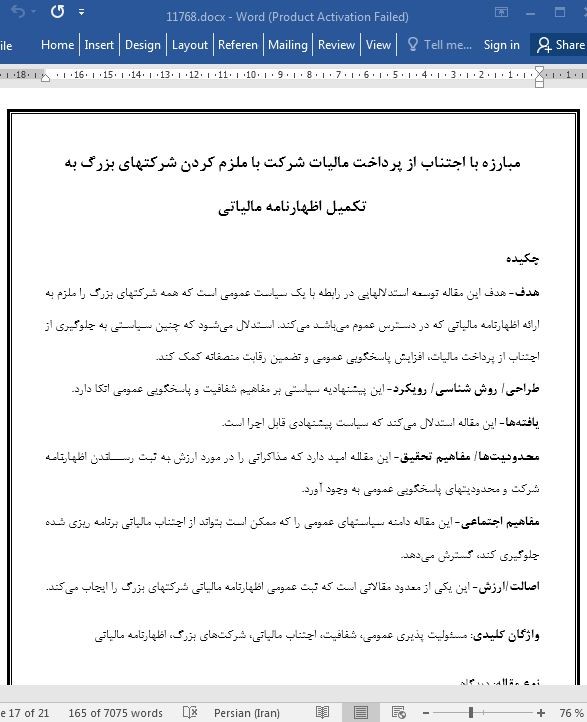
مبارزه با اجتناب از پرداخت مالیات شرکت ها با الزام شرکت های بزرگ برای ارائه اظهارنامه مالیاتی
عنوان انگلیسی
Combating corporate tax avoidance by requiring large companies to file their tax returns
صفحات مقاله فارسی
21
صفحات مقاله انگلیسی
13
سال انتشار
2018
رفرنس
دارای رفرنس در داخل متن و انتهای مقاله
نشریه
امرالد - Emerald
فرمت مقاله انگلیسی
pdf و ورد تایپ شده با قابلیت ویرایش
فرمت ترجمه مقاله
pdf و ورد تایپ شده با قابلیت ویرایش
فونت ترجمه مقاله
بی نازنین
سایز ترجمه مقاله
14
نوع مقاله
ISI
نوع نگارش
Viewpoint
نوع ارائه مقاله
ژورنال
شناسه ISSN مجله
2514-4774
کد محصول
11768
وضعیت ترجمه منابع داخل متن
به صورت انگلیسی درج شده است ✓
وضعیت فرمولها و محاسبات در فایل ترجمه
ندارد ☓
ضمیمه
ندارد ☓
بیس
نیست ☓
مدل مفهومی
ندارد ☓
پرسشنامه
ندارد ☓
متغیر
ندارد ☓
فرضیه
ندارد ☓
رفرنس در ترجمه
در داخل متن و انتهای مقاله درج شده است
رشته و گرایش های مرتبط با این مقاله
مدیریت و حسابداری و حسابرسی، حسابداری مالیاتیٰ مدیریت کسب و کار، مدیریت مالی
کلمات کلیدی
مسئولیت پذیری عمومی، شفافیت، اجتناب مالیاتی، شرکتهای بزرگ، اظهارنامه مالیاتی
کلمات کلیدی انگلیسی
Public accountability - Transparency - Tax avoidance - Large companies - Tax returns
doi یا شناسه دیجیتال
https://doi.org/10.1108/JCMS-01-2018-0005
۰.۰
(هنوز امتیازی ثبت نشده است)