.svg)
.svg)

.svg)


ترجمه مقاله تکنیک های بهینه سازی برای برنامه ریزی تجهیزات پاسخ دهی اورژانس - نشریه اشپرینگر

عنوان فارسی
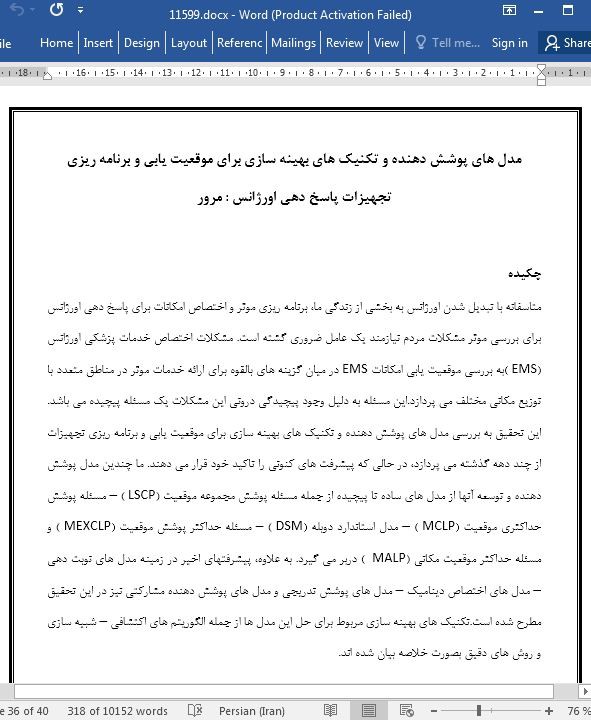
مرور مدل های پوشش دهنده و تکنیک های بهینه سازی برای مکان یابی و برنامه ریزی تجهیزات پاسخ دهی اورژانس
عنوان انگلیسی
Covering models and optimization techniques for emergency response facility location and planning: a review
صفحات مقاله فارسی
40
صفحات مقاله انگلیسی
30
سال انتشار
2011
رفرنس
دارای رفرنس در داخل متن و انتهای مقاله
نشریه
اشپرینگر - Springer
فرمت مقاله انگلیسی
PDF
فرمت ترجمه مقاله
pdf و ورد تایپ شده با قابلیت ویرایش
فونت ترجمه مقاله
بی نازنین
سایز ترجمه مقاله
14
نوع مقاله
ISI
نوع نگارش
مقالات پژوهشی (تحقیقاتی)
نوع ارائه مقاله
ژورنال
پایگاه
اسکوپوس
ایمپکت فاکتور(IF) مجله
1.465 در سال 2020
شاخص H_index مجله
48 در سال 2021
شاخص SJR مجله
0.524 در سال 2020
شناسه ISSN مجله
1432-2994
شاخص Q یا Quartile (چارک)
Q2 در سال 2020
کد محصول
11599
وضعیت ترجمه عناوین تصاویر و جداول
ترجمه شده است ✓
وضعیت ترجمه متون داخل تصاویر و جداول
ترجمه شده است ✓
وضعیت ترجمه منابع داخل متن
ترجمه شده است ✓
وضعیت فرمولها و محاسبات در فایل ترجمه
به صورت عکس، درج شده است ✓
ضمیمه
ندارد ☓
بیس
است ✓
مدل مفهومی
ندارد ☓
پرسشنامه
ندارد ☓
متغیر
دارد ✓
رفرنس در ترجمه
در انتهای مقاله درج شده است
رشته های مرتبط با این مقاله
مهندسی فناوری اطلاعات و فناوری اطلاعات و ارتباطات
گرایش های مرتبط با این مقاله
سامانه های شبکه ای، اینترنت و شبکه های گسترده، کاربردهای ICT
دانشگاه
گروه مهندسی صنایع و اطلاعات، دانشگاه تنسی، ایالات متحده آمریکا
کلمات کلیدی
موقعیت امکانات اورژانس، مدلسازی و بهینه سازی، مدلسازی ریاضی، مدل پوشش دهنده، الگوریتم ژنتیک، جستجوی تابو، شبیه سازی
کلمات کلیدی انگلیسی
Emergency facility location - Modeling and optimization - Mathematical modeling - Covering model - Genetic algorithm - Tabu search - Simulation
doi یا شناسه دیجیتال
https://doi.org/10.1007/s00186-011-0363-4
۰.۰
(هنوز امتیازی ثبت نشده است)