.svg)
.svg)

.svg)


ترجمه مقاله زبان شناسی اجتماعی و برنامه نویسی - نشریه IEEE

عنوان فارسی
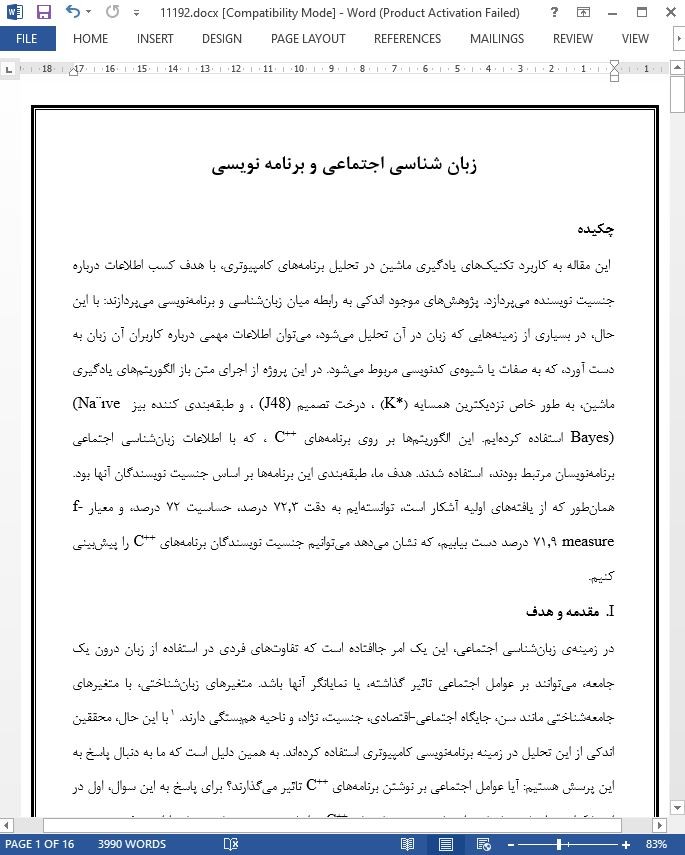
زبان شناسی اجتماعی و برنامه نویسی
عنوان انگلیسی
Sociolinguistics and Programming
صفحات مقاله فارسی
16
صفحات مقاله انگلیسی
6
سال انتشار
2015
نشریه
آی تریپل ای - IEEE
فرمت مقاله انگلیسی
pdf و ورد تایپ شده با قابلیت ویرایش
فرمت ترجمه مقاله
pdf و ورد تایپ شده با قابلیت ویرایش
فونت ترجمه مقاله
بی نازنین
سایز ترجمه مقاله
14
نوع مقاله
ISI
نوع ارائه مقاله
کنفرانس
رفرنس
دارای رفرنس در داخل متن و انتهای مقاله
شناسه ISSN مجله
2154-5952
کد محصول
11192
وضعیت ترجمه عناوین تصاویر و جداول
ترجمه شده است ✓
وضعیت ترجمه متون داخل تصاویر و جداول
ترجمه شده است ✓
وضعیت ترجمه منابع داخل متن
به صورت عدد درج شده است ✓
وضعیت فرمولها و محاسبات در فایل ترجمه
به صورت عکس، درج شده است
ضمیمه
ندارد ☓
بیس
نیست ☓
مدل مفهومی
ندارد ☓
پرسشنامه
ندارد ☓
متغیر
ندارد ☓
رفرنس در ترجمه
در انتهای مقاله درج شده است
doi یا شناسه دیجیتال
https://doi.org/10.1109/PACRIM.2015.7334812
دانشگاه
گروه ریاضی و علوم کامپیوتر، دانشگاه لتبریج، آلبرتا، کانادا
رشته و گرایش های مرتبط با این مقاله
مهندسی کامپیوتر، مهندسی نرم افزار، برنامه نویسی کامپیوتر
کنفرانس
کنفرانس حاشیه اقیانوس آرام در ارتباطات، رایانه ها و پردازش سیگنال - Pacific Rim Conference on Communications
۰.۰
(هنوز امتیازی ثبت نشده است)