.svg)
.svg)

.svg)


ترجمه مقاله نقش آگاهی از امنیت اطلاعات کارمندان در تمایل به مقاومت در برابر مهندسی اجتماعی - نشریه الزویر

عنوان فارسی
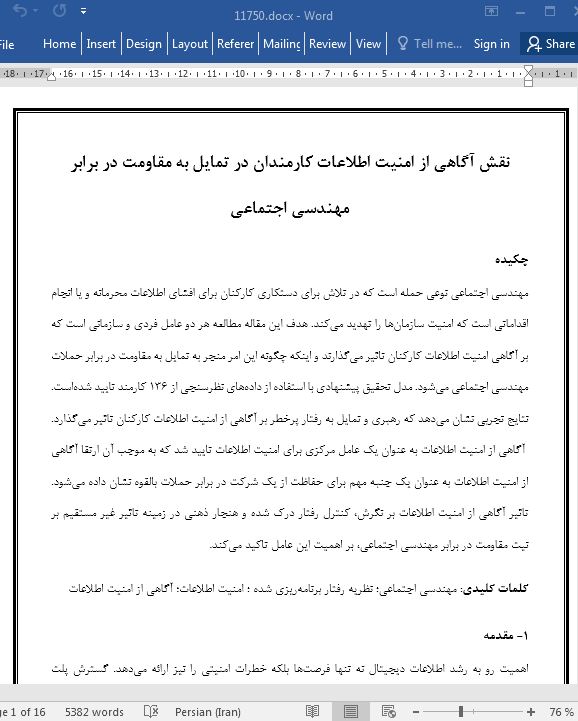
نقش آگاهی از امنیت اطلاعات کارمندان در تمایل به مقاومت در برابر مهندسی اجتماعی
عنوان انگلیسی
The Role of Employees’ Information Security Awareness on the Intention to Resist Social Engineering
صفحات مقاله فارسی
16
صفحات مقاله انگلیسی
8
سال انتشار
2021
رفرنس
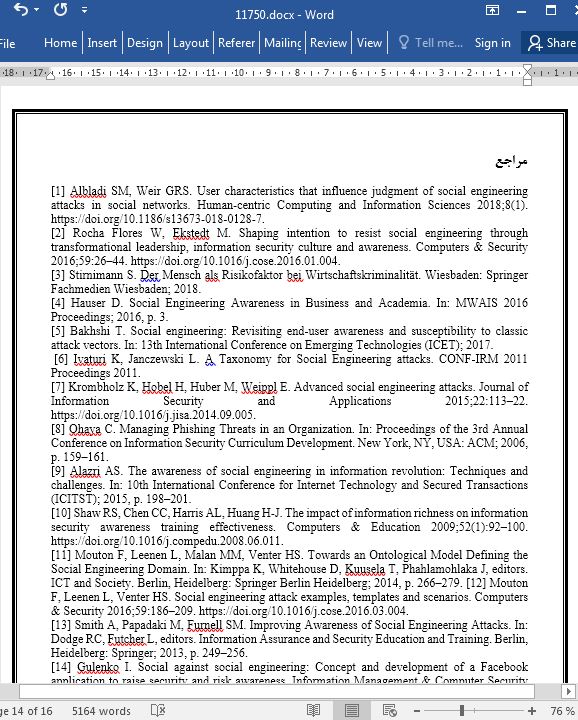
دارای رفرنس در داخل متن و انتهای مقاله
نشریه
الزویر - Elsevier
فرمت مقاله انگلیسی
pdf و ورد تایپ شده با قابلیت ویرایش
فرمت ترجمه مقاله
pdf و ورد تایپ شده با قابلیت ویرایش
فونت ترجمه مقاله
بی نازنین
سایز ترجمه مقاله
14
نوع مقاله
ISI
نوع نگارش
مقالات پژوهشی (تحقیقاتی)
نوع ارائه مقاله
ژورنال
ایمپکت فاکتور(IF) مجله
1.636 در سال 2020
شاخص H_index مجله
59 در سال 2021
شاخص SJR مجله
0.342 در سال 2020
شناسه ISSN مجله
1877-0509
کد محصول
11750
وضعیت ترجمه عناوین تصاویر و جداول
ترجمه شده است ✓
وضعیت ترجمه متون داخل تصاویر و جداول
ترجمه شده است ✓
وضعیت ترجمه منابع داخل متن
به صورت عدد درج شده است ✓
ضمیمه
ندارد ☓
بیس
است ✓
مدل مفهومی
ندارد ☓
پرسشنامه
ندارد ☓
متغیر
ندارد ☓
رفرنس در ترجمه
در داخل متن و انتهای مقاله درج شده است
رشته و گرایش های مرتبط با این مقاله
مدیریت و مهندسی کامپیوتر، سیستم های اطلاعاتی پیشرفته، امنیت اطلاعات
مجله
پروسدیا علوم کامپیوتر - Procedia Computer Science
دانشگاه
دانشگاه علوم کاربردی اوبراسترایش، اتریش
کلمات کلیدی
مهندسی اجتماعی، نظریه رفتار برنامهریزی شده، امنیت اطلاعات، آگاهی از امنیت اطلاعات
کلمات کلیدی انگلیسی
social engineering - theory of planned behavior - information security - information security awareness
doi یا شناسه دیجیتال
https://doi.org/10.1016/j.procs.2021.01.103
۰.۰
(هنوز امتیازی ثبت نشده است)