.svg)
.svg)

.svg)


ترجمه مقاله شرح علم انتخاب غذا برای سیستم های غذایی با تغییر سریع در کشورهای با درآمد پائین و متوسط - نشریه الزویر

عنوان فارسی
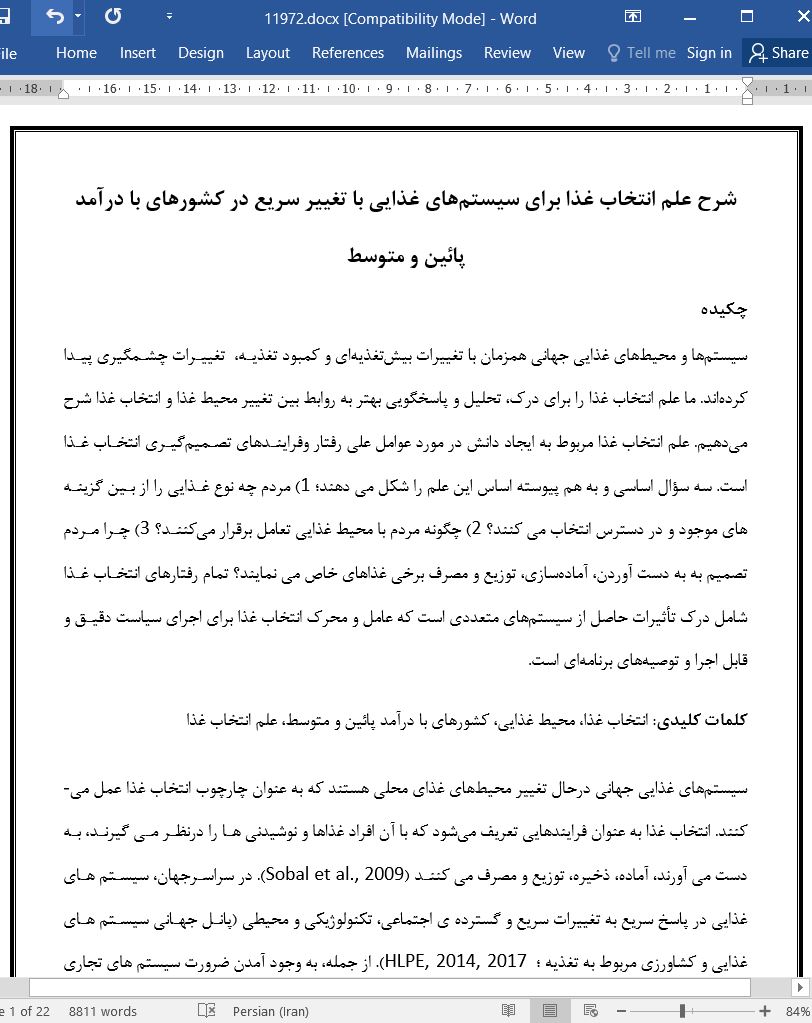
شرح علم انتخاب غذا برای سیستم های غذایی با تغییر سریع در کشورهای با درآمد پائین و متوسط
عنوان انگلیسی
Elaborating the science of food choice for rapidly changing food systems in low-and middle-income countries
صفحات مقاله فارسی
22
صفحات مقاله انگلیسی
7
سال انتشار
2021
رفرنس
دارای رفرنس در داخل متن و انتهای مقاله
نشریه
الزویر - Elsevier
فرمت مقاله انگلیسی
pdf و ورد تایپ شده با قابلیت ویرایش
فرمت ترجمه مقاله
pdf و ورد تایپ شده با قابلیت ویرایش
فونت ترجمه مقاله
بی نازنین
سایز ترجمه مقاله
14
نوع مقاله
ISI
نوع نگارش
مقالات پژوهشی (تحقیقاتی)
نوع ارائه مقاله
ژورنال
پایگاه
اسکوپوس
ایمپکت فاکتور(IF) مجله
7.667 در سال 2020
شاخص H_index مجله
46 در سال 2021
شاخص SJR مجله
2.350 در سال 2020
شناسه ISSN مجله
2211-9124
شاخص Q یا Quartile (چارک)
Q1 در سال 2020
کد محصول
11972
وضعیت ترجمه عناوین تصاویر و جداول
ترجمه شده است ✓
وضعیت ترجمه متون داخل تصاویر و جداول
ترجمه شده است ✓
وضعیت ترجمه منابع داخل متن
به صورت انگلیسی درج شده است ✓
وضعیت فرمولها و محاسبات در فایل ترجمه
ندارد ☓
ضمیمه
ندارد ☓
بیس
نیست ☓
مدل مفهومی
ندارد ☓
پرسشنامه
ندارد ☓
متغیر
ندارد ☓
فرضیه
ندارد ☓
رفرنس در ترجمه
در انتهای مقاله درج شده است
رشته و گرایش های مرتبط با این مقاله
صنایع غذایی، کشاورزی، اقتصاد کشاورزی، علوم مواد غذایی
مجله
امنیت غذایی جهانی - Global Food Security
دانشگاه
گروه ارتقاء سلامت، آموزش و رفتار، دانشکده بهداشت عمومی آرنولد، دانشگاه کارولینای جنوبی، ایالات متحده
کلمات کلیدی
انتخاب غذا، محیط غذایی، کشورهای با درآمد پائین و متوسط، علم انتخاب غذا
کلمات کلیدی انگلیسی
Food choice - Food environment - Food system - Low- and middle-income countries - Science of food choice
doi یا شناسه دیجیتال
https://doi.org/10.1016/j.gfs.2021.100503
۰.۰
(هنوز امتیازی ثبت نشده است)