.svg)
.svg)

.svg)


ترجمه مقاله عملکرد تحصیلی شناگران جوان، با شدت فعالیت بدنی و مسیر سوخت و ساز غالب همراه است

عنوان فارسی
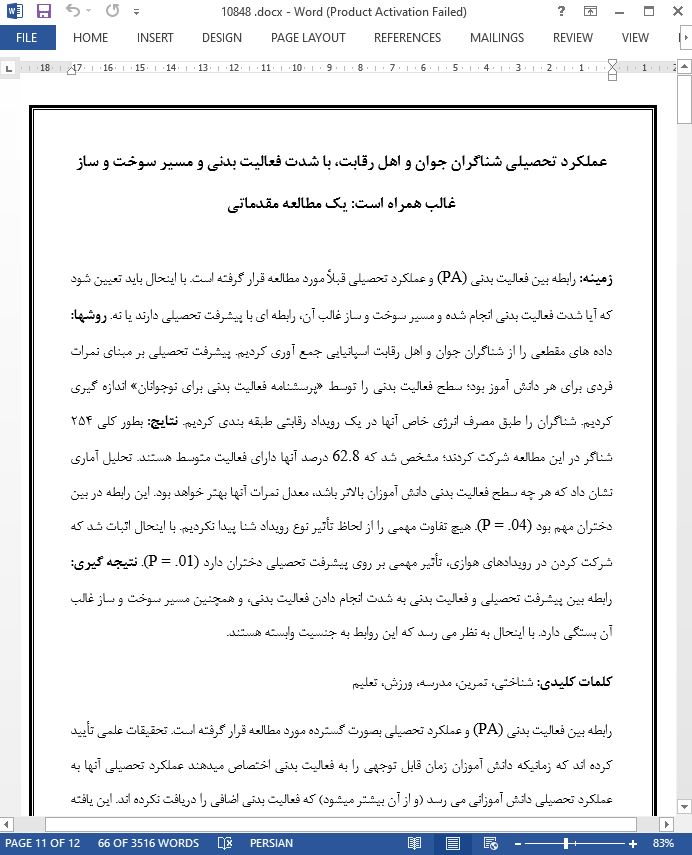
عملکرد تحصیلی شناگران جوان و اهل رقابت، با شدت فعالیت بدنی و مسیر سوخت و ساز غالب همراه است: یک مطالعه مقدماتی
عنوان انگلیسی
Academic Performance of Young Competitive Swimmers is Associated With Physical Activity Intensity and Its Predominant Metabolic Pathway: A Pilot Study
صفحات مقاله فارسی
12
صفحات مقاله انگلیسی
6
سال انتشار
2014
رفرنس
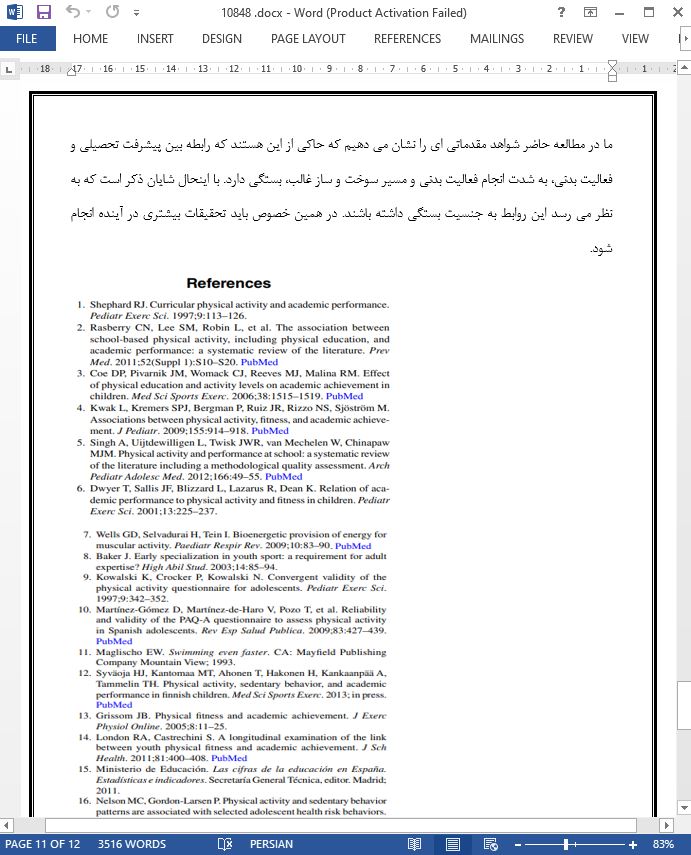
دارای رفرنس در داخل متن و انتهای مقاله
نشریه
Humankinetics
فرمت مقاله انگلیسی
pdf و ورد تایپ شده با قابلیت ویرایش
فرمت ترجمه مقاله
pdf و ورد تایپ شده با قابلیت ویرایش
فونت ترجمه مقاله
بی نازنین
سایز ترجمه مقاله
14
نوع مقاله
ISI
نوع نگارش
مقالات پژوهشی (تحقیقاتی)
نوع ارائه مقاله
ژورنال
پایگاه
اسکوپوس
ایمپکت فاکتور(IF) مجله
2.054 در سال 2019
شاخص H_index مجله
68 در سال 2020
شاخص SJR مجله
0.777 در سال 2019
شناسه ISSN مجله
1543-3080
شاخص Q یا Quartile (چارک)
Q2 در سال 2019
کد محصول
10848
وضعیت ترجمه عناوین تصاویر و جداول
ترجمه شده است ✓
وضعیت ترجمه متون داخل تصاویر و جداول
ترجمه شده است ✓
وضعیت ترجمه منابع داخل متن
درج نشده است ☓
ضمیمه
ندارد ☓
بیس
نیست ☓
مدل مفهومی
ندارد ☓
پرسشنامه
ندارد ☓
متغیر
ندارد ☓
رفرنس در ترجمه
در انتهای مقاله درج شده است
رشته و گرایش های مرتبط با این مقاله
تربیت بدنی، فیزیولوژی فعالیت بدنی و تندرستی، روانشناسی ورزشی
مجله
مجله فعالیت بدنی و سلامت - Journal of Physical Activity and Health
دانشگاه
گروه ورزش، دانشگاه ویگو، پونتوودرا، اسپانیا
کلمات کلیدی
شناختی، تمرین، مدرسه، ورزش، تعلیم
کلمات کلیدی انگلیسی
cognitive - exercise - school - sport - training
doi یا شناسه دیجیتال
https://doi.org/10.1123/jpah.2012-0453
۰.۰
(هنوز امتیازی ثبت نشده است)