.svg)
.svg)

.svg)


ترجمه مقاله کجا می روی؟ دولت محلی در ترکیه پس از اصلاحات مدیریت دولتی - نشریه Sage

عنوان فارسی
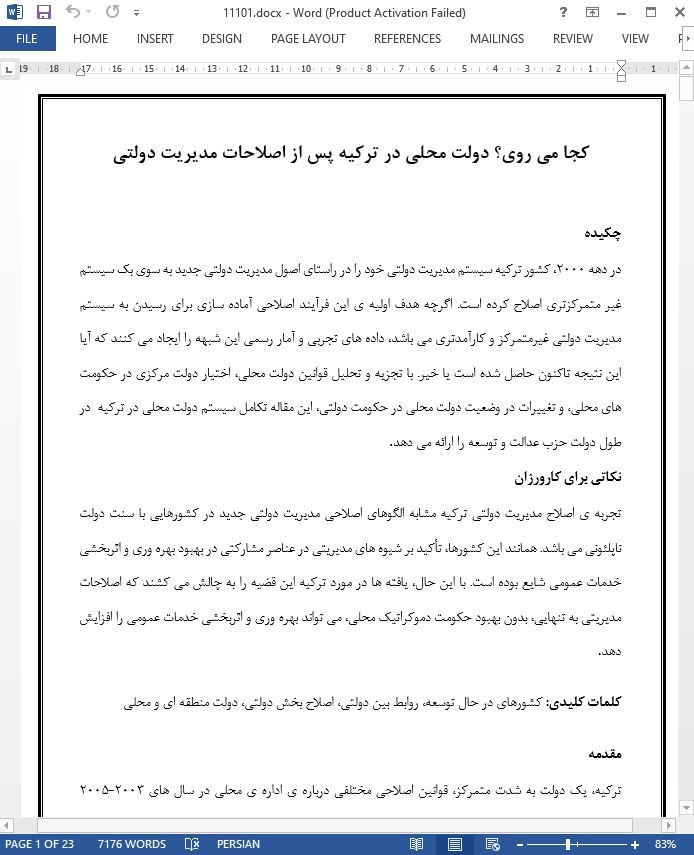
کجا می روی؟ دولت محلی در ترکیه پس از اصلاحات مدیریت دولتی
عنوان انگلیسی
Quo vadis? The local government in Turkey after public management reforms
صفحات مقاله فارسی
23
صفحات مقاله انگلیسی
19
سال انتشار
2018
رفرنس
دارای رفرنس در داخل متن و انتهای مقاله
نشریه
سیج - Sage
فرمت مقاله انگلیسی
pdf و ورد تایپ شده با قابلیت ویرایش
فرمت ترجمه مقاله
pdf و ورد تایپ شده با قابلیت ویرایش
فونت ترجمه مقاله
بی نازنین
سایز ترجمه مقاله
14
نوع مقاله
ISI
نوع نگارش
مقالات پژوهشی (تحقیقاتی)
نوع ارائه مقاله
ژورنال
پایگاه
اسکوپوس
ایمپکت فاکتور(IF) مجله
2.832 در سال 2019
شاخص H_index مجله
49 در سال 2020
شاخص SJR مجله
0.904 در سال 2019
شناسه ISSN مجله
0020-8523
شاخص Q یا Quartile (چارک)
Q1 در سال 2019
کد محصول
11101
وضعیت ترجمه عناوین تصاویر و جداول
ترجمه شده است ✓
وضعیت ترجمه متون داخل تصاویر و جداول
ترجمه نشده است ☓
وضعیت ترجمه منابع داخل متن
ترجمه نشده است ☓
ضمیمه
ندارد ☓
بیس
نیست ☓
مدل مفهومی
ندارد ☓
پرسشنامه
ندارد ☓
متغیر
ندارد ☓
رفرنس در ترجمه
در انتهای مقاله درج شده است
رشته و گرایش های مرتبط با این مقاله
مدیریت، مدیریت دولتی
مجله
بررسی بین المللی علوم اداری - International Review of Administrative Sciences
دانشگاه
دانشگاه کاتولیک لون، بلژیک
doi یا شناسه دیجیتال
https://doi.org/10.1177/0020852317752268
۰.۰
(هنوز امتیازی ثبت نشده است)