.svg)
.svg)

.svg)


ترجمه مقاله شکستن مرز log n در شایعه پراکنی - نشریه اشپرینگر

عنوان فارسی
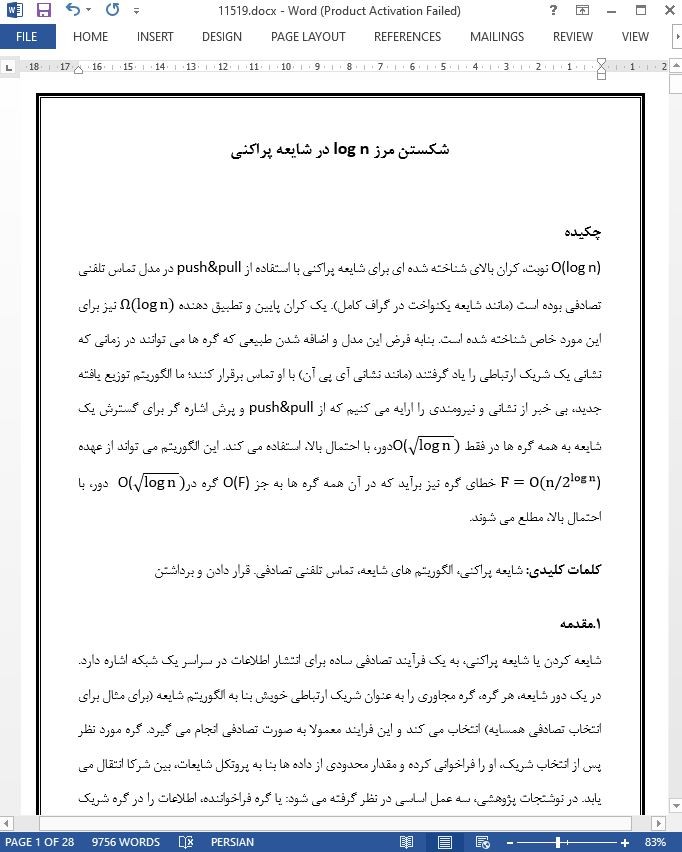
شکستن مرز log n در شایعه پراکنی
عنوان انگلیسی
Breaking the log n barrier on rumor spreading
صفحات مقاله فارسی
28
صفحات مقاله انگلیسی
11
سال انتشار
2017
رفرنس
دارای رفرنس در داخل متن و انتهای مقاله
نشریه
اشپرینگر - Springer
فرمت مقاله انگلیسی
PDF
فرمت ترجمه مقاله
pdf و ورد تایپ شده با قابلیت ویرایش
فونت ترجمه مقاله
بی نازنین
سایز ترجمه مقاله
14
نوع مقاله
ISI
نوع ارائه مقاله
ژورنال
پایگاه
اسکوپوس
ایمپکت فاکتور(IF) مجله
2.128 در سال 2020
شاخص H_index مجله
44 در سال 2021
شاخص SJR مجله
0.729 در سال 2020
شناسه ISSN مجله
0178-2770
شاخص Q یا Quartile (چارک)
Q2 در سال 2020
کد محصول
11519
وضعیت ترجمه منابع داخل متن
درج نشده است ☓
وضعیت فرمولها و محاسبات در فایل ترجمه
به صورت عکس، درج شده است ✓
ضمیمه
ندارد ☓
بیس
نیست ☓
مدل مفهومی
ندارد ☓
پرسشنامه
ندارد ☓
متغیر
ندارد ☓
رفرنس در ترجمه
در انتهای مقاله درج شده است
رشته های مرتبط با این مقاله
مهندسی کامپیوتر
گرایش های مرتبط با این مقاله
مهندسی نرم افزار و رایانش ابری
دانشگاه
مهندسی سیستم های ارتباطی، دانشگاه بن گوریون در Negev ، اسرائیل
کلمات کلیدی
شایعه پراکنی، الگوریتم های شایعه، تماس تلفنی تصادفی، قرار دادن و برداشتن
کلمات کلیدی انگلیسی
Rumor spreading - Gossip algorithms - Random phone call - Push & pull
doi یا شناسه دیجیتال
https://doi.org/10.1007/s00446-017-0312-4
۰.۰
(هنوز امتیازی ثبت نشده است)