Abstract
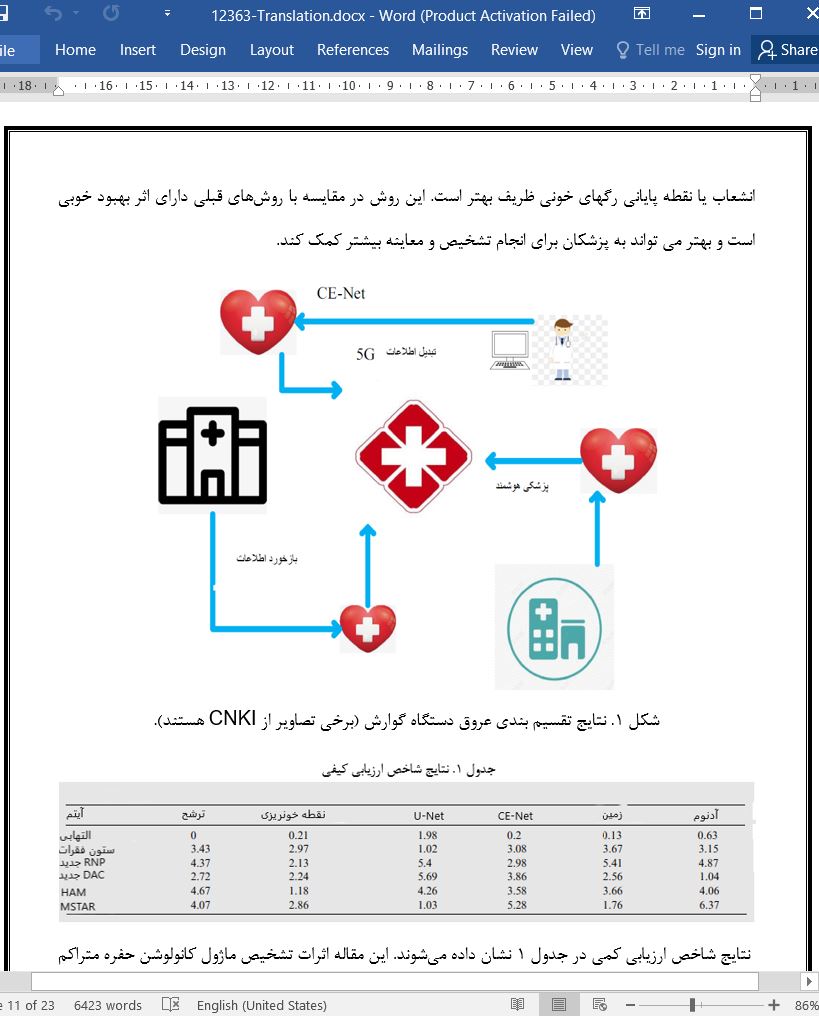
In this paper, we use artificial intelligence image recognition to obtain Digestive endoscopy image, and process the image based on 5G Deep learning edge algorithm to judge the disease type of the patient, and then consider the treatment plan. The combination of body area network and edge computing technology can meet the demand of low delay in body area network. In this case, the resource constrained body area network gateway node can process the physiological data collected by it into an offloadable task, and then unload the task and data to the edge computing node according to a certain strategy. The edge computing node completes the corresponding task processing and data storage, and finally provides the results to the relevant medical institutions and body area network users for reading auxiliary diagnosis and treatment of diseases. Studies have shown that 25% of patients with colon polyps have CD4 cells in peripheral blood based on 5G deep learning edge algorithm under artificial intelligence image recognition of Digestive endoscopy. The number of lymphocyte in group of differentiation was less than 200/μL, and the blood RNA in 92.3% patients was lower than 100 IU/ml, while fam CTP (A-cyclic peptide) was lower than 100 IU/ml. Opportunistic infections of the intestine and viruses can directly cause enteropathy because the fluorescence intensity of the probe is essentially unchanged and cannot form a triple helix structure. In terms of feature recognition accuracy, the 5G deep learning edge algorithm in this paper improves accuracy by 68% compared to the simple Yolo algorithm, and is similar in speed. Compared with RCNN algorithm, the accuracy and speed are improved by 21% and 85% respectively. Therefore, the 5G deep learning edge algorithm based on artificial intelligence image recognition has the advantages of accuracy and speed in digestive endoscopy of intelligent medical.
1. Introduction
Smart medicine is a hot topic in recent years, which is a new interdisciplinary subject integrating life science and information science. There is no very clear definition of smart medicine. The mainstream view is that it is based on medical informatization. The core is to manage patient identities through the Internet of Things and sensor technology and form patient indexes in hospital information systems. Based on this, information exchange and communication are performed according to business logic and network protocols to enable intelligent identification and identification location, tracking, monitoring and management.
5. Conclusions
According to the medical characteristics of intelligent medical human body tomography, the original OCR image is divided into four blocks, and each sub block reflects the local characteristics of different directions. A single signal is used to describe the spectral and local features of each subblock and build a feature vector. A single feature vector of the four subblocks is categorized by the SRC to get the reconstruction error vector. The four subblock reconstruction error vectors are weighted and fused based on a random weighting matrix. Through statistical analysis of the fusion results of multiple groups of weight vectors, the decision variables are designed and sample categories are obtained. Four test conditions were set in MSTAR dataset, including standard operating conditions and extended operating conditions. Strengthening the construction of medical humanities may help us to arouse our self-contained medical emotions and wisdom, guide us to understand the truth behind medicine, get rid of blind adherence and superstition to medical science and technology, and return to the original nature of medicine. The main body is not only the medical staff, but also the patients and their families. This is very suitable to start with the intelligent medical treatment of hypertension, which has become a public problem. With the help of the intelligent medical treatment of digestive endoscopy, it is the main topic of general practice in the future to realize the intelligent medical treatment of more diseases.