.svg)
.svg)

.svg)


ترجمه مقاله ماهیت موقتی رضایت شغلی کارکنان - نشریه الزویر

عنوان فارسی
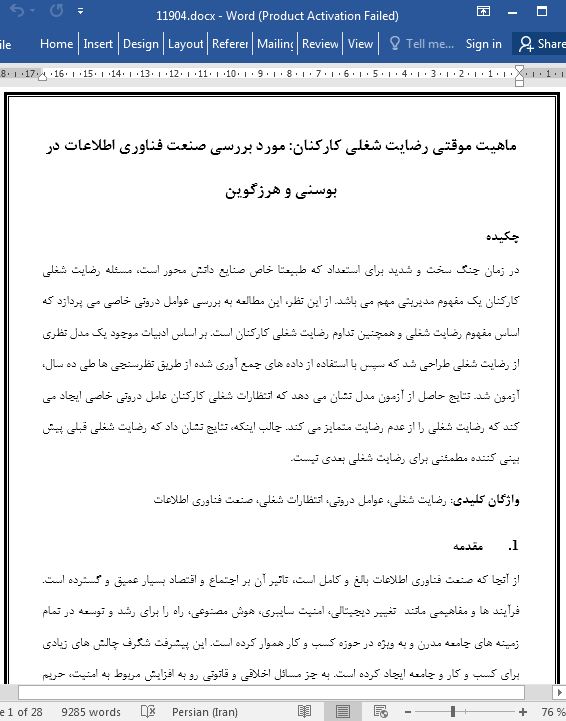
ماهیت موقتی رضایت شغلی کارکنان: مورد بررسی صنعت فناوری اطلاعات در بوسنی و هرزگوین
عنوان انگلیسی
Transient nature of the employees’ job satisfaction: The case of the IT industry in Bosnia and Herzegovina
صفحات مقاله فارسی
28
صفحات مقاله انگلیسی
10
سال انتشار
2021
رفرنس
دارای رفرنس در داخل متن و انتهای مقاله
نشریه
الزویر - Elsevier
فرمت مقاله انگلیسی
pdf و ورد تایپ شده با قابلیت ویرایش
فرمت ترجمه مقاله
pdf و ورد تایپ شده با قابلیت ویرایش
فونت ترجمه مقاله
بی نازنین
سایز ترجمه مقاله
14
نوع مقاله
ISI
نوع نگارش
مقالات پژوهشی (تحقیقاتی)
نوع ارائه مقاله
ژورنال
پایگاه
اسکوپوس
ایمپکت فاکتور(IF) مجله
6.333 در سال 2020
شاخص H_index مجله
18 در سال 2021
شاخص SJR مجله
1.024 در سال 2020
شناسه ISSN مجله
2444-8834
شاخص Q یا Quartile (چارک)
Q1 در سال 2020
کد محصول
11904
وضعیت ترجمه عناوین تصاویر و جداول
ترجمه شده است ✓
وضعیت ترجمه متون داخل تصاویر و جداول
ترجمه شده است ✓
وضعیت ترجمه منابع داخل متن
ترجمه شده است ✓
ضمیمه
ندارد ☓
بیس
است ✓
مدل مفهومی
دارد ✓
پرسشنامه
ندارد ☓
متغیر
دارد ✓
رفرنس در ترجمه
در انتهای مقاله درج شده است
رشته و گرایش های مرتبط با این مقاله
مدیریت، مدیریت منابع انسانی، مدیریت فناوری اطلاعات
مجله
تحقیقات اروپایی در زمینه مدیریت و کسب و کار اقتصادی - European Research on Management and Business Economic
دانشگاه
دانشگاه آمریکایی در بوسنی و هرزگوین، دانشکده اقتصاد، سارایوو، بوسنی و هرزگوین
کلمات کلیدی
رضایت شغلی، عوامل درونی، انتظارات شغلی، صنعت فناوری اطلاعات
کلمات کلیدی انگلیسی
Job satisfaction - Intrinsic factors - Job expectations - IT industry
doi یا شناسه دیجیتال
https://doi.org/10.1016/j.iedeen.2020.100141
۰.۰
(هنوز امتیازی ثبت نشده است)