Abstract
With the introduction of smart grid technologies in the distribution network the resilience of the network can be increased. The advantage of the use of these technologies is that they could be more effective than conventional technologies in creating a local increase in the resilience of the network. This approach would allow for differentiating the reliability per (groups of) customers. Different smart grid technologies are evaluated based on how cost-effectively they can increase the local reliability. The creation of microgrids in combination with local energy storage and the reconfiguration of the network by remote switching, are the two smart grid technologies which are investigated in this paper. The use of energy storage can increase the reliability of a single node without affecting the other nodes, however the costs of implementing energy storage are still similar to the cost of conventional network reinforcement methods to locally increase the reliability. The cost of using remotely-controlled switches to increase the reliability at a single node is much lower. With this method, the increase in reliability is however not only achieved at a single node, but at other nodes as well. This makes it difficult for the DNO to charge in a fair manner for this additional reliability.
I. INTRODUCTION
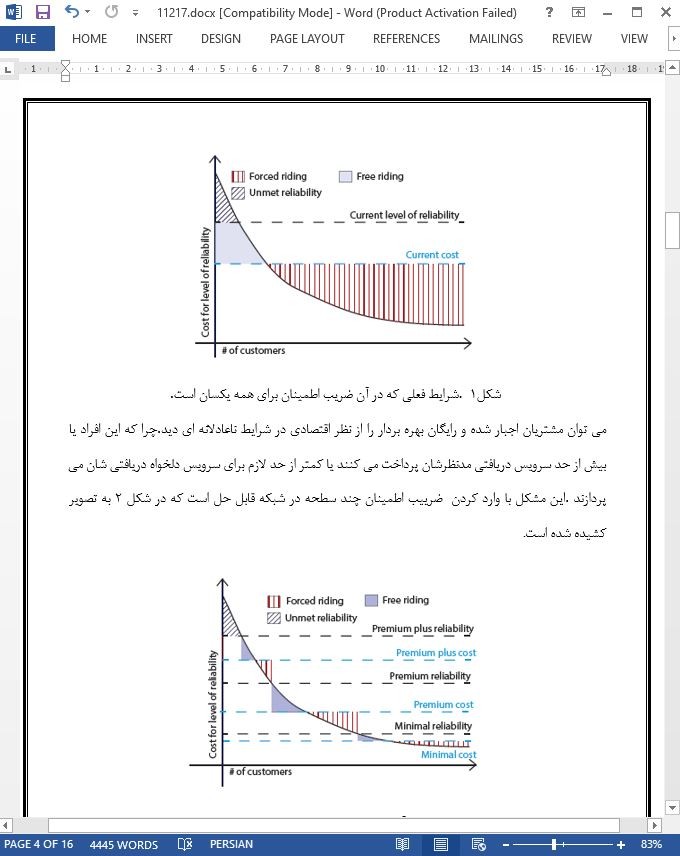
One of the key requirements of the distribution grid is reliability. As society becomes more and more reliant on electric power the need for this power to be always available also increases. Th reliance on electrical power can however differ significantly between consumers. Whilst for a residential consumer a power outage in the middle of the day might not bear much cost, the same outage for many small and medium enterprises (SME) will incur a substantial economic loss. In the current set-up of the distribution network the distribution network operator (DNO) is only rewarded/penalised for the system-wide level of availability that it maintains. In recent years there have been calls to allow for differences in reliability levels between consumers based on either new markets or as an addition to the current tariff structure employed by the DNO [1] [2] [3] [4] [5]. The main tools the DNO currently has at its disposal for the increased reliability of the network is to increase its focus more on certain consumers during restoration and pre-emptive maintenance.
V. CONCLUSIONS
With the introduction of smart grid technologies the resilience of the distribution network can be improved. When looking at the conventional option to improve the reliability by the laying of additional cables, the investment costs are ranging from e26 400 to e709 000. If the cost the DNO incurs for increasing the reliability is directly passed on to the consumer, this large cost difference can be considered unfair. The consumers have no influence on the design of the network and the design of the network is not publicly available. Meaning the consumers cannot select their location based on the network design. The cost for generating an adequate amount of reliability of the distribution network would be thus hard to influence and to assess for the grid users.With the introduction of energy storage or remote switching technologies, the amount of possibilities to target reliability improvements at a single node increases.