.svg)
.svg)

.svg)


ترجمه مقاله روش غیر مستقیم فرگشتی برای حل مساله برنامه ریزی حرکت - نشریه الزویر

عنوان فارسی
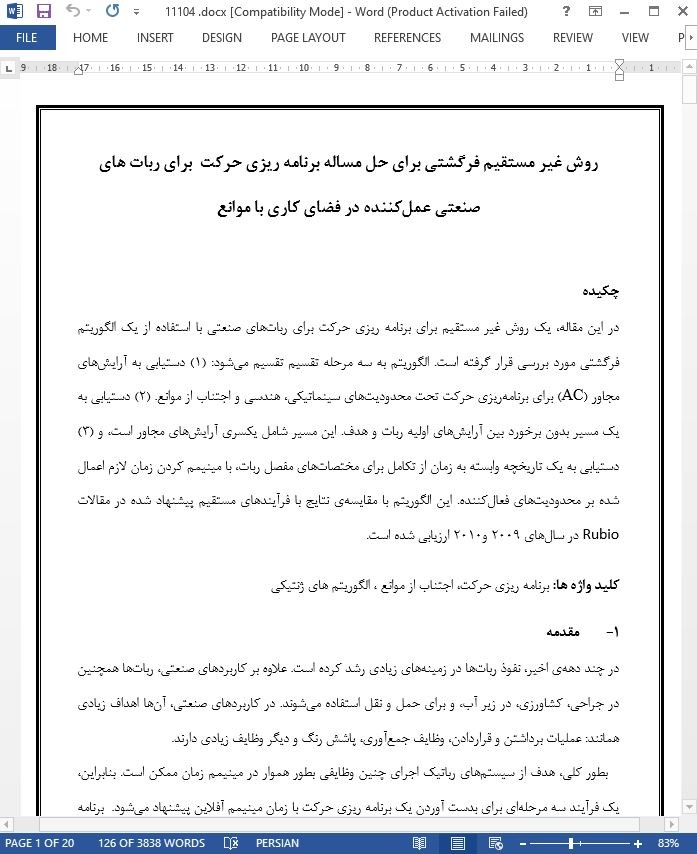
روش غیر مستقیم فرگشتی برای حل مساله برنامه ریزی حرکت برای ربات های صنعتی عمل کننده در فضای کاری با موانع
عنوان انگلیسی
Evolutionary indirect approach to solving trajectory planning problem for industrial robots operating in workspaces with obstacles
صفحات مقاله فارسی
20
صفحات مقاله انگلیسی
9
سال انتشار
2013
رفرنس
دارای رفرنس در داخل متن و انتهای مقاله
نشریه
الزویر - Elsevier
فرمت مقاله انگلیسی
PDF
فرمت ترجمه مقاله
pdf و ورد تایپ شده با قابلیت ویرایش
فونت ترجمه مقاله
بی نازنین
سایز ترجمه مقاله
14
نوع مقاله
ISI
نوع نگارش
مقالات پژوهشی (تحقیقاتی)
نوع ارائه مقاله
ژورنال
پایگاه
اسکوپوس
ایمپکت فاکتور(IF) مجله
4.269 در سال 2019
شاخص H_index مجله
83 در سال 2020
شاخص SJR مجله
1.295 در سال 2019
شناسه ISSN مجله
0997-7538
شاخص Q یا Quartile (چارک)
Q1 در سال 2019
کد محصول
11104
وضعیت ترجمه عناوین تصاویر و جداول
ترجمه شده است ✓
وضعیت ترجمه متون داخل تصاویر و جداول
ترجمه شده است ✓
وضعیت ترجمه منابع داخل متن
ترجمه نشده است ☓
وضعیت فرمولها و محاسبات در فایل ترجمه
تایپ شده است ✓
ضمیمه
ندارد ☓
بیس
نیست ☓
مدل مفهومی
ندارد ☓
پرسشنامه
ندارد ☓
متغیر
ندارد ☓
رفرنس در ترجمه
در انتهای مقاله درج شده است
رشته و گرایش های مرتبط با این مقاله
مهندسی برق، هوش ماشین، رباتیک، مهندسی کنترل، مهندسی الکترونیک
مجله
مجله اروپایی مکانیک های الف / جامدات - European Journal of Mechanics A/Solids
دانشگاه
مرکز تحقیقات فناوری خودرو CITV ، دانشگاه پلی تکنیک والنسیا، اسپانیا
کلمات کلیدی
برنامه ریزی حرکت، اجتناب از موانع ، الگوریتم های ژنتیکی
کلمات کلیدی انگلیسی
Trajectory planning - Obstacle avoidance - Genetic algorithms
doi یا شناسه دیجیتال
https://doi.org/10.1016/j.euromechsol.2013.05.007
۰.۰
(هنوز امتیازی ثبت نشده است)