

ترجمه مقاله نقش ضروری ارتباطات 6G با چشم انداز صنعت 4.0
- مبلغ: ۸۶,۰۰۰ تومان
ترجمه مقاله پایداری توسعه شهری، تعدیل ساختار صنعتی و کارایی کاربری زمین
- مبلغ: ۹۱,۰۰۰ تومان

This paper aims to reexamine the relationship between corporate social responsibility (CSR) and corporate financial performance (CFP) using a panel dataset of Chinese listed firms. Previous studies obtained divergent empirical evidence on the CSR-CFP relationship due to unclear, incomplete, or inappropriate consideration of endogeneity issues. By introducing a Heckman-2SLS model, we comprehensively address the main endogeneity problems (i.e., sample selection bias, reverse causality, and unobserved heterogeneity) simultaneously within the CSR-CFP relationship. Results not only indicate a robust CSR-CFP relationship after correcting for endogeneity issues but also serve as a strong case for future investigation and correction of endogeneity issues.
1. Introduction
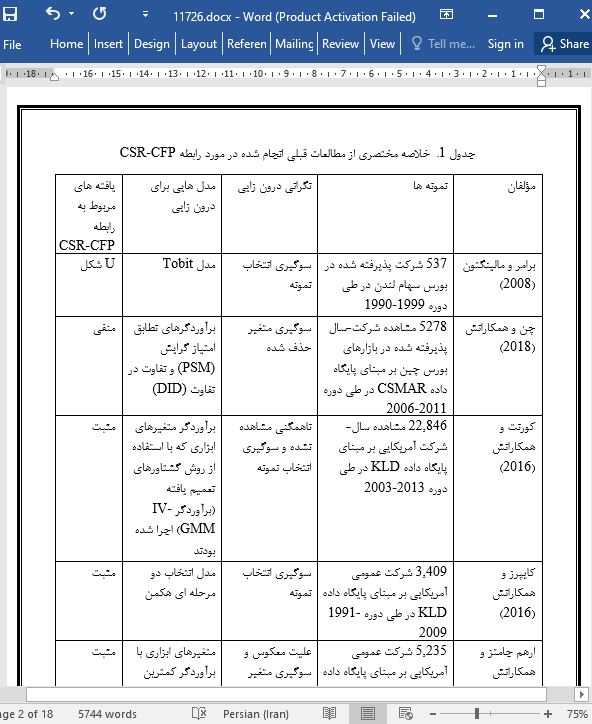
How corporate social responsibility (CSR) affects corporate financial performance (CFP) has attracted considerable attention in the finance, strategy, and management fields (Brammer and Millington, 2008; Callan and Thomas, 2011; Cuypers et al., 2016; Lev et al., 2010; Surroca et al., 2010; Wang and Qian, 2011). However, the literature on the relationship between CSR and CFP is largely inconclusive. Some scholars have argued that CSR positively affects CFP (Cornett et al., 2016; Cuypers et al., 2016; Rhou et al., 2016), whereas other scholars have reported negative (Chen et al., 2018) or U-shaped (Brammer and Millington, 2008) relationships between the two. We argue that, empirically, one important reason for such inconsistent findings is the inappropriate or incomplete treatment of endogeneity issues.
4. Conclusion
Given the growing interest in and divergent findings of the CSR-CFP relationship, applying a reliable modeling technique that can address different sources of endogeneity is of primary importance. Most studies documented in the literature focus on considering either selection bias or reverse causality, which may lead to biased estimation due to inappropriate and incomplete treatment of mitigating endogeneity issues. By using a sample of Chinese A-share firms, we tested a proposed Heckman-2SLS model and found that corporate charitable giving indeed had a positive and significant impact on a firm’s financial performance during the years 2008–2015. Alternatively, supplementary analyses further validated these results.
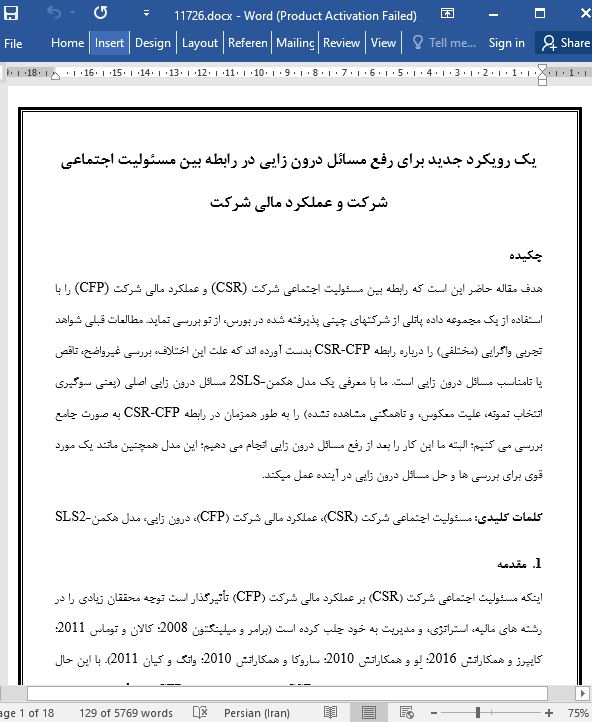
هدف مقاله حاضر این است که رابطه بین مسئولیت اجتماعی شرکت (CSR) و عملکرد مالی شرکت (CFP) را با استفاده از یک مجموعه داده پانلی از شرکتهای چینی پذیرفته شده در بورس، از نو بررسی نماید. مطالعات قبلی شواهد تجربی واگرایی (مختلفی) را درباره رابطه CSR-CFP بدست آورده اند که علت این اختلاف، بررسی غیرواضح، ناقص یا نامناسب مسائل درون زایی است. ما با معرفی یک مدل هکمن-2SLS مسائل درون زایی اصلی (یعنی سوگیری انتخاب نمونه، علیت معکوس، و ناهمگنی مشاهده نشده) را به طور همزمان در رابطه CSR-CFP به صورت جامع بررسی می کنیم؛ البته ما این کار را بعد از رفع مسائل درون زایی انجام می دهیم؛ این مدل همچنین مانند یک مورد قوی برای بررسی ها و حل مسائل درون زایی در آینده عمل میکند.
1. مقدمه
اینکه مسئولیت اجتماعی شرکت (CSR) بر عملکرد مالی شرکت (CFP) تأثیرگذار است توجه محققان زیادی را در رشته های مالیه، استراتژی، و مدیریت به خود جلب کرده است (برامر و میلینگتون 2008؛ کالان و توماس 2011؛ کایپرز و همکارانش 2016؛ لِو و همکارانش 2010؛ ساروکا و همکارانش 2010؛ وانگ و کیان 2011). با این حال ادبیات مربوط به رابطه بین مسئولیت اجتماعی شرکت (CSR) و عملکرد مالی شرکت (CFP) عمدتاً غیرقاطع هستند. برخی از محققان ادعا کرده اند که مسئولیت اجتماعی شرکت (CSR) تأثیر مثبتی بر روی عملکرد مالی شرکت (CFP) دارد (کورنت و همکارانش 2016؛ کایپرز و همکارانش 2016؛ رو و همکارانش 2016) در حالی که برخی از محققان هم روابط منفی (چن و همکارانش 2018) یا U شکلی (برامر و میلینگتون 2008) را بین این دو گزارش کرده اند. ما ادعا می کنیم که از لحاظ تجربی، یک دلیل مهم برای این یافته های متناقض یا حل ناقص مسائل درون زایی است.
4. نتیجه گیری
با توجه به علاقه فزاینده و یافته های همگرای رابطه CSR-CFP ، اعمال یک تکنیک مدلسازی قابل اطمینان که بتواند به منابع مختلف درون زایی بپردازد اهمیت زیادی دارد. اغلب مطالعات ثبت شده در ادبیات، روی بررسی یکی از دو موضوع «سوگیری انتخاب» یا «علیت معکوس» تمرکز کرده اند که این به علت روشهای نامناسب و ناقص برای کاهش مسائل درون زایی، میتواند منجر به یک برآورد اریب گردد. ما با استفاده از یک نمونه متشکل از شرکت هایی با سهام A در بازار بورس چین، یک مدل پیشنهادی هکمن-2SLS را آزمایش کردیم و پی بردیم که کمک های اهدایی شرکت در دوره 2008-2015 در حقیقت تأثیرات مثبت و معنی داری بر روی عملکرد مالی شرکت دارند. همچنین تحلیل های بیشتر، این نتایج را تأیید کردند.

