.svg)
.svg)

.svg)


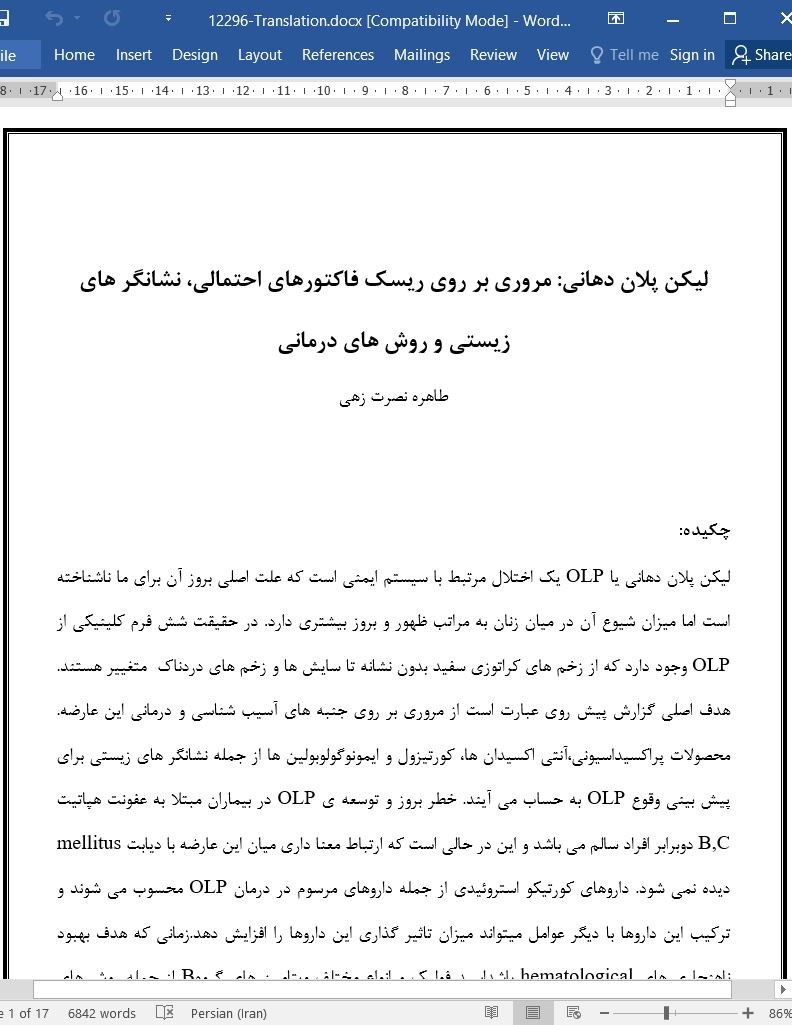
ترجمه مقاله لیکن پلان دهانی: مروری بر روی ریسک فاکتورهای احتمالی، نشانگر های زیستی و روش های درمانی

عنوان فارسی
لیکن پلان دهانی: مروری بر روی ریسک فاکتورهای احتمالی، نشانگر های زیستی و روش های درمانی
عنوان انگلیسی
Oral Lichen Planus: an Overview of Potential Risk Factors, Biomarkers and Treatments
صفحات مقاله فارسی
17
صفحات مقاله انگلیسی
7
سال انتشار
2017
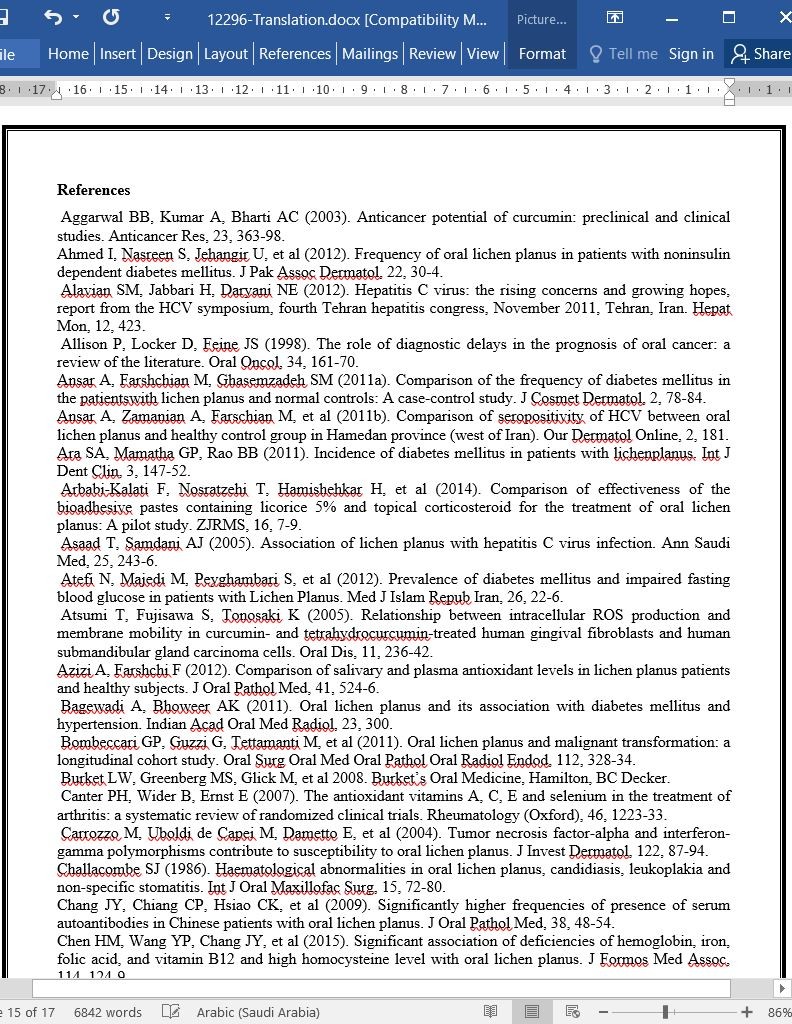
رفرنس
دارای رفرنس در داخل متن و انتهای مقاله
فرمت مقاله انگلیسی
pdf و ورد تایپ شده با قابلیت ویرایش
فرمت ترجمه مقاله
pdf و ورد تایپ شده با قابلیت ویرایش
فونت ترجمه مقاله
بی نازنین
سایز ترجمه مقاله
14
نوع مقاله
ISI
نوع نگارش
مقاله مروری (Review Article)
نوع ارائه مقاله
ژورنال
کد محصول
12296
وضعیت ترجمه عناوین تصاویر و جداول
ترجمه شده است ✓
وضعیت ترجمه متون داخل تصاویر و جداول
ترجمه شده است ✓
وضعیت ترجمه منابع داخل متن
به صورت انگلیسی درج شده است ✓
وضعیت فرمولها و محاسبات در فایل ترجمه
ندارد ☓
ضمیمه
ندارد ☓
بیس
نیست ☓
مدل مفهومی
ندارد ☓
پرسشنامه
ندارد ☓
متغیر
ندارد ☓
فرضیه
ندارد ☓
رفرنس در ترجمه
در انتهای مقاله درج شده است
رشته و گرایش های مرتبط با این مقاله
دندانپزشکی، تشخیص بیماری های دهان و دندان و آسیب شناسی دهان
مجله
مجله آسیایی اقیانوسیه پیشگیری از سرطان - Asian Pacific Journal of Cancer Prevention
دانشگاه
مرکز تحقیقات دندانپزشکی و گروه پزشکی دهان، دانشکده دندانپزشکی، دانشگاه علوم پزشکی زاهدان، ایران
کلمات کلیدی
لیکن پلان، دهان، تشخیصی، هپاتیت-درمانی، ویتامین ها
کلمات کلیدی انگلیسی
Lichen Planus - oral - diagnosis - hepatitis - therapeutics - vitamins
doi یا شناسه دیجیتال
https://doi.org/10.22034/APJCP.2018.19.5.1161
۰.۰
(هنوز امتیازی ثبت نشده است)