.svg)
.svg)

.svg)


ترجمه مقاله بررسی انگیزه های کاربران برای مشارکت در ارتباط ویروسی در رسانه های اجتماعی - نشریه الزویر

عنوان فارسی
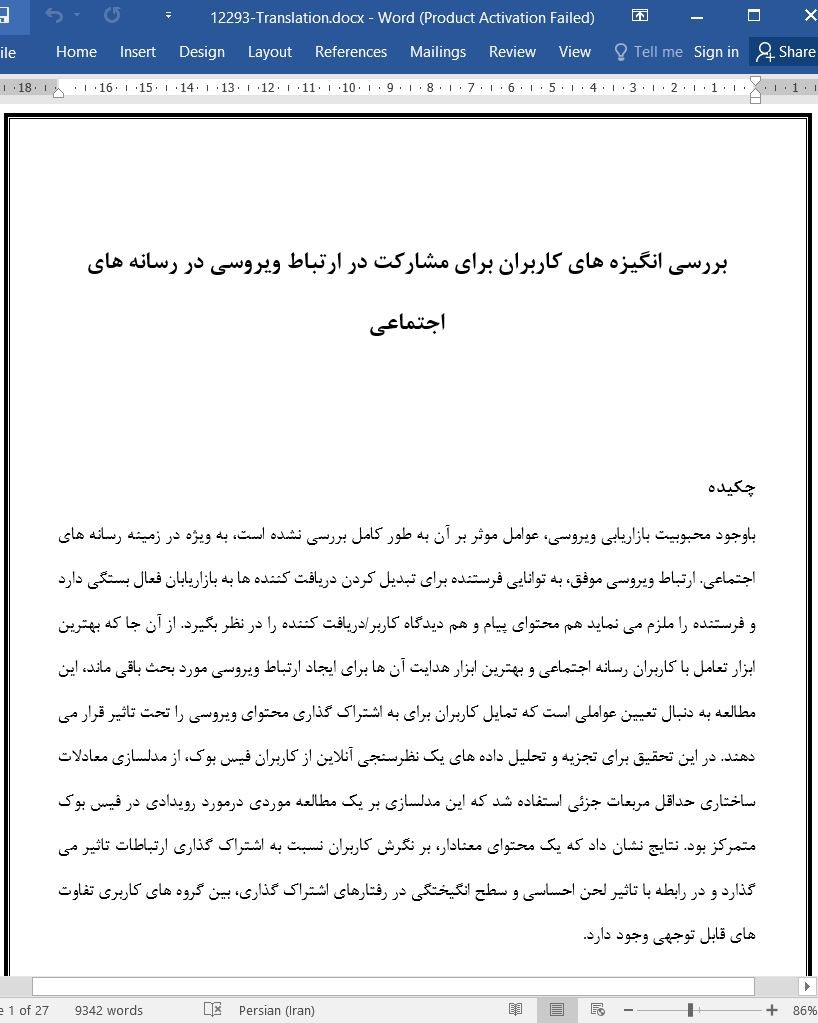
بررسی انگیزه های کاربران برای مشارکت در ارتباط ویروسی در رسانه های اجتماعی
عنوان انگلیسی
Exploring users' motivations to participate in viral communication on social media
صفحات مقاله فارسی
27
صفحات مقاله انگلیسی
9
سال انتشار
2019
رفرنس
دارای رفرنس در داخل متن و انتهای مقاله
نشریه
الزویر - Elsevier
فرمت مقاله انگلیسی
pdf و ورد تایپ شده با قابلیت ویرایش
فرمت ترجمه مقاله
pdf و ورد تایپ شده با قابلیت ویرایش
فونت ترجمه مقاله
بی نازنین
سایز ترجمه مقاله
14
نوع مقاله
ISI
نوع نگارش
مقالات پژوهشی (تحقیقاتی)
نوع ارائه مقاله
ژورنال
پایگاه
اسکوپوس
ایمپکت فاکتور(IF) مجله
7.382 در سال 2020
شاخص H_index مجله
195 در سال 2021
شاخص SJR مجله
2.049 در سال 2020
شناسه ISSN مجله
0148-2963
شاخص Q یا Quartile (چارک)
Q1 در سال 2020
کد محصول
12293
وضعیت ترجمه عناوین تصاویر و جداول
ترجمه شده است ✓
وضعیت ترجمه متون داخل تصاویر و جداول
ترجمه شده است ✓
وضعیت ترجمه منابع داخل متن
ترجمه شده است ✓
وضعیت فرمولها و محاسبات در فایل ترجمه
ندارد ☓
ضمیمه
ندارد ☓
بیس
است ✓
مدل مفهومی
ندارد ☓
پرسشنامه
ندارد ☓
متغیر
دارد ✓
فرضیه
ندارد ☓
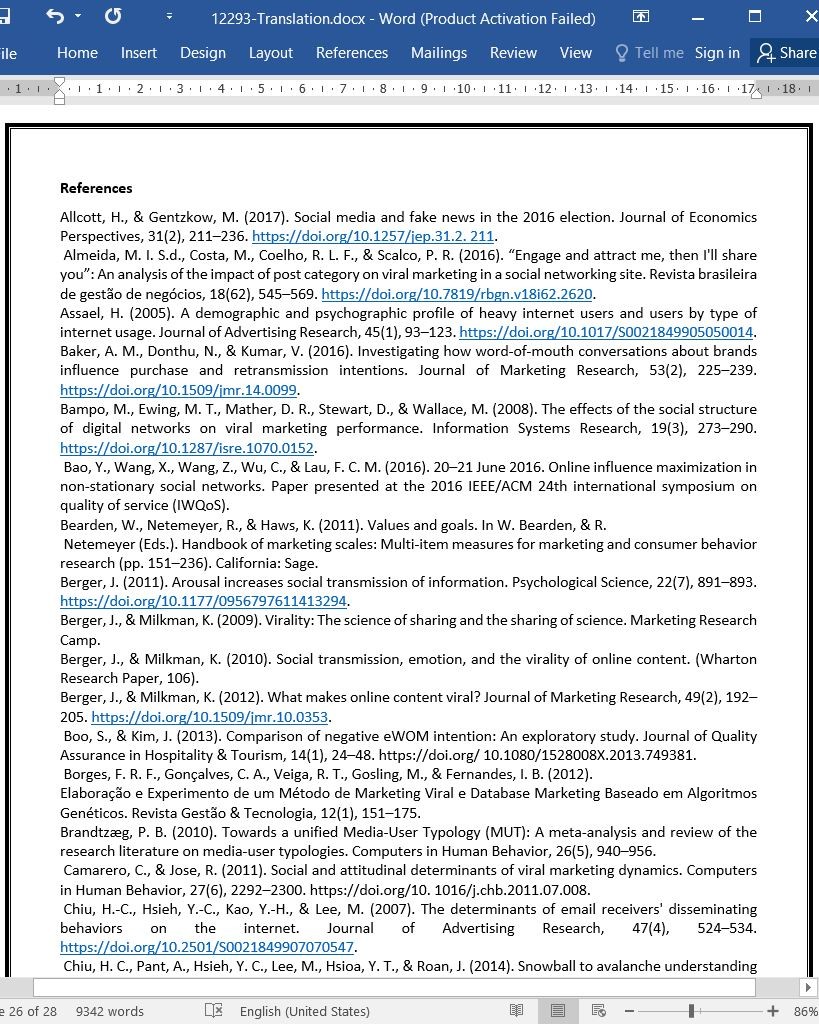
رفرنس در ترجمه
در انتهای مقاله درج شده است
رشته و گرایش های مرتبط با این مقاله
مدیریت، مهندسی فناوری اطلاعات، بازاریابی، مدیریت بازرگانی، مدیریت فناوری اطلاعات، مدیریت کسب و کار و اینترنت و شبکه های گسترده
مجله
مجله تحقیقات کسب و کار - Journal of Business Research
دانشگاه
گروه بازرگانی، دانشگاه آزور، پرتغال
کلمات کلیدی
رسانه های اجتماعی، ارتباط بازاریابی ویروسی، فیس بوک، رفتار انتقال، رفتار به اشتراک گذاری
کلمات کلیدی انگلیسی
Social media - Viral marketing communication - Facebook - Pass-on behavior - Sharing behavior
doi یا شناسه دیجیتال
https://doi.org/10.1016/j.jbusres.2018.11.011
۰.۰
(هنوز امتیازی ثبت نشده است)