Abstract
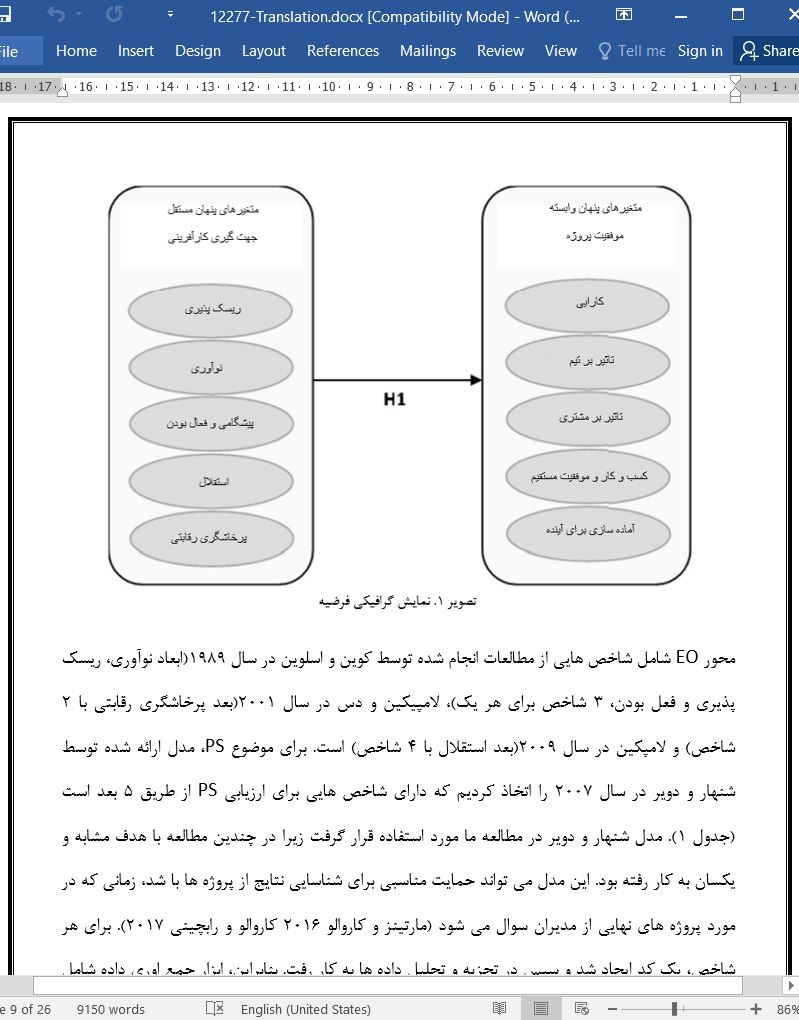
Entrepreneurial orientation (EO) is a strategic posture of an organization, and it is related to basic policies and practices for the development of entrepreneurial actions looking for creating competitive advantages. This study develops and tests a model of the relationship between entrepreneurial orientation and project success in Brazilian context. As quantitative research, a survey was used to collect data. A sample of 100 valid answers from project practitioners was treated through the structural equation modeling method. As research implications, the main result points out the positive correlation between the entrepreneurial orientation and the project success, contributing to the development of this research subject and helping to minimize the gap in the literature that addresses the relationship between project success and EO. In practical terms, understanding that innovativeness, risk taking, proactiveness, autonomy and competitive aggressiveness (the dimensions of the EO) can contribute to project success and can also indirectly impact on organizational performance, could help organizations get competitive advantage when developing correlate factors. Finally, the results suggest that practices of project management can be aligned to the firm's entrepreneurial orientation to enable firms to attain better results in their projects and generate a competitive advantage. On other hand, given the proportion of the impact of EO on project success (20.3%) identified in this study, it is critical that project management professionals expand their horizon to recognize other factors that affect project success.
1. Introduction
Recent market dynamics levels are largely responsible for stimulating growth and innovation, which puts pressure on organizations to respond to more complex demands using increasingly competitive cost approaches. To meet the concerns arising from this scenario, a natural decrease occurs in the organization's set of operations, making room for an escalation of activities through projects (Shenhar and Dvir, 2007). Because of this, a significant number of companies are adopting project management techniques (Berssaneti and Carvalho, 2015) and investing resources and efforts in the implementation of project management (Martens and Carvalho, 2016).
6.4. Avenues for further research
Different organizational segments may also have different effects of entrepreneurial orientation on project success. According to Lumpkin and Dess (1996: 150): “although we argue here that all five dimensions are central to understanding the entrepreneurial process, they may occur in different combinations, depending on the type of entrepreneurial opportunity a firm pursues”. In this sense, how much a dimension of EO has a greater or less importance for the PS can also vary, which was not object of study of our research. For example, in segments or contexts where innovation is more present, it can be speculated that the innovativeness dimension plays a more important role on project success than in those where firms do not promote innovation. This situation can also occur with other dimensions in environments where the teams operate more autonomously, the competition is stronger, the risk behavior is more or less conservative, or where there is more market proactiveness, thereby opening up possibilities for future research.