.svg)
.svg)

.svg)


ترجمه مقاله اعتماد به برندهای رسانه های اجتماعی و ارزهای رسانه ای ادراک شده - نشریه الزویر

عنوان فارسی
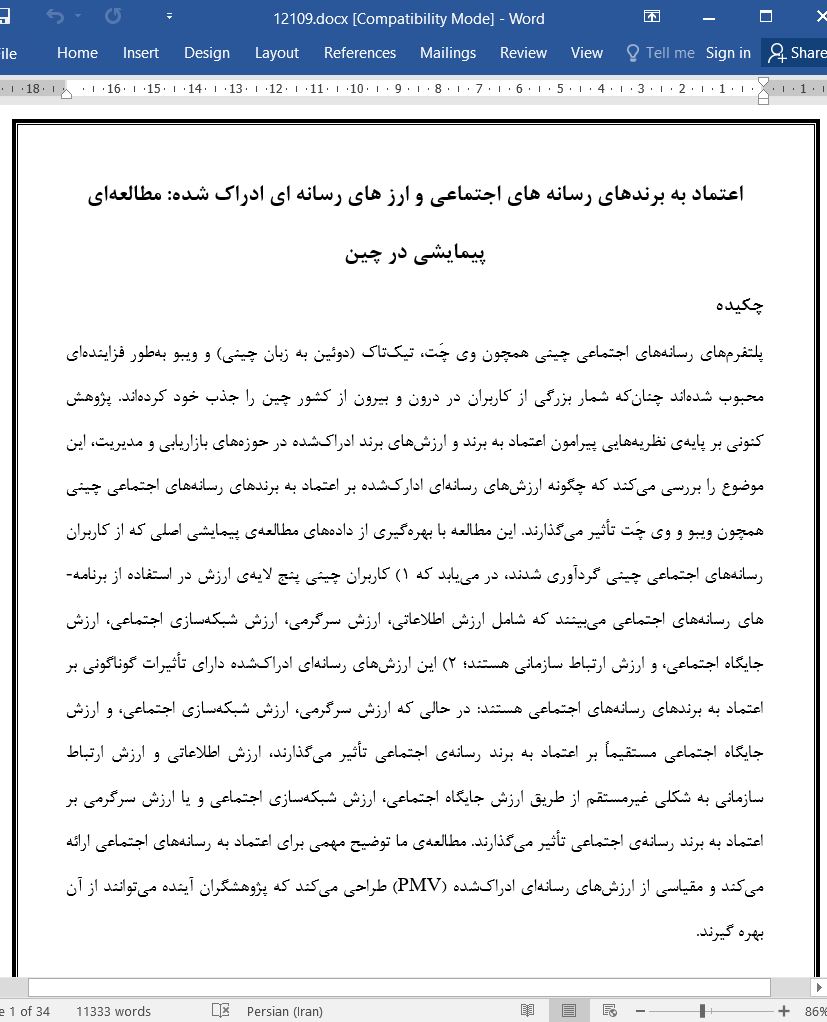
اعتماد به برندهای رسانه های اجتماعی و ارزهای رسانه ای ادراک شده: مطالعه ای پیمایشی در چین
عنوان انگلیسی
Trust in social media brands and perceived media values: A survey study in China
صفحات مقاله فارسی
34
صفحات مقاله انگلیسی
10
سال انتشار
2022
رفرنس
دارای رفرنس در داخل متن و انتهای مقاله
نشریه
الزویر - Elsevier
فرمت مقاله انگلیسی
pdf و ورد تایپ شده با قابلیت ویرایش
فرمت ترجمه مقاله
pdf و ورد تایپ شده با قابلیت ویرایش
فونت ترجمه مقاله
بی نازنین
سایز ترجمه مقاله
14
نوع مقاله
ISI
نوع نگارش
مقالات پژوهشی (تحقیقاتی)
نوع ارائه مقاله
ژورنال
پایگاه
اسکوپوس
ایمپکت فاکتور(IF) مجله
7.834 در سال 2020
شاخص H_index مجله
178 در سال 2021
شاخص SJR مجله
2.108 در سال 2020
شناسه ISSN مجله
0747-5632
شاخص Q یا Quartile (چارک)
Q1 در سال 2020
کد محصول
12109
وضعیت ترجمه عناوین تصاویر و جداول
ترجمه شده است ✓
وضعیت ترجمه متون داخل تصاویر و جداول
ترجمه شده است ✓
وضعیت ترجمه منابع داخل متن
ترجمه شده است ✓
وضعیت فرمولها و محاسبات در فایل ترجمه
ندارد ☓
ضمیمه
ندارد ☓
بیس
است ✓
مدل مفهومی
دارد ✓
پرسشنامه
ندارد ☓
متغیر
دارد ✓
فرضیه
دارد ✓
رفرنس در ترجمه
در انتهای مقاله درج شده است
رشته و گرایش های مرتبط با این مقاله
مدیریت، مدیریت بازرگانی، بازاریابی، مدیریت فناوری اطلاعات، مدیریت کسب و کار
مجله
نقش کامپیوترها در رفتار انسان - Computers in Human Behavior
دانشگاه
گروه روزنامه نگاری و ارتباطات، دانشگاه عادی چین جنوبی، چین
کلمات کلیدی
ارزش رسانه ای ادارک شده، رسانه های اجتماعی، اعتماد به برند، مدل معادلات ساختاری، توسعه مقیاس
کلمات کلیدی انگلیسی
Perceived media value - Social media - Brand trust - Structural equation model - Scale developmentبا خط تیره
doi یا شناسه دیجیتال
https://doi.org/10.1016/j.chb.2021.107024
۰.۰
(هنوز امتیازی ثبت نشده است)