.svg)
.svg)

.svg)


ترجمه مقاله آیا جرم پیشرفته، جرمی با هوش بالا است؟ - نشریه الزویر

عنوان فارسی
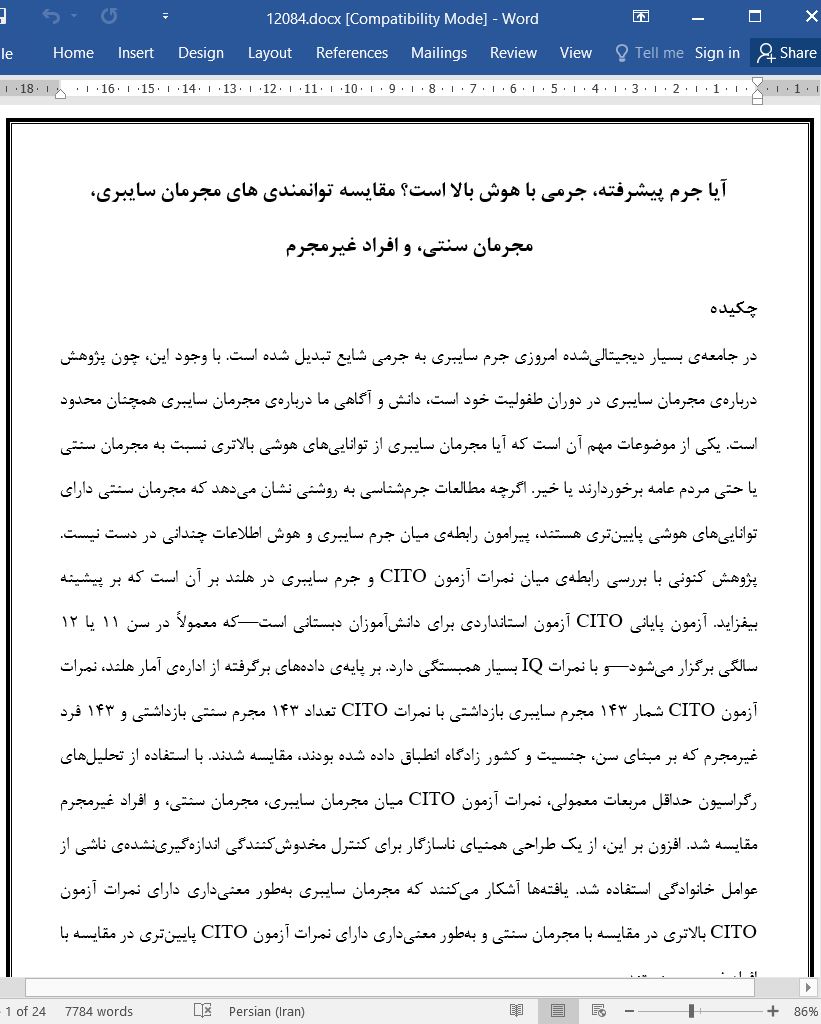
آیا جرم پیشرفته، جرمی با هوش بالا است؟ مقایسه توانمندی های مجرمان سایبری، مجرمان سنتی، و افراد غیرمجرم
عنوان انگلیسی
High tech crime, high intellectual crime? Comparing the intellectual capabilities of cybercriminals, traditional criminals and non-criminals
صفحات مقاله فارسی
24
صفحات مقاله انگلیسی
8
سال انتشار
2022
رفرنس
دارای رفرنس در داخل متن و انتهای مقاله
نشریه
الزویر - Elsevier
فرمت مقاله انگلیسی
pdf و ورد تایپ شده با قابلیت ویرایش
فرمت ترجمه مقاله
pdf و ورد تایپ شده با قابلیت ویرایش
فونت ترجمه مقاله
بی نازنین
سایز ترجمه مقاله
14
نوع مقاله
ISI
نوع نگارش
مقالات پژوهشی (تحقیقاتی)
نوع ارائه مقاله
ژورنال
پایگاه
اسکوپوس
ایمپکت فاکتور(IF) مجله
7.834 در سال 2020
شاخص H_index مجله
178 در سال 2021
شاخص SJR مجله
2.108 در سال 2020
شناسه ISSN مجله
0747-5632
شاخص Q یا Quartile (چارک)
Q1 در سال 2020
کد محصول
12084
وضعیت ترجمه عناوین تصاویر و جداول
ترجمه شده است ✓
وضعیت ترجمه متون داخل تصاویر و جداول
ترجمه شده است ✓
وضعیت ترجمه منابع داخل متن
ترجمه شده است ✓
وضعیت فرمولها و محاسبات در فایل ترجمه
ندارد ☓
ضمیمه
ندارد ☓
بیس
نیست ☓
مدل مفهومی
ندارد ☓
پرسشنامه
ندارد ☓
متغیر
ندارد ☓
فرضیه
ندارد ☓
رفرنس در ترجمه
در انتهای مقاله درج شده است
رشته و گرایش های مرتبط با این مقاله
حقوق، حقوق جزا و جرم شناسی، حقوق عمومی
مجله
نقش کامپیوترها در رفتار انسان - Computers in Human Behavior
دانشگاه
موسسه هلند برای مطالعه جرم و جنایت و اجرای قانون، آمستردام، هلند
کلمات کلیدی
توانایی های هوشی، جرم سایبری، مرتکب شوندگان، دسترسی غیرمجاز به رایانه
کلمات کلیدی انگلیسی
Intellectual capabilities - Cybercrime - Perpetrators - Computer trespassing
doi یا شناسه دیجیتال
https://doi.org/10.1016/j.chb.2021.106985
۰.۰
(هنوز امتیازی ثبت نشده است)