.svg)
.svg)

.svg)


ترجمه مقاله پیوند نامطمئن بین اینترنت اشیا و بلاک چین در زنجیره های تامین مواد غذایی - نشریه الزویر

عنوان فارسی
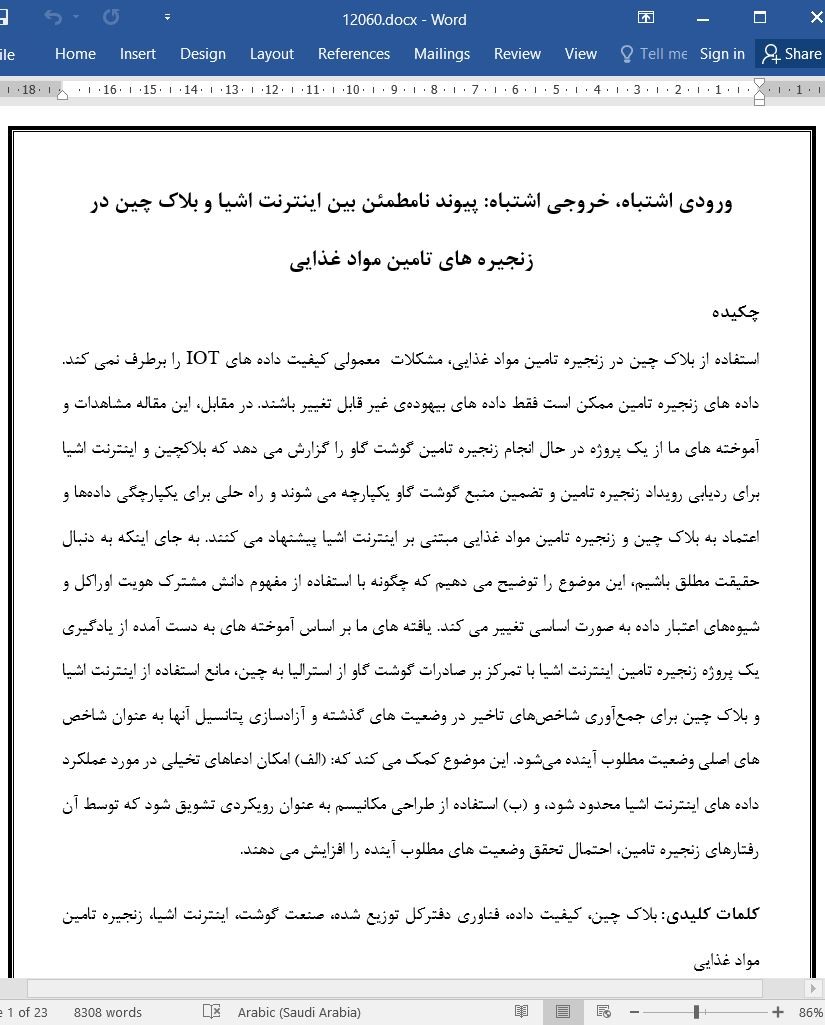
ورودی اشتباه، خروجی اشتباه: پیوند نامطمئن بین اینترنت اشیا و بلاک چین در زنجیره های تامین مواد غذایی
عنوان انگلیسی
Garbage in garbage out: The precarious link between IoT and blockchain in food supply chains
صفحات مقاله فارسی
23
صفحات مقاله انگلیسی
8
سال انتشار
2021
رفرنس
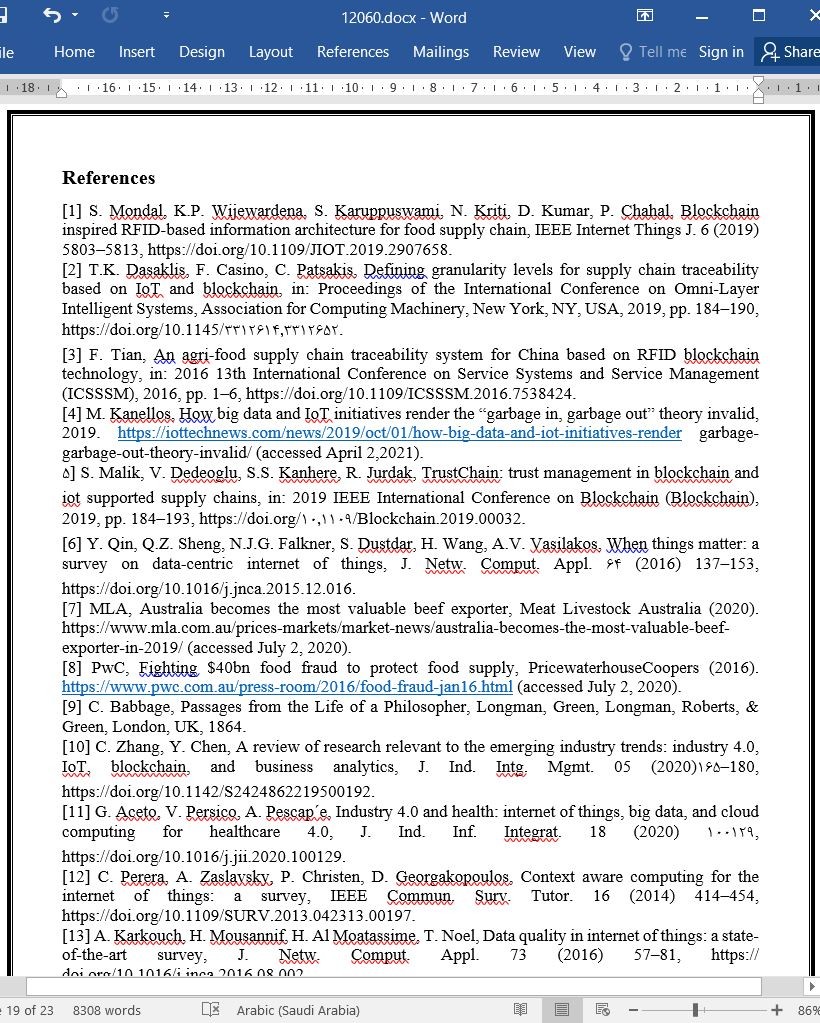
دارای رفرنس در انتهای مقاله
نشریه
الزویر - Elsevier
فرمت مقاله انگلیسی
pdf و ورد تایپ شده با قابلیت ویرایش
فرمت ترجمه مقاله
pdf و ورد تایپ شده با قابلیت ویرایش
فونت ترجمه مقاله
بی نازنین
سایز ترجمه مقاله
14
نوع مقاله
ISI
نوع نگارش
مقالات پژوهشی (تحقیقاتی)
نوع ارائه مقاله
ژورنال
پایگاه
اسکوپوس
ایمپکت فاکتور(IF) مجله
12.258 در سال 2020
شاخص H_index مجله
24 در سال 2021
شاخص SJR مجله
2.042 در سال 2020
شناسه ISSN مجله
2452-414X
شاخص Q یا Quartile (چارک)
Q1 در سال 2020
کد محصول
12060
وضعیت ترجمه عناوین تصاویر و جداول
ترجمه شده است ✓
وضعیت ترجمه متون داخل تصاویر و جداول
ترجمه شده است ✓
وضعیت ترجمه منابع داخل متن
به صورت عددی درج شده است ✓
وضعیت فرمولها و محاسبات در فایل ترجمه
ندارد ☓
ضمیمه
ندارد ☓
بیس
نیست ☓
مدل مفهومی
ندارد ☓
پرسشنامه
ندارد ☓
متغیر
ندارد ☓
فرضیه
ندارد ☓
رفرنس در ترجمه
در انتهای مقاله درج شده است
رشته و گرایش های مرتبط با این مقاله
مهندسی فناوری اطلاعات، مهندسی صنایع، مهندسی کامپیوتر، لجستیک و زنجیره تامین، اینترنت و شبکه های گسترده، سامانه های شبکه ای، هوش مصنوعی
مجله
مجله یکپارچه سازی اطلاعات صنعتی - Journal of Industrial Information Integration
دانشگاه
دانشگاه صنعتی کوئینزلند (QUT)، استرالیا
کلمات کلیدی
بلاک چین، کیفیت داده، فناوری دفترکل توزیع شده، صنعت گوشت، اینترنت اشیا، زنجیره تامین مواد غذایی
کلمات کلیدی انگلیسی
Blockchain - Data quality - Distributed ledger technology - Meat industry - Internet of things - Food supply chains
doi یا شناسه دیجیتال
https://doi.org/10.1016/j.jii.2021.100261
۰.۰
(هنوز امتیازی ثبت نشده است)