.svg)
.svg)

.svg)


ترجمه مقاله مروری بر نانوالیاف الکتروریسی شده زیست فعال با پایه گیاهان دارویی بعنوان پانسمان زخم - نشریه الزویر

عنوان فارسی
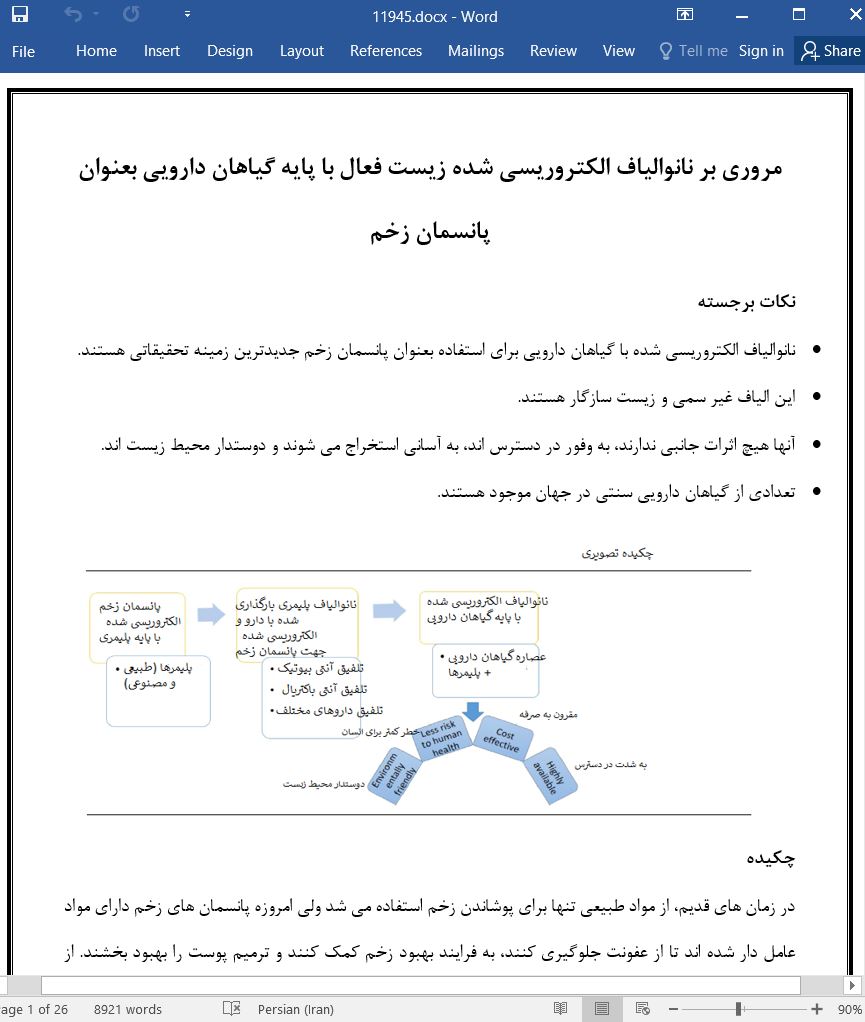
مروری بر نانوالیاف الکتروریسی شده زیست فعال با پایه گیاهان دارویی بعنوان پانسمان زخم
عنوان انگلیسی
A review of medicinal plant-based bioactive electrospun nano fibrous wound dressings
صفحات مقاله فارسی
26
صفحات مقاله انگلیسی
9
سال انتشار
2021
رفرنس
دارای رفرنس در داخل متن و انتهای مقاله
نشریه
الزویر - Elsevier
فرمت مقاله انگلیسی
PDF
فرمت ترجمه مقاله
pdf و ورد تایپ شده با قابلیت ویرایش
فونت ترجمه مقاله
بی نازنین
سایز ترجمه مقاله
14
نوع مقاله
ISI
نوع نگارش
مقالات پژوهشی (تحقیقاتی)
نوع ارائه مقاله
ژورنال
پایگاه
اسکوپوس
ایمپکت فاکتور(IF) مجله
8.086 در سال 2020
شاخص H_index مجله
164 در سال 2021
شاخص SJR مجله
1.842 در سال 2020
شناسه ISSN مجله
0264-1275
شاخص Q یا Quartile (چارک)
Q1 در سال 2020
کد محصول
11945
وضعیت ترجمه عناوین تصاویر و جداول
ترجمه شده است ✓
وضعیت ترجمه متون داخل تصاویر و جداول
ترجمه شده است ✓
وضعیت ترجمه منابع داخل متن
ترجمه شده است ✓
وضعیت فرمولها و محاسبات در فایل ترجمه
ندارد ☓
ضمیمه
ندارد ☓
بیس
نیست ☓
مدل مفهومی
ندارد ☓
پرسشنامه
ندارد ☓
متغیر
ندارد ☓
فرضیه
ندارد ☓
رفرنس در ترجمه
در انتهای مقاله درج شده است
رشته و گرایش های مرتبط با این مقاله
مهندسی نساجی، پزشکی، نانوفناوری پزشکی، مهندسی بافت، ساختارهای نانولیفی
مجله
مواد و طراحی - Materials & Design
دانشگاه
کالج نساجی، دانشگاه Donghua، شانگهای، چین
کلمات کلیدی
نانوالیاف الکتروریسی شده، پانسمان زخم، بیوپلیمرها، ضدمیکروب، گیاهان دارویی
کلمات کلیدی انگلیسی
Electrospun nanofibrous - Wound dressings - Biopolymers - Antimicrobial - Medicinal plants
doi یا شناسه دیجیتال
https://doi.org/10.1016/j.matdes.2021.109942
۰.۰
(هنوز امتیازی ثبت نشده است)