.svg)
.svg)

.svg)


ترجمه مقاله ملاحظات اخلاقی و قانونی با توجه به مالکیت و کاربرد تجاری مواد بیولوژیکی انسانی و مشتقات آن - نشریه Dovepress

عنوان فارسی
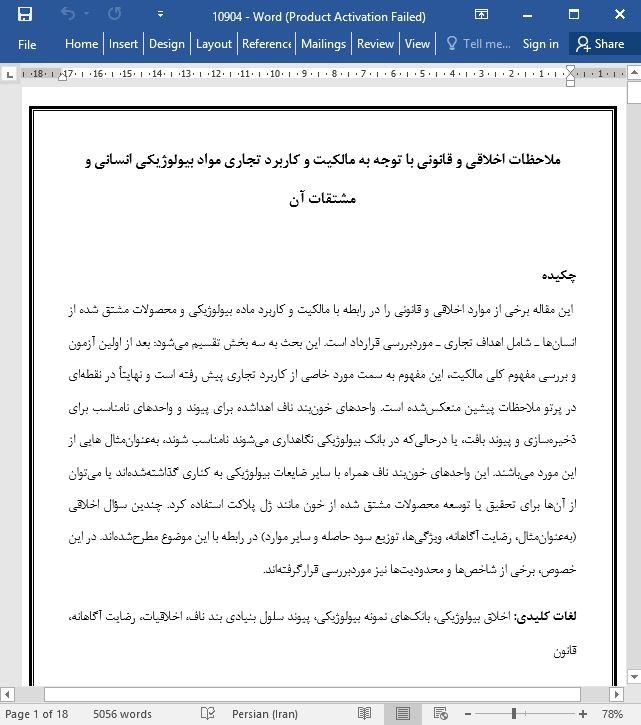
ملاحظات اخلاقی و قانونی با توجه به مالکیت و کاربرد تجاری مواد بیولوژیکی انسانی و مشتقات آن
عنوان انگلیسی
Ethical and legal considerations regarding the ownership and commercial use of human biological materials and their derivatives
صفحات مقاله فارسی
18
صفحات مقاله انگلیسی
10
سال انتشار
2012
نشریه
Dovepress
فرمت مقاله انگلیسی
pdf و ورد تایپ شده با قابلیت ویرایش
فرمت ترجمه مقاله
pdf و ورد تایپ شده با قابلیت ویرایش
نوع مقاله
ISI
نوع نگارش
مقاله مروری (Review Article)
نوع ارائه مقاله
ژورنال
پایگاه
اسکوپوس
ایمپکت فاکتور(IF) مجله
2.038 در سال 2019
شاخص H_index مجله
17 در سال 2020
شاخص SJR مجله
0.736 در سال 2019
شناسه ISSN مجله
1179-2736
شاخص Q یا Quartile (چارک)
Q2 در سال 2019
کد محصول
10904
وضعیت ترجمه منابع داخل متن
درج نشده است ☓
ضمیمه
ندارد ☓
بیس
نیست ☓
مدل مفهومی
ندارد☓
پرسشنامه
ندارد☓
متغیر
ندارد☓
رشته های مرتبط با این مقاله
حقوق
گرایش های مرتبط با این مقاله
حقوق پزشکی
مجله
مجله پزشکی خون - Journal of Blood Medicine
دانشگاه
موسسه ملی بهداشت ایتالیا، رم، ایتالیا
کلمات کلیدی
اخلاق بیولوژیکی، بانکهای نمونه بیولوژیکی، پیوند سلول بنیادی بند ناف، اخلاقیات، رضایت آگاهانه، قانون
کلمات کلیدی انگلیسی
bioethics - biological specimen banks - cord-blood stem cell transplantation - ethics - informed consent - legislation
doi یا شناسه دیجیتال
https://doi.org/10.2147/JBM.S36134
۰.۰
(هنوز امتیازی ثبت نشده است)