.svg)
.svg)

.svg)


ترجمه مقاله توسعه نشانگرها و ابزاری برای ارزیابی میزان اثربخشی پروژه آموزش پرستار حرفه ای

عنوان فارسی
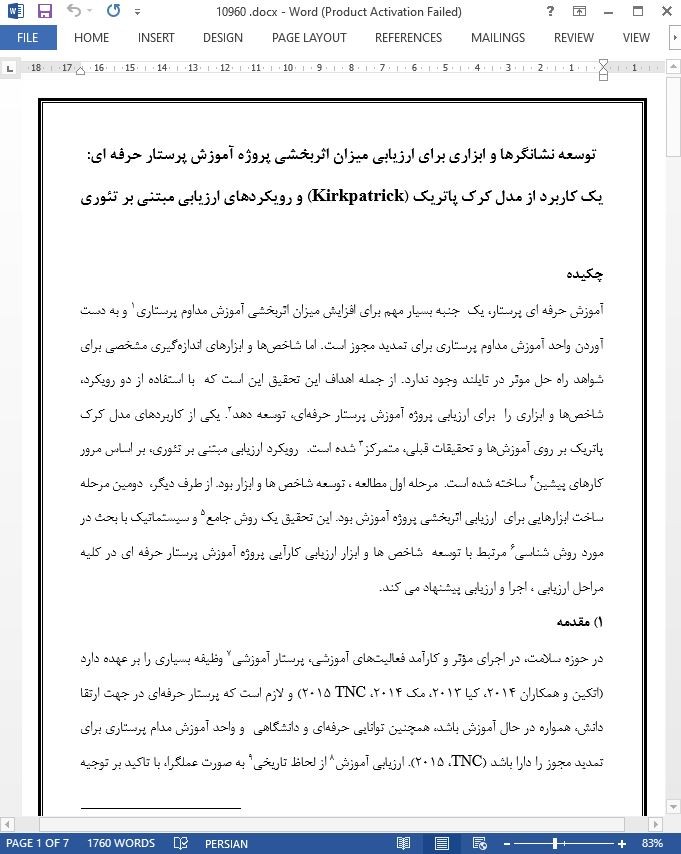
توسعه نشانگرها و ابزاری برای ارزیابی میزان اثربخشی پروژه آموزش پرستار حرفه ای: یک کاربرد از مدل کرک پاتریک (Kirkpatrick) و رویکردهای ارزیابی مبتنی بر تئوری
عنوان انگلیسی
Development of the Indicators and Instrument to Evaluate the Effectiveness of the Professional Nurse Training Project: An Application of Kirkpatrick’s Model and Theory-Based Evaluation Approaches
صفحات مقاله فارسی
7
صفحات مقاله انگلیسی
6
سال انتشار
2016
رفرنس
دارای رفرنس در داخل متن و انتهای مقاله
فرمت مقاله انگلیسی
pdf و ورد تایپ شده با قابلیت ویرایش
فرمت ترجمه مقاله
pdf و ورد تایپ شده با قابلیت ویرایش
فونت ترجمه مقاله
بی نازنین
سایز ترجمه مقاله
14
نوع مقاله
ISI
نوع ارائه مقاله
کنفرانس
شناسه ISSN مجله
2357-1330
کد محصول
10960
وضعیت ترجمه عناوین تصاویر و جداول
ترجمه شده است✓
وضعیت ترجمه متون داخل تصاویر و جداول
ترجمه شده است✓
وضعیت ترجمه منابع داخل متن
ترجمه شده است✓
ضمیمه
ندارد ☓
بیس
است ✓
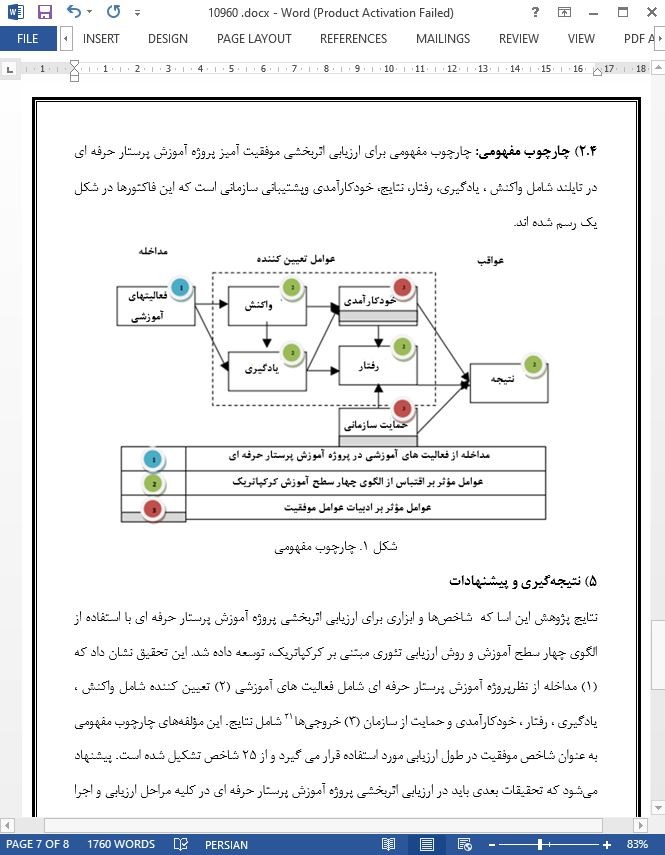
مدل مفهومی
دارد ✓
پرسشنامه
ندارد ☓
متغیر
ندارد ☓
رفرنس در ترجمه
در داخل متن و انتهای مقاله درج شده است
رشته و گرایش های مرتبط با این مقاله
پزشکی، علوم تربیتی، پرستاری، مدیریت و برنامه ریزی آموزشی
کنفرانس
هفتمین کنفرانس بین المللی آموزش و روانشناسی آموزشی - 7th International Conference on Education and Educational Psychology
دانشگاه
گروه تحقیق و روانشناسی کاربردی ، دانشگاه بورفا ، تایلند
کلمات کلیدی
پرستار حرفه ای ، پروژه آموزشی ، ارزیابی تئوری محور ، اثربخشی
کلمات کلیدی انگلیسی
Professional nurse - training project - theory-based evaluation - effectiveness
doi یا شناسه دیجیتال
https://doi.org/10.15405/epsbs.2016.11.67
۰.۰
(هنوز امتیازی ثبت نشده است)