.svg)
.svg)

.svg)


ترجمه مقاله گزارش دهی مالی دولتی با تغییر حسابداری ملی - نشریه الزویر

عنوان فارسی
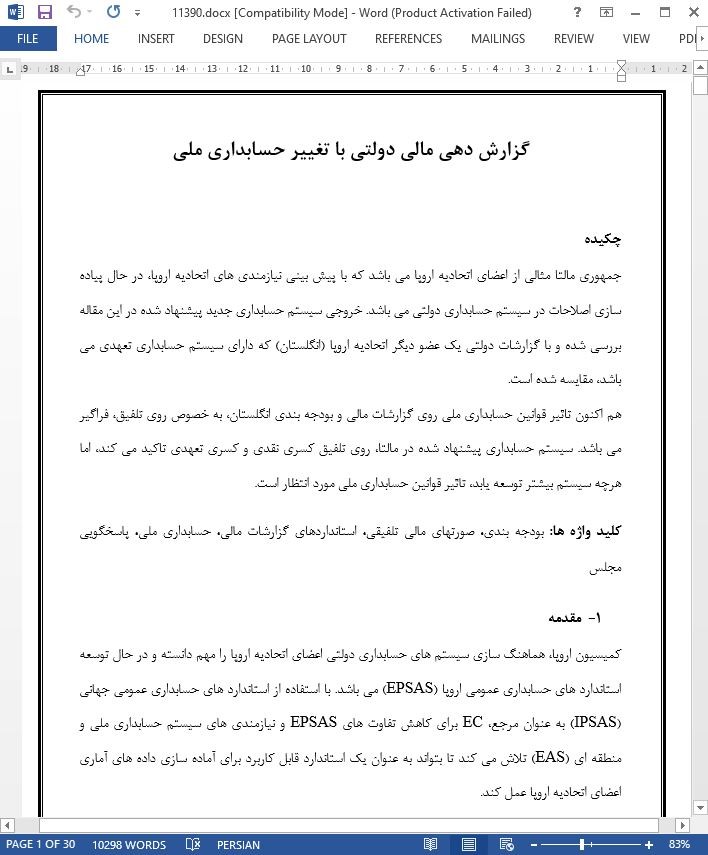
گزارش دهی مالی دولتی با تغییر حسابداری ملی
عنوان انگلیسی
Shades of governmental financial reporting with a national accounting twist
صفحات مقاله فارسی
30
صفحات مقاله انگلیسی
13
سال انتشار
2016
رفرنس
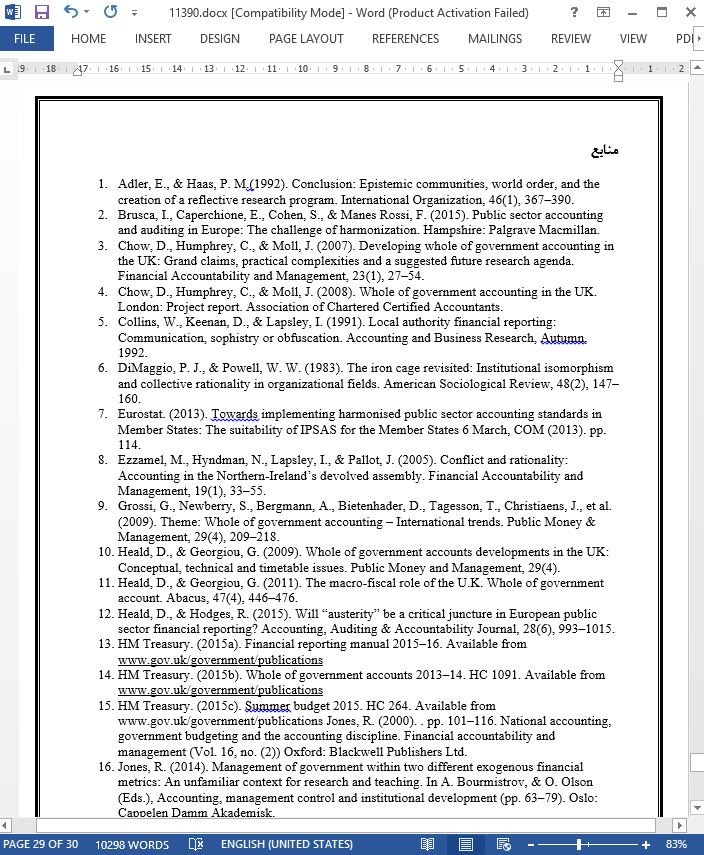
دارای رفرنس در داخل متن و انتهای مقاله
نشریه
الزویر - Elsevier
فرمت مقاله انگلیسی
pdf و ورد تایپ شده با قابلیت ویرایش
فرمت ترجمه مقاله
pdf و ورد تایپ شده با قابلیت ویرایش
فونت ترجمه مقاله
بی نازنین
سایز ترجمه مقاله
14
نوع مقاله
ISI
نوع نگارش
مقالات پژوهشی (تحقیقاتی)
نوع ارائه مقاله
ژورنال
پایگاه
اسکوپوس
ایمپکت فاکتور(IF) مجله
2.472 در سال 2019
شاخص H_index مجله
42 در سال 2020
شاخص SJR مجله
0.953 در سال 2019
شناسه ISSN مجله
0155-9982
شاخص Q یا Quartile (چارک)
Q1 در سال 2019
کد محصول
11390
وضعیت ترجمه عناوین تصاویر و جداول
ترجمه شده است ✓
وضعیت ترجمه متون داخل تصاویر و جداول
ترجمه شده است ✓
وضعیت ترجمه منابع داخل متن
درج نشده است ☓
ضمیمه
ندارد ☓
بیس
است ✓
مدل مفهومی
دارد ✓
پرسشنامه
ندارد ☓
متغیر
ندارد ☓
رفرنس در ترجمه
در انتهای مقاله درج شده است
رشته و گرایش های مرتبط با این مقاله
حسابداری، حسابداری مالی، حسابداری دولتی
مجله
انجمن حسابداری - Accounting Forum
دانشگاه
دانشگاه مالت
کلمات کلیدی
بودجه بندی، صورتهای مالی تلفیقی، استانداردهای گزارشات مالی، حسابداری ملی، پاسخگویی مجلس
کلمات کلیدی انگلیسی
Budgeting - Consolidated financial statements - Financial reporting standards - National accounting - Parliamentary accountability
doi یا شناسه دیجیتال
https://doi.org/10.1016/j.accfor.2016.06.002
۰.۰
(هنوز امتیازی ثبت نشده است)