.svg)
.svg)

.svg)


ترجمه مقاله سازمان های نقشه کشی به عنوان دروازه بانان ساخت مسکن در لاگوس، نیجریه - نشریه تیلور و فرانسیس

عنوان فارسی
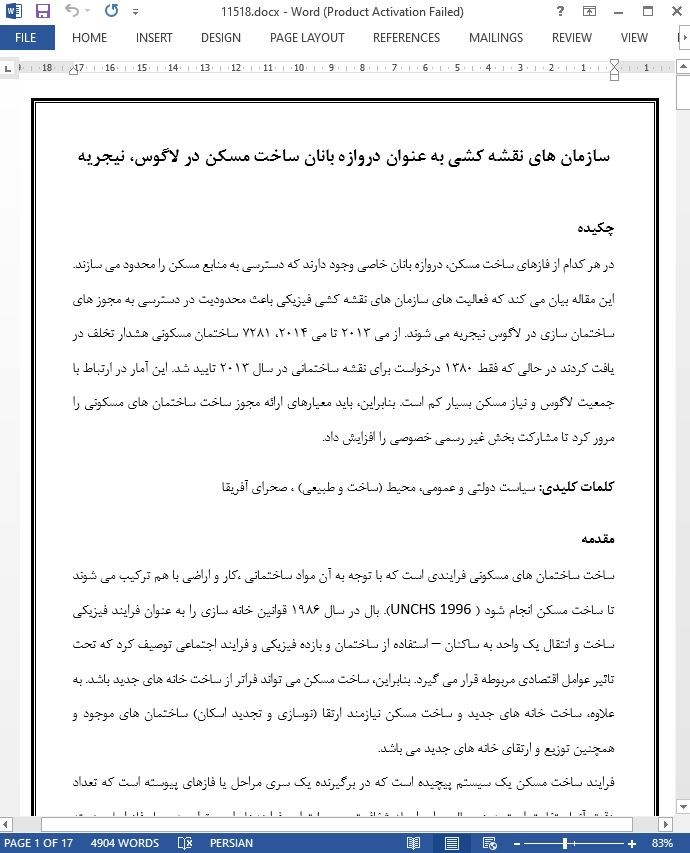
سازمان های نقشه کشی به عنوان دروازه بانان ساخت مسکن در لاگوس، نیجریه
عنوان انگلیسی
Planning institutions as gatekeepers in housing production in Lagos, Nigeria
صفحات مقاله فارسی
17
صفحات مقاله انگلیسی
11
سال انتشار
2018
رفرنس
دارای رفرنس در داخل متن و انتهای مقاله
نشریه
تیلور و فرانسیس - Taylor & Francis
فرمت مقاله انگلیسی
pdf و ورد تایپ شده با قابلیت ویرایش
فرمت ترجمه مقاله
pdf و ورد تایپ شده با قابلیت ویرایش
فونت ترجمه مقاله
بی نازنین
سایز ترجمه مقاله
14
نوع مقاله
ISI
نوع ارائه مقاله
ژورنال
پایگاه
اسکوپوس
ایمپکت فاکتور(IF) مجله
0.918 در سال 2020
شاخص H_index مجله
40 در سال 2021
شاخص SJR مجله
0.368 در سال 2020
شناسه ISSN مجله
0961-4524
شاخص Q یا Quartile (چارک)
Q2 در سال 2020
کد محصول
11518
وضعیت ترجمه عناوین تصاویر و جداول
ترجمه شده است ✓
وضعیت ترجمه متون داخل تصاویر و جداول
ترجمه شده است ✓
وضعیت ترجمه منابع داخل متن
ترجمه شده است ✓
ضمیمه
ندارد ☓
بیس
نیست ☓
مدل مفهومی
ندارد ☓
پرسشنامه
ندارد ☓
متغیر
ندارد ☓
رفرنس در ترجمه
در انتهای مقاله درج شده است
رشته و گرایش های مرتبط با این مقاله
معماری، مدیریت پروژه و ساخت
مجله
توسعه در عمل - Development in Practice
کلمات کلیدی
سیاست دولتی و عمومی، محیط (ساخت و طبیعی) ، صحرای آفریقا
کلمات کلیدی انگلیسی
Governance and public policy - Environment (built and natural) - Sub-Saharan Africa
doi یا شناسه دیجیتال
https://doi.org/10.1080/09614524.2018.1468416
۰.۰
(هنوز امتیازی ثبت نشده است)