.svg)
.svg)

.svg)


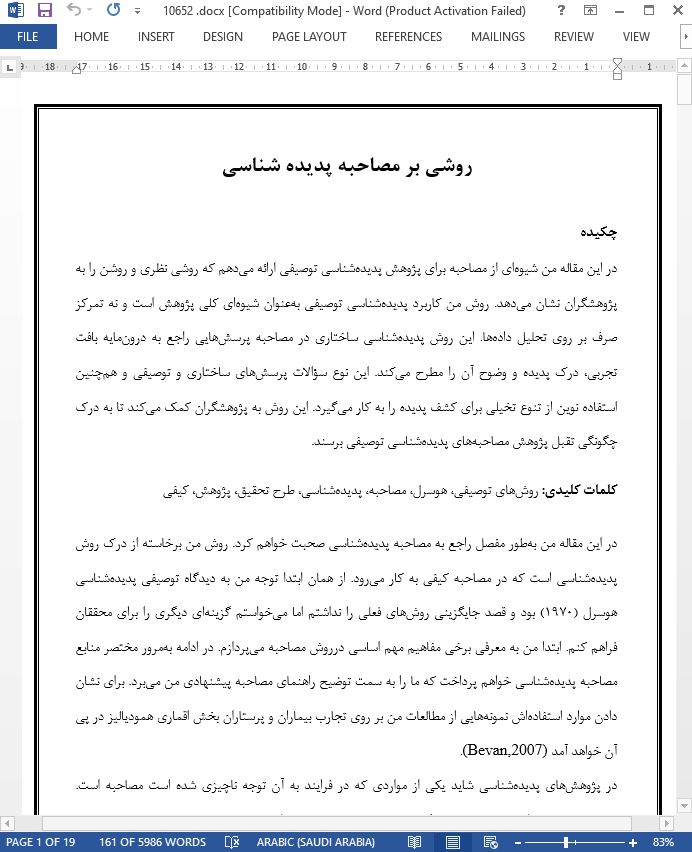
ترجمه مقاله روشی بر مصاحبه پدیده شناسی - نشریه Sage

عنوان فارسی
روشی بر مصاحبه پدیده شناسی
عنوان انگلیسی
A Method of Phenomenological Interviewing
صفحات مقاله فارسی
19
صفحات مقاله انگلیسی
10
سال انتشار
2014
رفرنس
دارای رفرنس در داخل متن و انتهای مقاله
نشریه
سیج - Sage
فرمت مقاله انگلیسی
pdf و ورد تایپ شده با قابلیت ویرایش
فرمت ترجمه مقاله
pdf و ورد تایپ شده با قابلیت ویرایش
فونت ترجمه مقاله
بی نازنین
سایز ترجمه مقاله
14
نوع مقاله
ISI
نوع نگارش
مقالات پژوهشی (تحقیقاتی)
نوع ارائه مقاله
ژورنال
پایگاه
اسکوپوس
ایمپکت فاکتور(IF) مجله
3.383 در سال 2019
شاخص H_index مجله
95 در سال 2020
شاخص SJR مجله
1.437 در سال 2019
شناسه ISSN مجله
1049-7323
شاخص Q یا Quartile (چارک)
Q1 در سال 2019
کد محصول
10652
وضعیت ترجمه منابع داخل متن
به صورت انگلیسی درج شده است ✓
ضمیمه
ندارد ☓
بیس
نیست ☓
مدل مفهومی
ندارد ☓
پرسشنامه
ندارد ☓
متغیر
ندارد ☓
رفرنس در ترجمه
در داخل متن و انتهای مقاله درج شده است
رشته و گرایش های مرتبط با این مقاله
مدیریت، تحقیق در عملیات
مجله
تحقیقات کیفی بهداشت - Qualitative Health Research
دانشگاه
دانشکده علوم بهداشت و زندگی، دانشگاه Northumbria، انگلستان
کلمات کلیدی
روشهای توصیفی، هوسرل، مصاحبه، پدیدهشناسی، طرح تحقیق، پژوهش، کیفی
کلمات کلیدی انگلیسی
descriptive methods - Husserl; interviews - phenomenology - research design - research - qualitative
doi یا شناسه دیجیتال
https://doi.org/10.1177/1049732313519710
۰.۰
(هنوز امتیازی ثبت نشده است)