.svg)
.svg)

.svg)


ترجمه مقاله قطعه بندی بازار از طریق عملکردهای نگرشی - نشریه امرالد

عنوان فارسی
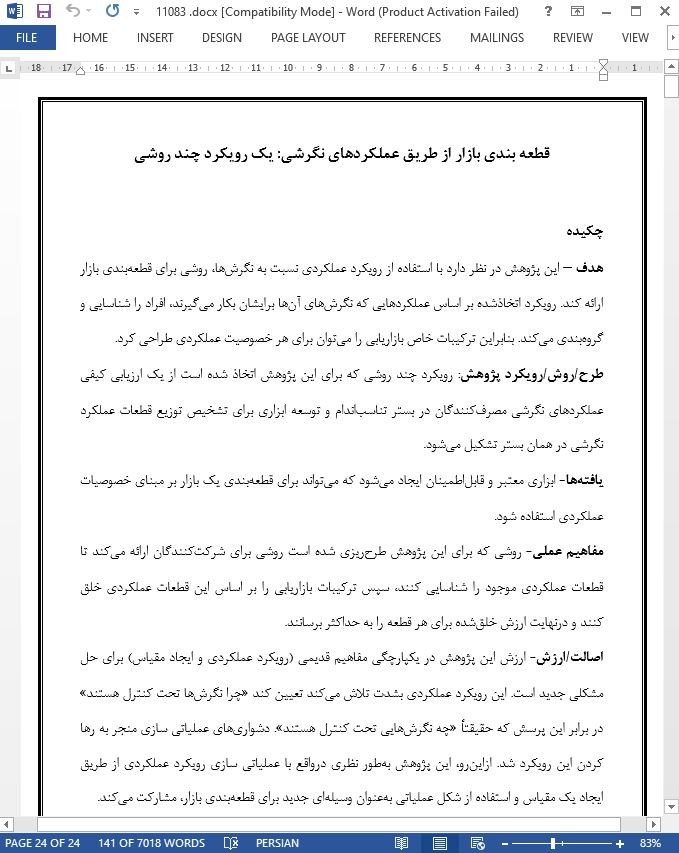
قطعه بندی بازار از طریق عملکردهای نگرشی: یک رویکرد چند روشی
عنوان انگلیسی
Market segmentation via attitudinal functions: a multi-method approach
صفحات مقاله فارسی
24
صفحات مقاله انگلیسی
16
سال انتشار
2018
رفرنس
دارای رفرنس در داخل متن و انتهای مقاله
نشریه
امرالد - Emerald
فرمت مقاله انگلیسی
pdf و ورد تایپ شده با قابلیت ویرایش
فرمت ترجمه مقاله
pdf و ورد تایپ شده با قابلیت ویرایش
فونت ترجمه مقاله
بی نازنین
سایز ترجمه مقاله
14
نوع مقاله
ISI
نوع نگارش
مقالات پژوهشی (تحقیقاتی)
نوع ارائه مقاله
ژورنال
پایگاه
اسکوپوس
ایمپکت فاکتور(IF) مجله
2.019 در سال 2019
شاخص H_index مجله
51 در سال 2020
شاخص SJR مجله
0.541 در سال 2019
شناسه ISSN مجله
1352-2752
شاخص Q یا Quartile (چارک)
Q2 در سال 2019
کد محصول
11083
وضعیت ترجمه عناوین تصاویر و جداول
ترجمه شده است ✓
وضعیت ترجمه متون داخل تصاویر و جداول
ترجمه نشده است ☓
وضعیت ترجمه منابع داخل متن
درج نشده است ☓
ضمیمه
ندارد ☓
بیس
نیست ☓
مدل مفهومی
ندارد ☓
پرسشنامه
ندارد ☓
متغیر
ندارد ☓
رفرنس در ترجمه
در انتهای مقاله درج شده است
رشته و گرایش های مرتبط با این مقاله
مدیریت، مدیریت کسب و کار، بازاریابی
مجله
تحقیقات بازار کیفی - Qualitative Market Research
دانشگاه
گروه بازاریابی و مهمان نوازی، دانشگاه میشیگان مرکزی، ایالات متحده آمریکا
کلمات کلیدی
پژوهش کیفی، ایجاد مقیاس، قطعه بندی بازار، پژوهش چند روشی، منفعت جویی، رویکرد عملکردی
کلمات کلیدی انگلیسی
Qualitative research - Scale development - Market segmentation - Multi-method research - Benefits-sought - Functional approach
doi یا شناسه دیجیتال
https://doi.org/10.1108/QMR-06-2016-0052
۰.۰
(هنوز امتیازی ثبت نشده است)