.svg)
.svg)

.svg)


ترجمه مقاله خود مختاری مدیران، کنترل استراتژیکی، سیاست سازمانی و اثربخشی برنامه ریزی استراتژیک - نشریه الزویر

عنوان فارسی
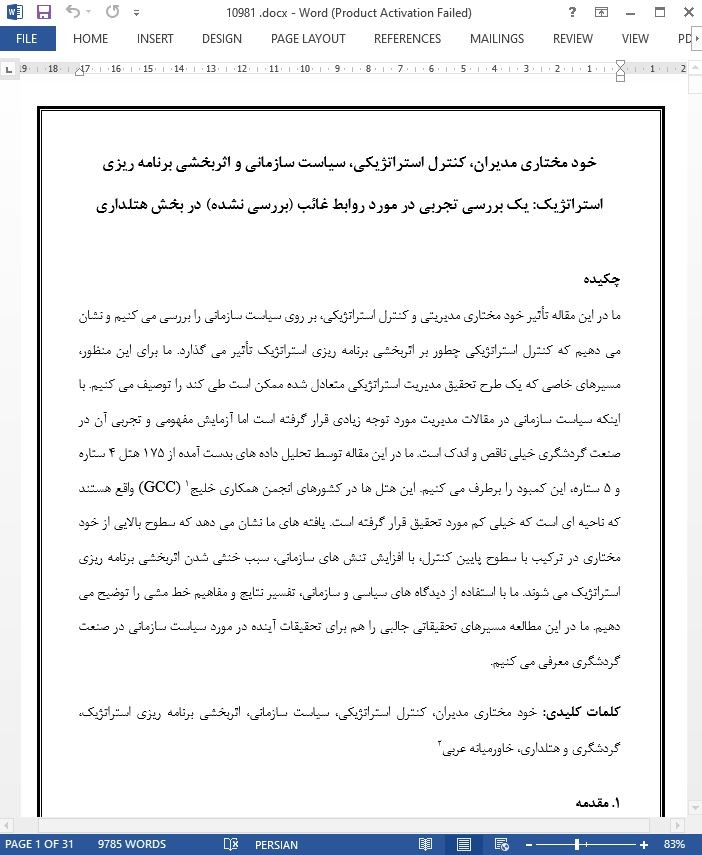
خود مختاری مدیران، کنترل استراتژیکی، سیاست سازمانی و اثربخشی برنامه ریزی استراتژیک: یک بررسی تجربی در مورد روابط غائب (بررسی نشده) در بخش هتلداری
عنوان انگلیسی
Managers' autonomy, strategic control, organizational politics and strategic planning effectiveness: An empirical investigation into missing links in the hotel sector
صفحات مقاله فارسی
31
صفحات مقاله انگلیسی
11
سال انتشار
2016
رفرنس
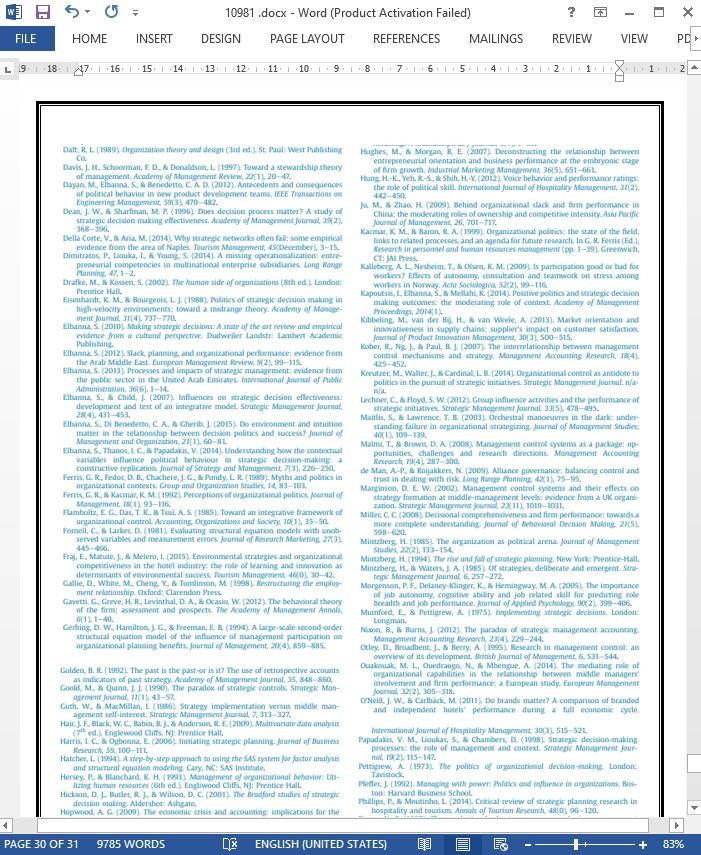
دارای رفرنس در داخل متن و انتهای مقاله
نشریه
الزویر - Elsevier
فرمت مقاله انگلیسی
pdf و ورد تایپ شده با قابلیت ویرایش
فرمت ترجمه مقاله
pdf و ورد تایپ شده با قابلیت ویرایش
فونت ترجمه مقاله
بی نازنین
سایز ترجمه مقاله
14
نوع مقاله
ISI
نوع نگارش
مقالات پژوهشی (تحقیقاتی)
نوع ارائه مقاله
ژورنال
پایگاه
اسکوپوس
ایمپکت فاکتور(IF) مجله
9.657 در سال 2019
شاخص H_index مجله
179 در سال 2020
شاخص SJR مجله
3.068 در سال 2019
شناسه ISSN مجله
0261-5177
شاخص Q یا Quartile (چارک)
Q1 در سال 2019
کد محصول
10981
وضعیت ترجمه عناوین تصاویر و جداول
ترجمه شده است ✓
وضعیت ترجمه متون داخل تصاویر و جداول
ترجمه شده است ✓
وضعیت ترجمه منابع داخل متن
ترجمه شده است ✓
ضمیمه
ندارد ☓
بیس
است ✓
مدل مفهومی
دارد ✓
پرسشنامه
دارد ✓
متغیر
دارد ✓
رفرنس در ترجمه
در انتهای مقاله درج شده است
رشته و گرایش های مرتبط با این مقاله
مدیریت، مدیریت استراتژیک، مدیریت عملکرد، مدیریت هتلداری
مجله
مدیریت گردشگری - Tourism Management
دانشگاه
دانشکده تجارت و اقتصاد، دانشگاه قطر
کلمات کلیدی
خود مختاری مدیران، کنترل استراتژیکی، سیاست سازمانی، اثربخشی برنامه ریزی استراتژیک، گردشگری و هتلداری، خاورمیانه عربی
کلمات کلیدی انگلیسی
Managers' autonomy - Strategic control - Organizational politics - Effectiveness of strategic planning - Tourism and hospitality - Arab Middle East
doi یا شناسه دیجیتال
https://doi.org/10.1016/j.tourman.2015.06.025
۰.۰
(هنوز امتیازی ثبت نشده است)