.svg)
.svg)

.svg)


ترجمه مقاله تهیه دیوپساید دارای توانایی تشکیل آپاتیت به وسیله فرآیند سل-ژل - نشریه الزویر

عنوان فارسی
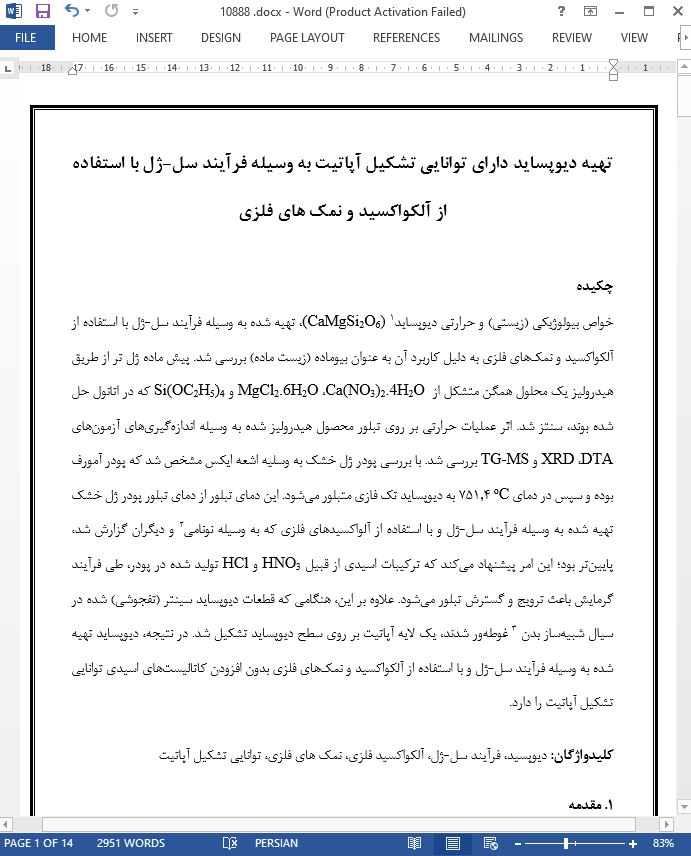
تهیه دیوپساید دارای توانایی تشکیل آپاتیت به وسیله فرآیند سل-ژل با استفاده از آلکواکسید و نمک های فلزی
عنوان انگلیسی
Preparation of diopside with apatite-forming ability by sol–gel process using metal alkoxide and metal salts
صفحات مقاله فارسی
14
صفحات مقاله انگلیسی
6
سال انتشار
2004
رفرنس
دارای رفرنس در داخل متن و انتهای مقاله
نشریه
الزویر - Elsevier
فرمت مقاله انگلیسی
pdf و ورد تایپ شده با قابلیت ویرایش
فرمت ترجمه مقاله
pdf و ورد تایپ شده با قابلیت ویرایش
فونت ترجمه مقاله
بی نازنین
سایز ترجمه مقاله
14
نوع مقاله
ISI
نوع نگارش
مقالات پژوهشی (تحقیقاتی)
نوع ارائه مقاله
ژورنال
پایگاه
اسکوپوس
ایمپکت فاکتور(IF) مجله
4.615 در سال 2019
شاخص H_index مجله
143 در سال 2020
شاخص SJR مجله
0.929 در سال 2019
شناسه ISSN مجله
0927-7765
شاخص Q یا Quartile (چارک)
Q1 در سال 2019
کد محصول
10888
وضعیت ترجمه عناوین تصاویر و جداول
ترجمه شده است ✓
وضعیت ترجمه متون داخل تصاویر و جداول
جداول ترجمه شده است ✓ تصاویر ترجمه نشده است ☓
وضعیت ترجمه منابع داخل متن
درج نشده است ☓
ضمیمه
ندارد ☓
بیس
نیست ☓
مدل مفهومی
ندارد ☓
پرسشنامه
ندارد ☓
متغیر
ندارد ☓
رفرنس در ترجمه
در انتهای مقاله درج شده است
رشته و گرایش های مرتبط با این مقاله
مهندسی مواد، شیمی، شیمی کاربردی، سرامیک،
مجله
کلوئیدها و سطوح ب: رابط زیستی - Colloids and Surfaces B: Biointerfaces
دانشگاه
گروه علوم و فنون مواد، دانشکده فنی و مهندسی، دانشگاه توئین یوکوهاما، ژاپن
کلمات کلیدی
ديوپسيد، فرآیند سل-ژل، آلکواکسید فلزی، نمک های فلزی، توانایی تشکیل آپاتیت
کلمات کلیدی انگلیسی
Diopside - Sol–gel process - Metal alkoxide - Metal salts - Apatite-forming ability
doi یا شناسه دیجیتال
https://doi.org/10.1016/j.colsurfb.2003.07.004
۰.۰
(هنوز امتیازی ثبت نشده است)