.svg)
.svg)

.svg)


ترجمه مقاله ارزیابی هوش تجاری بر اساس پروفایل رفتار مشتری با استفاده از ایده کاوی مبتنی بر سرگرمی در هند - نشریه تیلور و فرانسیس

عنوان فارسی
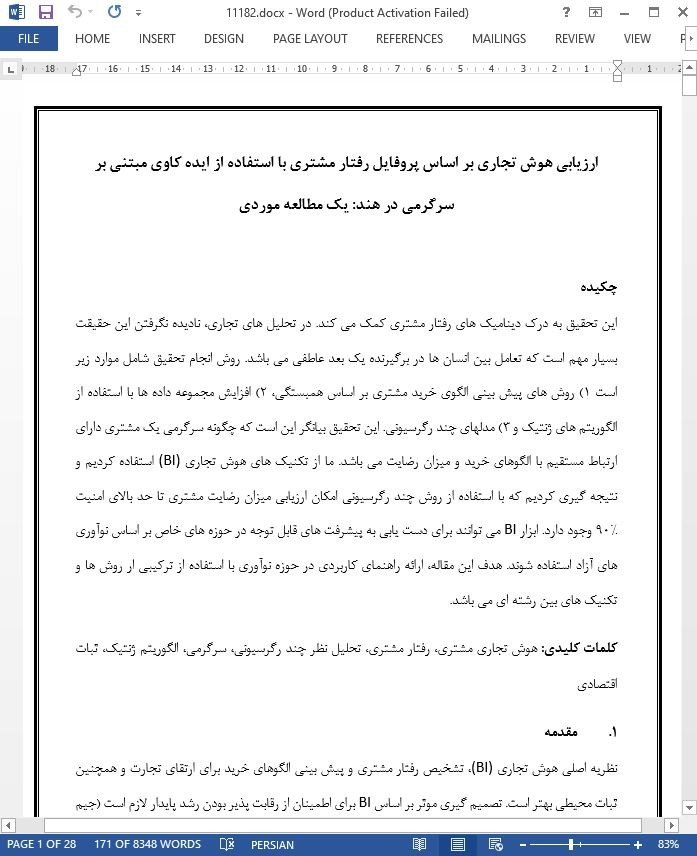
ارزیابی هوش تجاری بر اساس پروفایل رفتار مشتری با استفاده از ایده کاوی مبتنی بر سرگرمی در هند: یک مطالعه موردی
عنوان انگلیسی
Business intelligence appraisal based on customer behaviour profile by using hobby based opinion mining in India: a case study
صفحات مقاله فارسی
28
صفحات مقاله انگلیسی
21
سال انتشار
2020
رفرنس
دارای رفرنس در داخل متن و انتهای مقاله
نشریه
تیلور و فرانسیس - Taylor & Francis
فرمت مقاله انگلیسی
PDF
فرمت ترجمه مقاله
pdf و ورد تایپ شده با قابلیت ویرایش
فونت ترجمه مقاله
بی نازنین
سایز ترجمه مقاله
14
نوع مقاله
ISI
نوع ارائه مقاله
ژورنال
پایگاه
اسکوپوس
ایمپکت فاکتور(IF) مجله
2.751 در سال 2019
شاخص H_index مجله
21 در سال 2020
شاخص SJR مجله
0.490 در سال 2019
شناسه ISSN مجله
1331-677X
شاخص Q یا Quartile (چارک)
Q2 در سال 2019
کد محصول
11182
وضعیت ترجمه عناوین تصاویر و جداول
ترجمه شده است ✓
وضعیت ترجمه متون داخل تصاویر و جداول
ترجمه شده است ✓
وضعیت ترجمه منابع داخل متن
ترجمه شده است ✓
ضمیمه
ندارد ☓
بیس
است ✓
مدل مفهومی
دارد ✓
پرسشنامه
ندارد ☓
متغیر
دارد ✓
رفرنس در ترجمه
در انتهای مقاله درج شده است
رشته و گرایش های مرتبط با این مقاله
مدیریت، مدیریت کسب و کار، مدیریت منابع انسانی، بازاریابی
مجله
Economic Research-Ekonomska Istraživanja
دانشگاه
موسسه فناوری Shree Devi ، مانگالور، کارناتاکا، هند
کلمات کلیدی
هوش تجاری مشتری، رفتار مشتری، تحلیل نظر چند رگرسیونی، سرگرمی، الگوریتم ژنتیک، ثبات اقتصادی
کلمات کلیدی انگلیسی
Customer business intelligence - consumer behaviour - multiple regression opinion analysis - hobby - genetic algorithm - economic sustainability
doi یا شناسه دیجیتال
https://doi.org/10.1080/1331677X.2020.1763822
۰.۰
(هنوز امتیازی ثبت نشده است)