Abstract
Enterprise Resource Planning (ERP) systems influence organisational performance and business strategies significantly. However, identifying, managing, and realising expected benefits of ERP is challenging. The existing ERP research has largely focused on the implementation phase leaving post-implementation development understudied. Yet, post-implementation development ensures continuing benefits. This paper documents a single-case study on benefits realisation in postimplementation ERP development. The results imply that benefits realisation practices can improve job satisfaction while lack of it can lead to unused solutions. Outdated and evolved business processes, complicated further by workarounds, hinder on-going ERP development. Consequently, benefits realisation is hindered as well. Moreover, when subsidiaries are unable to identify new benefits on their own and while the benefits may even vary from one subsidiary to another, the complexity of benefits realisation increases. Altogether, the article highlights four empirical findings on issues influencing post-implementation benefits realisation and four issues on post implementation ERP development in general.
1. Introduction
Enterprise Resource Planning (ERP) systems are standard software packages integrating processes from various business functions by utilising shared and integrated databases and workflow standardisations [1, 2]. These systems are complex due to their size and influence on business processes, but also due to their risk factors and benefit opportunities [2, 3]. As ERP systems require expensive investments, also the question of ERP benefits becomes nontrivial [4, 5]. Johansson et al. [4] highlight that various underlying factors can generate benefits, but no coherent ways to manage them exist. Perhaps due to the complexity, many organisations merely assume that the anticipated benefits from ERP will actualise without formal practices [6, 7]. If benefits realisation has so significant importance and moreover, if organisations understand the importance, formal practices should be used widely. However, literature indicates otherwise [8]. The purpose of this study is to examine this contradiction.
6. Conclusion
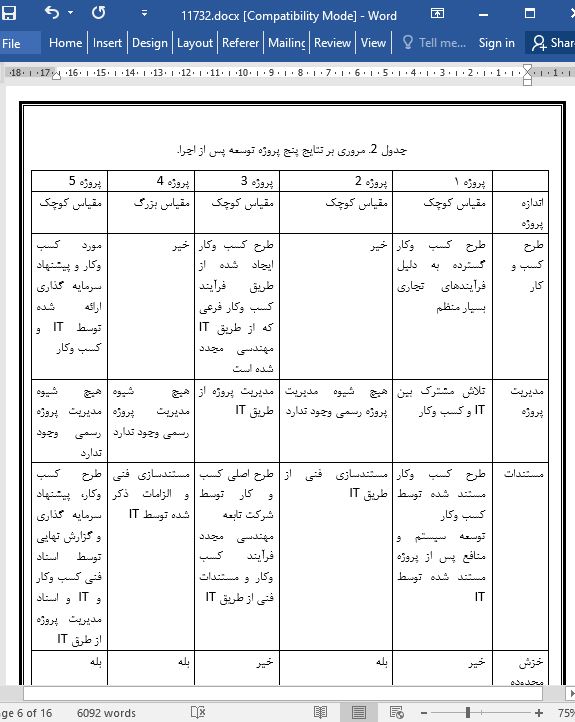
This paper presented a single case study on benefits realisation in post-implementation development of ERP systems. Systematic benefits realisation approach and solid planning improves project success by preventing expansion of scope, schedule and costs and ultimately improving job satisfaction whereas poor practices result confusing projects. However, in a few projects, ERP development was considered either as a technical project or the benefits were seen self-evident making systematic approaches to realise benefits unnecessary. Although variance existed depending on the project size, the insufficient follow up can, at worst, result unadopted solutions wasting the development resources. One explanation was that personal interests of business managers or IT personnel often directed and prioritised the development projects. Consequently, personal interests, rather than organisational targets, directed development projects posing a considerable risk for failure of benefits realisation.