.svg)
.svg)

.svg)


ترجمه مقاله سنتز یکجای دی هیدروپیریمیدین ها از طریق کاتالیز سازگار با محیط مشتقات فسفر - نشریه الزویر

عنوان فارسی
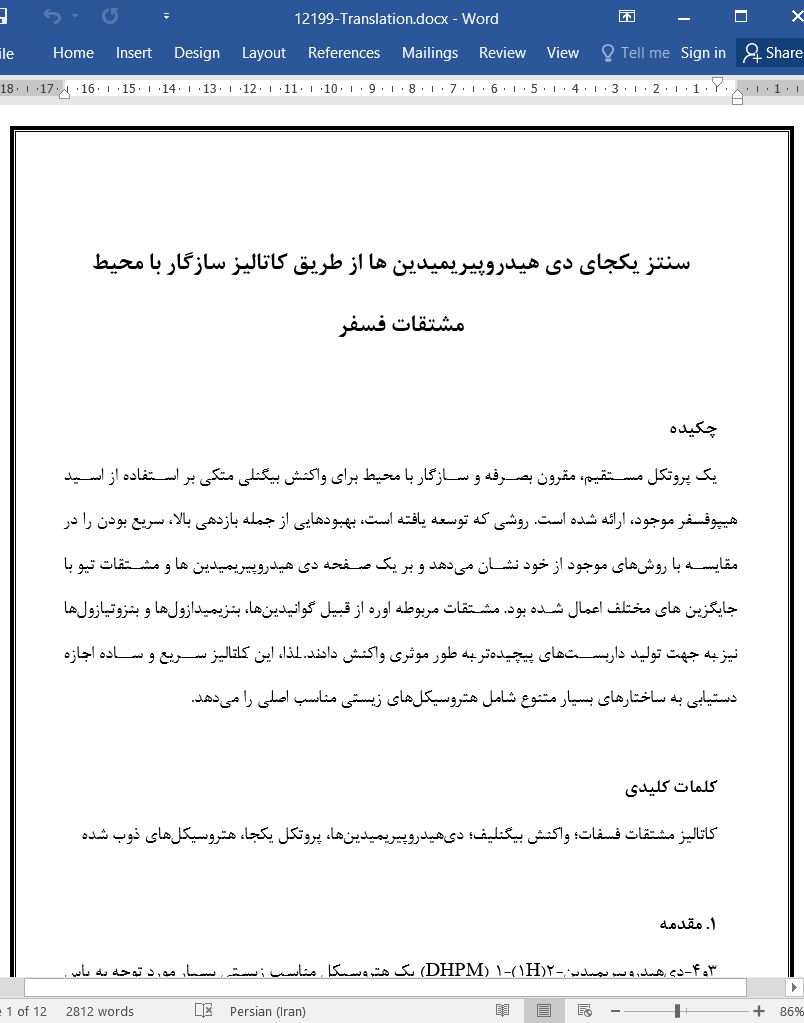
سنتز یکجای دی هیدروپیریمیدین ها از طریق کاتالیز سازگار با محیط مشتقات فسفر
عنوان انگلیسی
One-pot synthesis of dihydropyrimidines via eco-friendly phosphorus derivatives catalysis
صفحات مقاله فارسی
12
صفحات مقاله انگلیسی
9
سال انتشار
2022
رفرنس
دارای رفرنس در داخل متن و انتهای مقاله
نشریه
الزویر - Elsevier
فرمت مقاله انگلیسی
pdf و ورد تایپ شده با قابلیت ویرایش
فرمت ترجمه مقاله
pdf و ورد تایپ شده با قابلیت ویرایش
فونت ترجمه مقاله
بی نازنین
سایز ترجمه مقاله
14
نوع مقاله
ISI
نوع نگارش
مقالات پژوهشی (تحقیقاتی)
نوع ارائه مقاله
ژورنال
پایگاه
اسکوپوس
ایمپکت فاکتور(IF) مجله
2.987 در سال 2020
شاخص H_index مجله
47 در سال 2021
شاخص SJR مجله
0.670 در سال 2020
شناسه ISSN مجله
1319-6103
شاخص Q یا Quartile (چارک)
12 (2 صفحه رفرنس انگلیسی)
کد محصول
12199
وضعیت ترجمه عناوین تصاویر و جداول
ترجمه شده است ✓
وضعیت ترجمه متون داخل تصاویر و جداول
ترجمه شده است ✓
وضعیت ترجمه منابع داخل متن
به صورت عدد درج شده است ✓
وضعیت فرمولها و محاسبات در فایل ترجمه
ندارد ☓
ضمیمه
ندارد ☓
بیس
نیست ☓
مدل مفهومی
ندارد ☓
پرسشنامه
ندارد ☓
متغیر
ندارد ☓
فرضیه
ندارد ☓
رفرنس در ترجمه
در انتهای مقاله درج شده است
رشته و گرایش های مرتبط با این مقاله
شیمی، شیمی تجزیه، شیمی کاتالیست
مجله
مجله انجمن شیمی عربستان - Journal of Saudi Chemical Society
دانشگاه
گروه علوم شیمی و بیوشیمیایی - مهندسی فرآیند سبز (CBS-GPE)، دانشگاه پلی تکنیک محمد ششم (UM6P)، بن گویر، مراکش
کلمات کلیدی
کاتالیز مشتقات فسفات؛ واکنش بیگنلیف؛ دیهیدروپیریمیدینها، پروتکل یکجا، هتروسیکلهای ذوب شده
کلمات کلیدی انگلیسی
Phosphate derivatives catalysis - Biginelli reaction - Dihydropyrimidines - One-pot protocol - Fused heterocycles
doi یا شناسه دیجیتال
https://doi.org/10.1016/j.jscs.2021.101398
۰.۰
(هنوز امتیازی ثبت نشده است)