.svg)
.svg)

.svg)


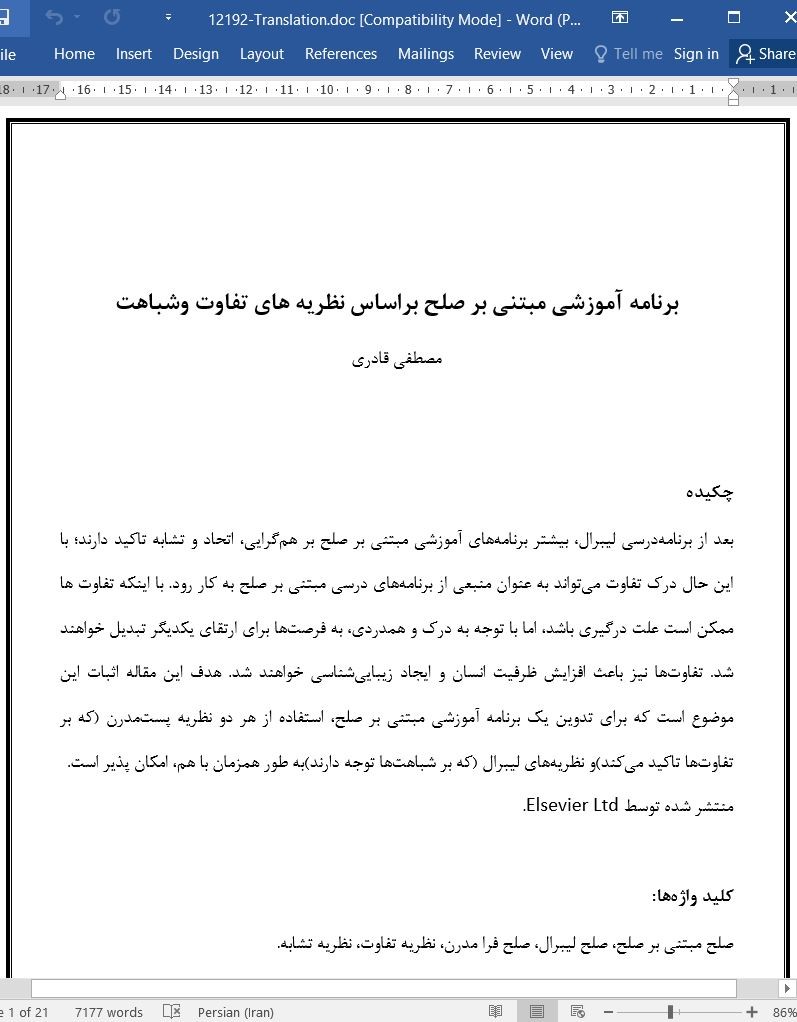
ترجمه مقاله برنامه آموزشی مبتنی بر صلح بر اساس نظریه های تفاوت و شباهت - نشریه الزویر

عنوان فارسی
برنامه آموزشی مبتنی بر صلح بر اساس نظریه های تفاوت و شباهت
عنوان انگلیسی
Peace-based curriculum based on the theories of
صفحات مقاله فارسی
21
صفحات مقاله انگلیسی
11
سال انتشار
2011
رفرنس
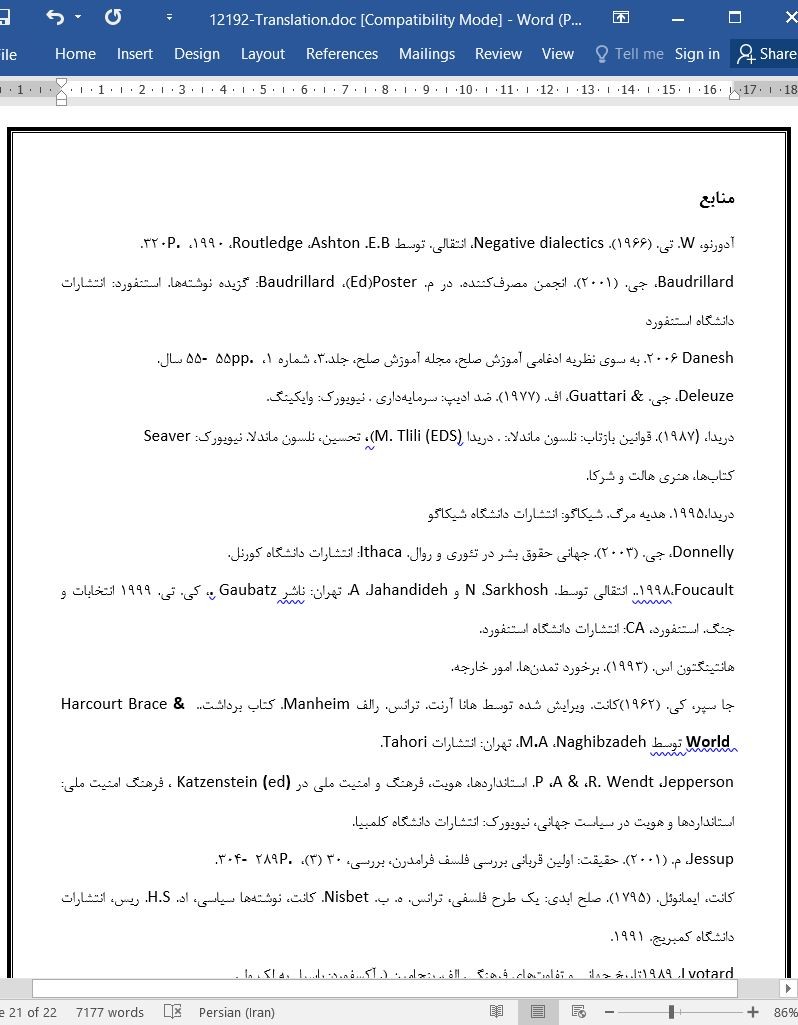
دارای رفرنس در داخل متن و انتهای مقاله
نشریه
الزویر - Elsevier
فرمت مقاله انگلیسی
pdf و ورد تایپ شده با قابلیت ویرایش
فرمت ترجمه مقاله
pdf و ورد تایپ شده با قابلیت ویرایش
فونت ترجمه مقاله
بی نازنین
سایز ترجمه مقاله
14
نوع مقاله
ISI
نوع نگارش
مقالات پژوهشی (تحقیقاتی)
نوع ارائه مقاله
ژورنال
شناسه ISSN مجله
1877–0428
کد محصول
12192
وضعیت ترجمه منابع داخل متن
ترجمه شده است ✓
وضعیت فرمولها و محاسبات در فایل ترجمه
ندارد ☓
ضمیمه
ندارد ☓
بیس
نیست ☓
مدل مفهومی
ندارد ☓
پرسشنامه
ندارد ☓
متغیر
ندارد ☓
فرضیه
ندارد ☓
رفرنس در ترجمه
در انتهای مقاله درج شده است
رشته و گرایش های مرتبط با این مقاله
علوم اجتماعی، فلسفه و جامعه شناسی
مجله
علوم اجتماعی و رفتاری پروسدیا - Procedia Social and Behavioral Sciences
دانشگاه
دانشگاه کردستان، ایران
کلمات کلیدی
صلح مبتنی بر صلح، صلح لیبرال، صلح فرا مدرن، نظریه تفاوت، نظریه تشابه
کلمات کلیدی انگلیسی
Peace-Based Curricula - Liberal Peace - Postmodern Peace - Theory of Difference - Theory of Similarity
doi یا شناسه دیجیتال
https://doi.org/10.1016/j.sbspro.2011.04.314
۰.۰
(هنوز امتیازی ثبت نشده است)