.svg)
.svg)

.svg)


ترجمه مقاله پیشگیری دارویی واکنش حساسیت شدید تاخیری ناشی از ماده حاجب یددار - نشریه الزویر

عنوان فارسی
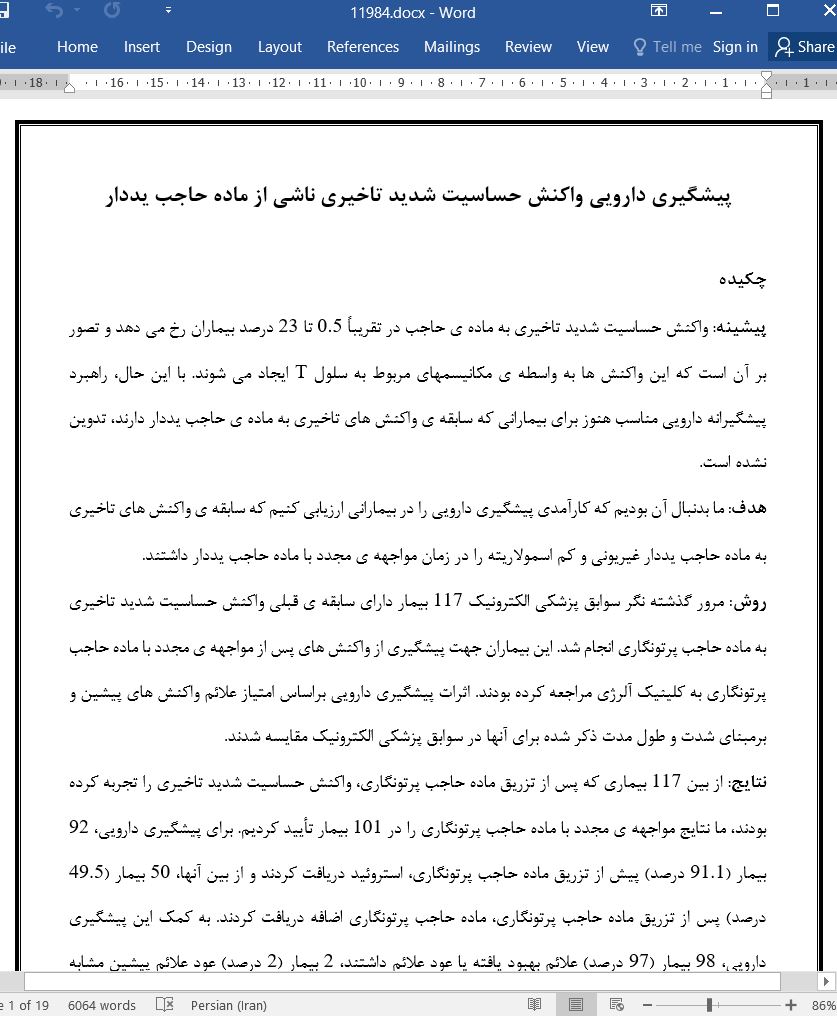
پیشگیری دارویی واکنش حساسیت شدید تاخیری ناشی از ماده حاجب یددار
عنوان انگلیسی
Pharmacological prevention of delayed hypersensitivity reactions caused by iodinated contrast media
صفحات مقاله فارسی
19
صفحات مقاله انگلیسی
10
سال انتشار
2021
رفرنس
دارای رفرنس در داخل متن و انتهای مقاله
نشریه
الزویر - Elsevier
فرمت مقاله انگلیسی
pdf و ورد تایپ شده با قابلیت ویرایش
فرمت ترجمه مقاله
pdf و ورد تایپ شده با قابلیت ویرایش
فونت ترجمه مقاله
بی نازنین
سایز ترجمه مقاله
14
نوع مقاله
ISI
نوع نگارش
مقالات پژوهشی (تحقیقاتی)
نوع ارائه مقاله
ژورنال
پایگاه
اسکوپوس
ایمپکت فاکتور(IF) مجله
3.632 در سال 2020
شاخص H_index مجله
37 در سال 2021
شاخص SJR مجله
1.041 در سال 2020
شناسه ISSN مجله
1939-4551
شاخص Q یا Quartile (چارک)
Q2 در سال 2020
کد محصول
11984
وضعیت ترجمه عناوین تصاویر و جداول
ترجمه شده است ✓
وضعیت ترجمه متون داخل تصاویر و جداول
ترجمه شده است ✓
وضعیت ترجمه منابع داخل متن
ترجمه شده است ✓
وضعیت فرمولها و محاسبات در فایل ترجمه
ندارد ☓
ضمیمه
ندارد ☓
بیس
است ✓
مدل مفهومی
ندارد ☓
پرسشنامه
ندارد ☓
متغیر
دارد ✓
فرضیه
ندارد ☓
رفرنس در ترجمه
در انتهای مقاله درج شده است
رشته و گرایش های مرتبط با این مقاله
داروسازی، پزشکی، داروشناسی، پرتوشناسی
مجله
مجله سازمان جهانی آلرژی - World Allergy Organization Journal
دانشگاه
گروه پزشکی داخلی، کالج پزشکی دانشگاه ملی سئول، کره جنوبی
کلمات کلیدی
واکنش حساسیت شدید تاخیری، ماده حاجب پرتونگاری
کلمات کلیدی انگلیسی
Delayed hypersensitivity - Radiocontrast
doi یا شناسه دیجیتال
https://doi.org/10.1016/j.waojou.2021.100561
۰.۰
(هنوز امتیازی ثبت نشده است)