.svg)
.svg)

.svg)


ترجمه مقاله نقش فرهنگ و ویژگی های شخصیتی در عادات و نگرش های بازی های تخته ای - نشریه الزویر

عنوان فارسی
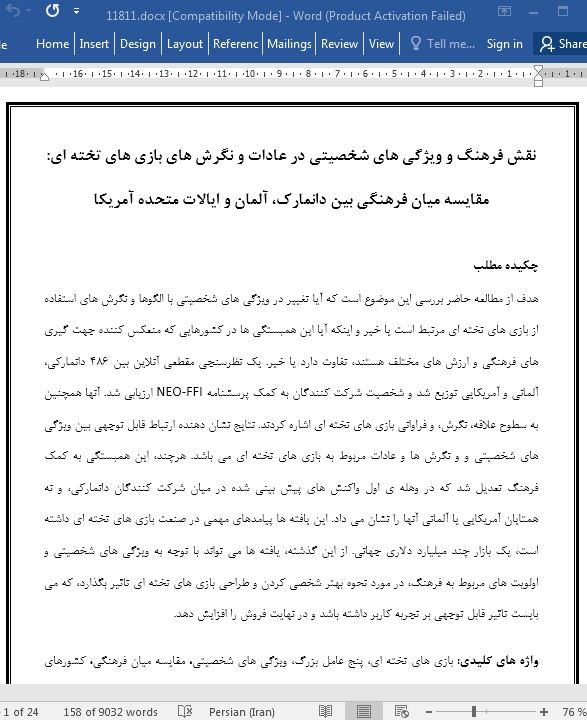
نقش فرهنگ و ویژگی های شخصیتی در عادات و نگرش های بازی های تخته ای: مقایسه میان فرهنگی بین دانمارک، آلمان و ایالات متحده آمریکا
عنوان انگلیسی
The role of culture and personality traits in board game habits and attitudes: Cross-cultural comparison between Denmark, Germany, and USA
صفحات مقاله فارسی
24
صفحات مقاله انگلیسی
8
سال انتشار
2021
رفرنس
دارای رفرنس در داخل متن و انتهای مقاله
نشریه
الزویر - Elsevier
فرمت مقاله انگلیسی
PDF
فرمت ترجمه مقاله
pdf و ورد تایپ شده با قابلیت ویرایش
فونت ترجمه مقاله
بی نازنین
سایز ترجمه مقاله
14
نوع مقاله
ISI
نوع نگارش
مقالات پژوهشی (تحقیقاتی)
نوع ارائه مقاله
ژورنال
پایگاه
اسکوپوس
ایمپکت فاکتور(IF) مجله
7.766 در سال 2020
شاخص H_index مجله
89 در سال 2021
شاخص SJR مجله
1.568 در سال 2020
شناسه ISSN مجله
0969-6989
شاخص Q یا Quartile (چارک)
Q1 در سال 2020
کد محصول
11811
وضعیت ترجمه عناوین تصاویر و جداول
ترجمه شده است ✓
وضعیت ترجمه متون داخل تصاویر و جداول
ترجمه شده است ✓
وضعیت ترجمه منابع داخل متن
ترجمه شده است ✓
وضعیت فرمولها و محاسبات در فایل ترجمه
تایپ شده است ✓
ضمیمه
ندارد ☓
بیس
است ✓
مدل مفهومی
ندارد ☓
پرسشنامه
ندارد ☓
متغیر
دارد ✓
رفرنس در ترجمه
در داخل متن و انتهای مقاله درج شده است
رشته و گرایش های مرتبط با این مقاله
مدیریت و روانشناسی، بازاریابی، مدیریت کسب و کار، روانشناسی صنعتی و سازمانی
مجله
مجله خرده فروشی و خدمات مصرف کننده - Journal of Retailing and Consumer Services
دانشگاه
دانشگاه آگر، کریستیان، نروژ
کلمات کلیدی
بازی های تخته ای، پنج عامل بزرگ، ویژگی های شخصیتی، مقایسه میان فرهنگی، کشورهای نوردیک (وابسته به شمال اروپا)، صنعت اسباب بازی
کلمات کلیدی انگلیسی
Board games - Big five - Personality traits - Cross-cultural comparison - Nordics - Toy industry
doi یا شناسه دیجیتال
https://doi.org/10.1016/j.jretconser.2021.102506
۰.۰
(هنوز امتیازی ثبت نشده است)