.svg)
.svg)

.svg)


ترجمه مقاله تاثیر رهبری تحولگرا روی کارمندان در طول تغییر سازمانی - نشریه تیلور و فرانسیس

عنوان فارسی
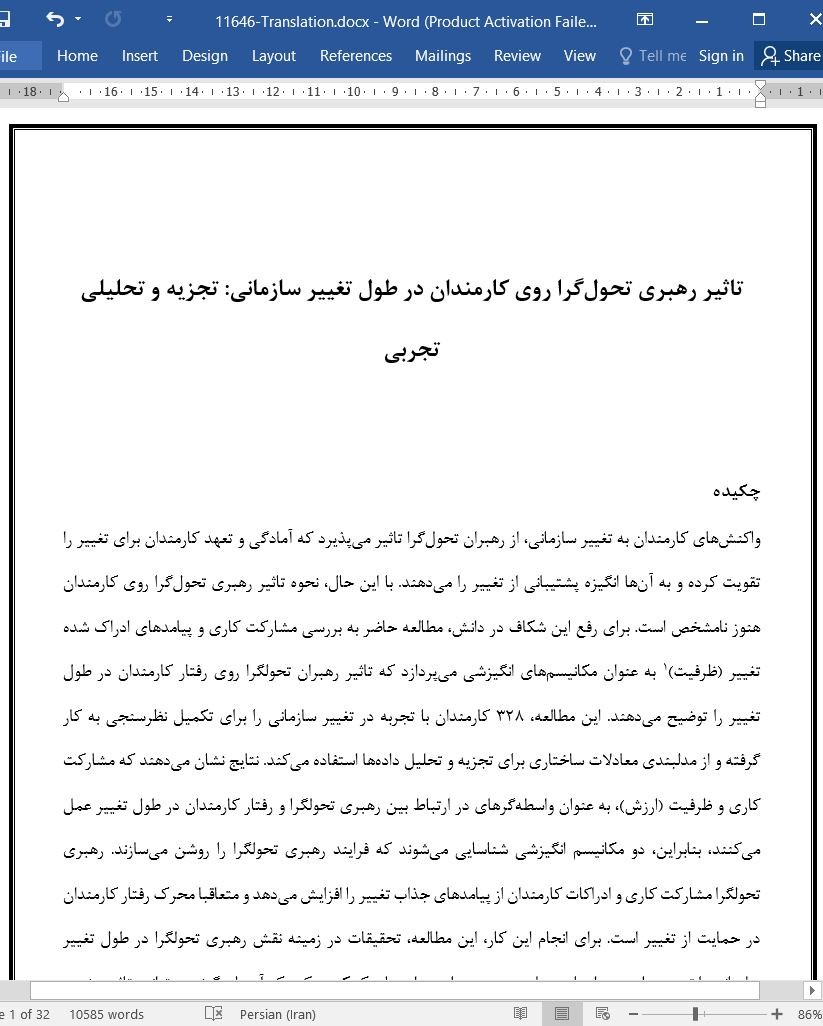
تاثیر رهبری تحولگرا روی کارمندان در طول تغییر سازمانی: تجزیه و تحلیلی تجربی
عنوان انگلیسی
The Effect of Transformational Leadership on Employees During Organizational Change – An Empirical Analysis
صفحات مقاله فارسی
31
صفحات مقاله انگلیسی
23
سال انتشار
2019
رفرنس
دارای رفرنس در داخل متن و انتهای مقاله
نشریه
تیلور و فرانسیس - Taylor & Francis
فرمت مقاله انگلیسی
pdf و ورد تایپ شده با قابلیت ویرایش
فرمت ترجمه مقاله
pdf و ورد تایپ شده با قابلیت ویرایش
فونت ترجمه مقاله
بی نازنین
سایز ترجمه مقاله
14
نوع مقاله
ISI
نوع ارائه مقاله
ژورنال
پایگاه
اسکوپوس
ایمپکت فاکتور(IF) مجله
2.135 در سال 2020
شاخص H_index مجله
28 در سال 2021
شاخص SJR مجله
0.816 در سال 2020
شناسه ISSN مجله
1469-7017
شاخص Q یا Quartile (چارک)
Q2 در سال 2020
کد محصول
11646
وضعیت ترجمه عناوین تصاویر و جداول
ترجمه شده است ✓
وضعیت ترجمه متون داخل تصاویر و جداول
ترجمه شده است ✓
وضعیت ترجمه منابع داخل متن
ترجمه شده است ✓
وضعیت فرمولها و محاسبات در فایل ترجمه
ندارد ☓
ضمیمه
ندارد ☓
بیس
است ✓
مدل مفهومی
دارد ✓
پرسشنامه
ندارد ☓
متغیر
دارد ✓
فرضیه
دارد ✓
رفرنس در ترجمه
در داخل متن و انتهای مقاله درج شده است
رشته و گرایش های مرتبط با این مقاله
مدیریت، مدیریت اجرایی، مدیریت عملکرد و مدیریت منابع انسانی
مجله
مجله مدیریت تغییر - Journal of Change Management
دانشگاه
گروه مدیریت بازرگانی، دانشگاه هاینریش هاینه دوسلدورف، دوسلدورف، آلمان
کلمات کلیدی
رهبری تحولگرا، تغییر سازمانی، مشارکت کاری، ظرفیت (ارزش)، رفتار کارمندان
کلمات کلیدی انگلیسی
Transformational leadership - organizational change - work engagement - valence - employee behaviour
doi یا شناسه دیجیتال
https://doi.org/10.1080/14697017.2018.1447006
۰.۰
(هنوز امتیازی ثبت نشده است)