.svg)
.svg)

.svg)


ترجمه مقاله تاثیرات حمل و نقل هوایی، انرژی، تکنولوژی ICT و FDI بر روی رشد اقتصادی در عصر صنعت 4.0 - نشریه الزویر

عنوان فارسی
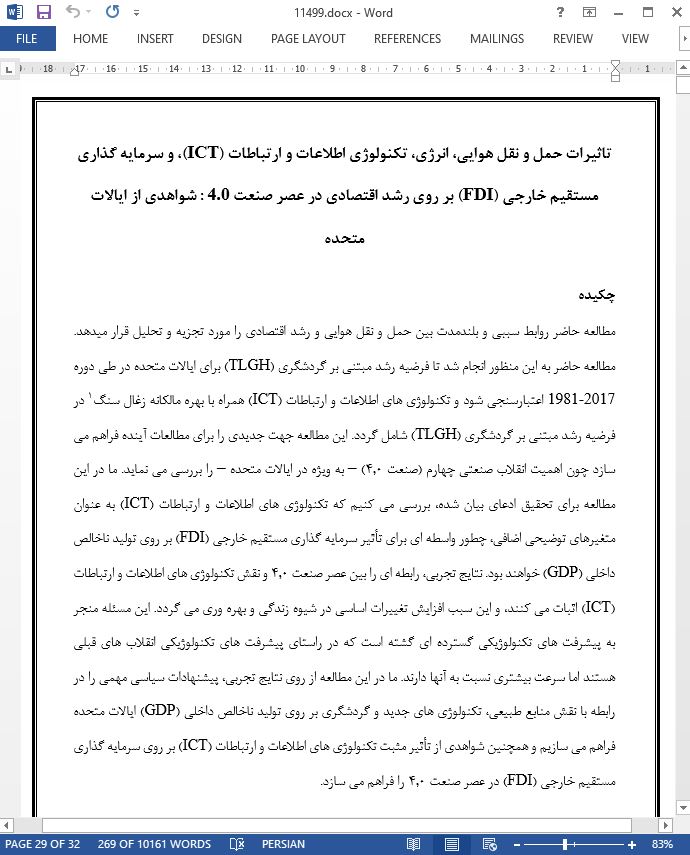
تاثیرات حمل و نقل هوایی، انرژی، تکنولوژی اطلاعات و ارتباطات (ICT)، و سرمایه گذاری مستقیم خارجی (FDI) بر روی رشد اقتصادی در عصر صنعت 4.0 : شواهدی از ایالات متحده
عنوان انگلیسی
The effects of air transportation, energy, ICT and FDI on economic growth in the industry 4.0 era: Evidence from the United States
صفحات مقاله فارسی
32
صفحات مقاله انگلیسی
10
سال انتشار
2020
رفرنس
دارای رفرنس در داخل متن و انتهای مقاله
نشریه
الزویر - Elsevier
فرمت مقاله انگلیسی
pdf و ورد تایپ شده با قابلیت ویرایش
فرمت ترجمه مقاله
pdf و ورد تایپ شده با قابلیت ویرایش
فونت ترجمه مقاله
بی نازنین
سایز ترجمه مقاله
14
نوع مقاله
ISI
نوع نگارش
مقالات پژوهشی (تحقیقاتی)
نوع ارائه مقاله
ژورنال
پایگاه
اسکوپوس
ایمپکت فاکتور(IF) مجله
7.330 در سال 2019
شاخص H_index مجله
103 در سال 2020
شاخص SJR مجله
1.815 در سال 2019
شناسه ISSN مجله
0040-1625
شاخص Q یا Quartile (چارک)
Q1 در سال 2019
کد محصول
11499
وضعیت ترجمه عناوین تصاویر و جداول
ترجمه شده است ✓
وضعیت ترجمه متون داخل تصاویر و جداول
ترجمه شده است ✓
وضعیت ترجمه منابع داخل متن
ترجمه شده است ✓
وضعیت فرمولها و محاسبات در فایل ترجمه
به صورت عکس، درج شده است ✓
ضمیمه
ندارد
بیس
نیست ☓
مدل مفهومی
ندارد ☓
پرسشنامه
ندارد ☓
متغیر
دارد ✓
رفرنس در ترجمه
در انتهای مقاله درج شده است
رشته و گرایش های مرتبط با این مقاله
اقتصاد، اقتصاد مالی، توسعه اقتصادی و برنامه ریزی
مجله
پیش بینی فن آوری و تغییرات اجتماعی - Technological Forecasting & Social Change
دانشگاه
گروه حسابداری، مالی و اقتصادی، دانشگاه بورنموث، انگلیس
کلمات کلیدی
فرضیه رشد مبتنی بر گردشگری (TLGH)، حمل و نقل هوایی، سرمایه گذاری مستقیم خارجی (FDI)، بهره مالکانه ذغال سنگ، تکنولوژی های اطلاعات و ارتباطات (ICT)، صنعت 4.0
کلمات کلیدی انگلیسی
Tourism led growth hypothesis - Air transport - Foreign direct investment - Coal rents - ICTs - Industry 4.0
doi یا شناسه دیجیتال
https://doi.org/10.1016/j.techfore.2020.120297
۰.۰
(هنوز امتیازی ثبت نشده است)