.svg)
.svg)

.svg)


ترجمه مقاله درک استراتژی محصولات بین المللی در شرکت های چند ملیتی

عنوان فارسی
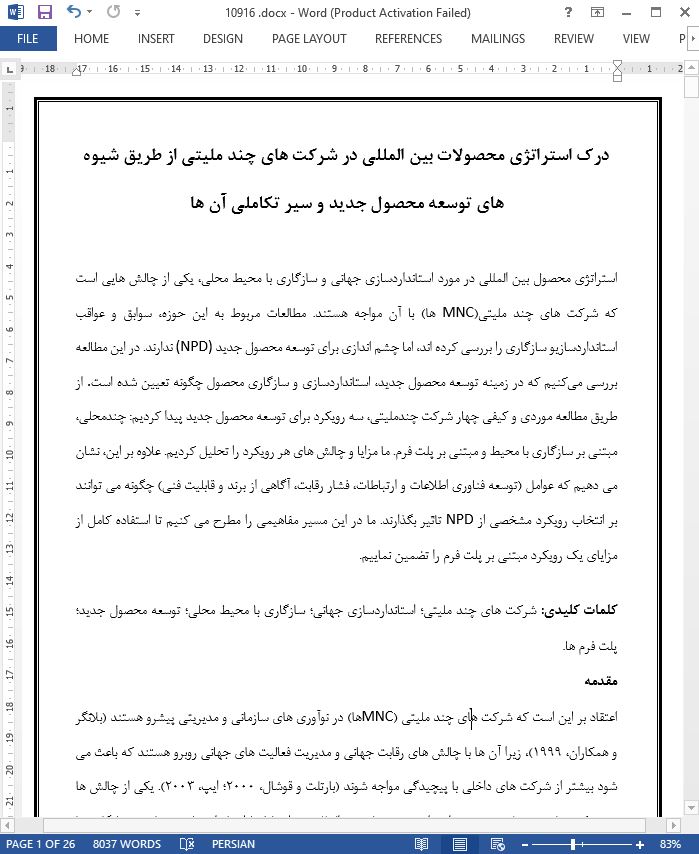
درک استراتژی محصولات بین المللی در شرکت های چند ملیتی از طریق شیوه های توسعه محصول جدید و سیر تکاملی آن ها
عنوان انگلیسی
Understanding International Product Strategy In Multinational Corporations Through New Product Development Approaches And Evolution
صفحات مقاله فارسی
26
صفحات مقاله انگلیسی
23
سال انتشار
2017
رفرنس
دارای رفرنس در داخل متن و انتهای مقاله
نشریه
Worldscientific
فرمت مقاله انگلیسی
pdf و ورد تایپ شده با قابلیت ویرایش
فرمت ترجمه مقاله
pdf و ورد تایپ شده با قابلیت ویرایش
فونت ترجمه مقاله
بی نازنین
سایز ترجمه مقاله
14
نوع مقاله
ISI
نوع ارائه مقاله
ژورنال
پایگاه
اسکوپوس
ایمپکت فاکتور(IF) مجله
2.079 در سال 2019
شاخص H_index مجله
39 در سال 2020
شاخص SJR مجله
0.491 در سال 2019
شناسه ISSN مجله
1363-9196
شاخص Q یا Quartile (چارک)
Q2 در سال 2019
کد محصول
10916
وضعیت ترجمه عناوین تصاویر و جداول
ترجمه شده است✓
وضعیت ترجمه متون داخل تصاویر و جداول
ترجمه شده است✓
وضعیت ترجمه منابع داخل متن
ترجمه شده است✓
ضمیمه
ندارد ☓
بیس
نیست ☓
مدل مفهومی
ندارد ☓
پرسشنامه
ندارد ☓
متغیر
ندارد ☓
رفرنس در ترجمه
در داخل متن و انتهای مقاله درج شده است
رشته و گرایش های مرتبط با این مقاله
مدیریت و مهندسی صنایع، بهینه سازی سیستم ها، تولید صنعتی، مدیریت استراتژیک، بازرگانی بین الملل
مجله
مجله بین المللی مدیریت نوآوری - International Journal of Innovation Management
دانشگاه
دانشکده مدیریت ملکه، دانشگاه ملکه بلفاست انگلستان
کلمات کلیدی
شرکت های چند ملیتی، استانداردسازی جهانی، سازگاری با محیط محلی، توسعه محصول جدید، پلت فرم ها
کلمات کلیدی انگلیسی
Multinational corporations - global standardisation - local adaptation - new product development - platforms
doi یا شناسه دیجیتال
https://doi.org/10.1142/S1363919617500578
۰.۰
(هنوز امتیازی ثبت نشده است)