.svg)
.svg)

.svg)


ترجمه مقاله قدرت توییتر و وفاداری هواداران ورزش
عنوان فارسی
قدرت توییتر و وفاداری هواداران ورزش: تأثیرات تعدیل کننده توییتر
عنوان انگلیسی
Twitter Power and Sport-Fan Loyalty: The Moderating Effects of Twitter
صفحات مقاله فارسی
34
صفحات مقاله انگلیسی
25
سال انتشار
2017
رفرنس
دارای رفرنس در داخل متن و انتهای مقاله
نشریه
Humankinetics
فرمت مقاله انگلیسی
pdf و ورد تایپ شده با قابلیت ویرایش
فرمت ترجمه مقاله
pdf و ورد تایپ شده با قابلیت ویرایش
فونت ترجمه مقاله
بی نازنین
سایز ترجمه مقاله
14
نوع مقاله
ISI
نوع ارائه مقاله
ژورنال
پایگاه
اسکوپوس
ایمپکت فاکتور(IF) مجله
1.000 در سال 2019
شاخص H_index مجله
3 در سال 2020
شاخص SJR مجله
0.185 در سال 2019
شناسه ISSN مجله
1936-3907
شاخص Q یا Quartile (چارک)
Q4 در سال 2019
کد محصول
10860
وضعیت ترجمه عناوین تصاویر و جداول
ترجمه شده است✓
وضعیت ترجمه متون داخل تصاویر و جداول
ترجمه شده است✓
وضعیت ترجمه منابع داخل متن
ترجمه شده است✓
ضمیمه
ندارد ☓
بیس
است ✓
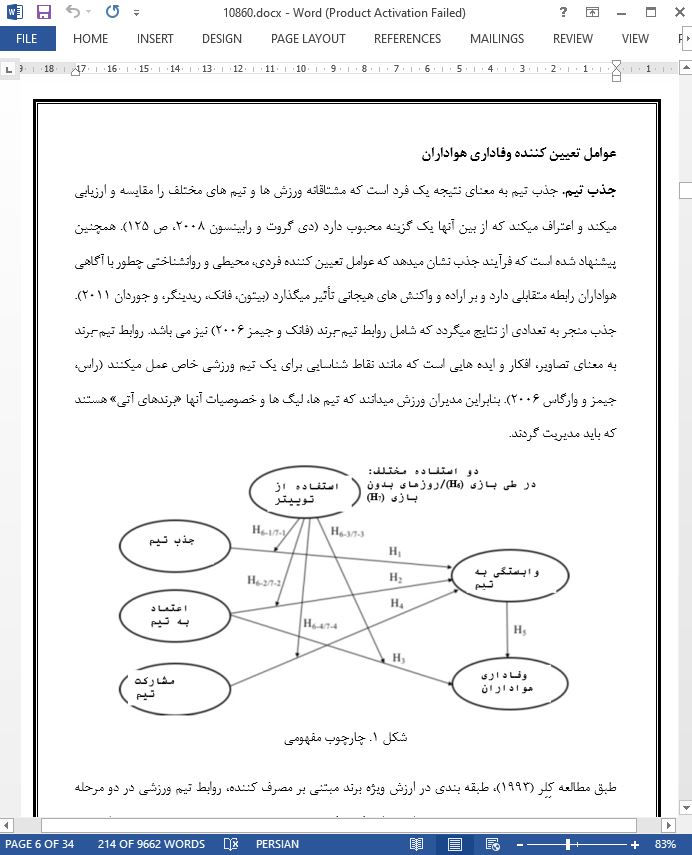
مدل مفهومی
دارد ✓
پرسشنامه
ندارد ☓
متغیر
دارد ✓
رفرنس در ترجمه
در داخل متن و انتهای مقاله درج شده است
رشته و گرایش های مرتبط با این مقاله
مدیریت و فناوری اطلاعات، بازاریابی، مدیریت فناوری اطلاعات و اینترنت و شبکه های گسترده
مجله
مجله بین المللی ارتباطات ورزشی - International Journal of Sport Communication
دانشگاه
دانشگاه A&M تگزاس، ایالات متحده آمریکا
کلمات کلیدی
بازاریابی ارتباطی، جذب تیم، اعتماد به تیم، مشارکت تیم، و وابستگی به تیم
کلمات کلیدی انگلیسی
relational marketing - team attraction - team trust - team involvement - and team attachment
doi یا شناسه دیجیتال
https://doi.org/10.1123/IJSC.2017-0010
۰.۰
(هنوز امتیازی ثبت نشده است)